The Trump administration is preparing to bail out the Argentine economy, whose current President is Trump ally Javier Milei. Says Reuters, “Markets have been roiled by corruption allegations inside Milei’s circle and a larger-than-expected loss in a local election in Buenos Aires …”






Over the weekend we had a confluence of three stories which together illustrate where the federal government is eight months into the second Trump administration. 1. The U.S. Attorney for the Eastern District of Virginia was either fired or resigned under pressure (probably the latter) for his refusal/inability to prosecute designated Trump enemies like New York Attorney General Letitia James. 2. We learned that last fall, Tom Homan was the subject of an investigation in which he had accepted a literal bag of $50,000 cash for corrupt actions during the second Trump administration should Trump again be elected. Investigators were waiting to see if Homan, who is now Trump’s border czar, would follow through on those promises once in office. (If you stiff the folks who bribed you it’s still a crime but it’s a lesser offense.) However, the Trump DOJ shut down the investigation. 3. Finally, NOTUS reports this morning that Department of Justice’s Public Integrity Section has gone from 36 “experienced attorneys assigned full-time to investigate corrupt politicians and police officers” to two. That’s two as in double of one. The departures are a mix of firings, pressured or forced resignations, resignations on principle and reassignments.
Read More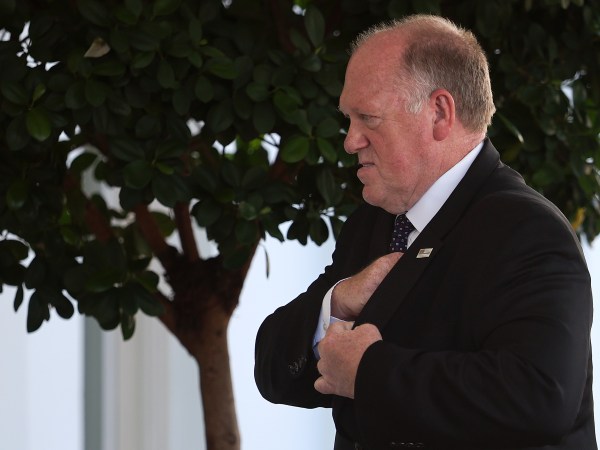






We live in an age of monsters: Elon Musk, Donald Trump, the Ellison family, Mark Zuckerberg, Peter Thiel, the sundry billionaires who don’t own apps. This may sound like a caustic and dramatic comment coming from me. Some of them are genuine monsters: Musk, Trump, probably Thiel. In other cases, like with Zuckerberg, they are probably more or less normal and might even be okay to have lunch with. But functionally, in the role they play and power they wield in our society, they are monsters. And the function of the Trump era has been to wind them all together into a single formation, first by allurement and then by force.
This realization first started to dawn on me in the years after Citizens United, the court decision that essentially ended meaningful campaign finance law in the United States. It came in the first reactions to Citizens United or more specifically the spending it made possible. Billionaires and centi-millionaires started gaining publicity and critical reactions to the scale of their spending and the impact it had on elections. Political giving at scale by the extremely wealthy wasn’t new. It had just taken a half-century hiatus. Perhaps the difference was the internet. Whatever it was, the years after 2010 spawned the idea that the very wealthy and the extremely powerful needed to be afforded more protections, more privacy for their giving then ordinary people who might donate $50 or even $5,000 up near the candidate donation limit.
Read More