









A couple weeks ago, the clarion of digital wrongdoing in the second Trump administration, Wired, published an article entitled ‘Startup Nation’ Groups Say They’re Meeting Trump Officials to Push for Deregulated ‘Freedom Cities’. I wrote about these guys, or one subset of them, in early January. Dryden Brown is chief of a startup called Praxis, which is in the “business” of founding new sovereign “start up societies.” On paper, he claims to have raised half a billion dollars for his company. But, actually, those are commitments contingent on his founding a new sovereign state. So that’s kind of like a lot of richies committing money to your new unicorn farm contingent on your finding two unicorns. In any case, Dryden had been focused on finding a chunk of land to found a new “network state” in the Mediterranean after getting bounced out of Africa. But once Donald Trump started making noises that Greenland might be on the market, he flew to Greenland to meet with officials and see if he could buy it.
In any case, that’s our boy Dryden. This new piece in Wired is about Trey Goff, the “chief of staff” of a thing called “Prospera,” which is a sorta, kinda “network state” recently established in Honduras, which the current government of Honduras is already trying to abolish. Prospera and a few other “network states” in the making are based on laws for “Special Economic Zones” which exist in some countries. The conceptual structure stems from certain duty-free areas that exist in certain countries, free ports of various kinds which have long existed and have often, but not always, been tied up with the history of European colonialism and, of course, the Special Administrative Regions of China, Hong Kong and Macau. U.S. urban policy has a sort of pale version of this in “enterprise zones” where businesses starting up in a certain area get certain tax benefits or expedited regulatory review. If you read about “Prospera,” a decent amount of at least the surface appeal is having these kind of boutique nerdvilles where tech micro-bros can high five each other because, like, if you want to buy a croissant at the coffee shop you have to pay in bitcoin. Stuff like that. The “government,” very much by design, follows the structure of venture investing, with different classes of stock and thus voting power. All that fun stuff.
Read More
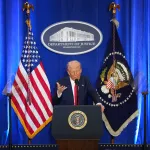



The primary drivers in the creation of the federal Constitution — James Madison and Alexander Hamilton — saw the several states more as problems to be solved or perhaps obstacles to be worked around than critical features of the new American national government they hoped to create. But that’s not how things worked out. The United States does in fact have a federal system, which chief justice of the Supreme Court Salmon P. Chase, just after the Civil War in 1869, described as an “indestructible Union composed of indestructible States.” That is a critical, central fact for anyone thinking about how to defy, delay and undo Donald Trump’s lawless effort to remake the American Republic into an autocracy.
In unitary states, lines of authority go from president or prime minister down to local officials. That’s not true in our federal system. The federal law is superior to state law. But governors don’t work for presidents. Nor do any other officials in state governments, whether they’re governors to state attorneys general or county commissioners or mayors. (The very important exception to this rule are the state National Guards, which in certain circumstances can be federalized and put at the command of the president — a key and potentially ominous detail we’ll return to.) What this means is that there are great stores of legitimate political power and authority in the United States which exist independent of the federal government and the power of the president. Inferior to that power, yes. But independent of it still. And that’s critical.
Read More



A short time ago, former U.S. Attorney Barb McQuade posted this passage from a Chronicle of Higher Education interview with Lee Bollinger, First Amendment scholar, former law school dean and former president of the University of Michigan and of Columbia. I note the thumbnail biography because Bollinger, apart from subject qualities, has ascended to the the peaks of two of the foundational nodes of power in American civil society: the legal profession and the university system.
Read More