Over the last few days, as I’ve struggled with everyone else to stay on top of all this, I’ve tried to balance two things. One of those is trying to keep people focused on what an opposition can actually do and what it can’t. The other is that you can’t simply be, in effect, yelling at people who are bewildered and scared. I saw a DNC member who was at that cattle call Thursday saying how weird it was hearing elected officials talking like these were normal times when actually the house is burning down around everyone. So, how to reconcile primal screams and concrete plans, and, in the midst of that, try to make some progress on thinking outside the box? How to counteract and defeat performative displays of powerlessness?
Read More


Over the course of the last two weeks, I’ve tried to drive home the point that the Democrats in Congress mostly can’t do anything to stop what the Trump administration is doing. That’s not a matter of weakness or bad strategy. Voters decided in November to put all federal power in the hands of Republicans. That’s done. It already happened. Many of the cries for Democrats to “do something” amount to thinking that if Democrats get energized and forceful enough they can undo the consequences of that election, as though there’s some “off” lever that if you reach really high you can grab ahold of and make all of this stop. You might as well demand Kamala Harris show some gumption and start issuing her own executive orders.
This emphatically does not mean Democrats are doing all they can or that there’s nothing they can do. But it is critical at every level to understand what the menu of actions includes. As much as this might seem pedantic, it’s critical to think very clearly about what an opposition does and what its tools are. Otherwise you’re just getting riled up demanding your fighters run at full speed, head first into the castle wall.
Fundamentally this is a battle over public opinion. And there are three areas of action to engage that battle.
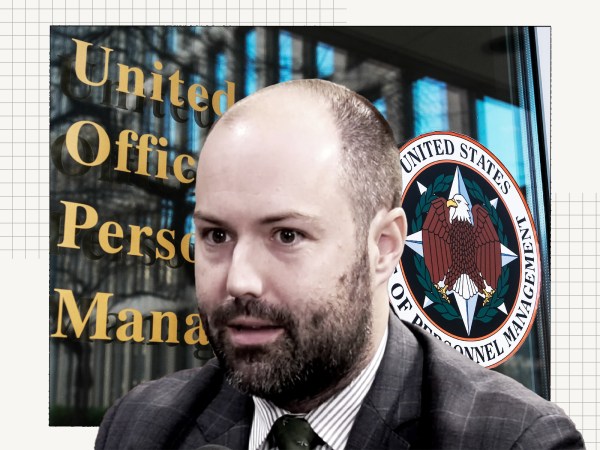
Read MoreI don’t know the answer to this. I raise it here to focus us on the question, even though I don’t have the answer to the question. I’d also invite anyone who has a clearer understanding of the federal statutes to get in touch and explain them to me. As I noted below, Trump White House officials this morning ordered staff at the Office of Personnel Management (the federal HR office) to prepare plans to cut the agency’s staff and the programs it administers by 70%. And to do it fast. Executive staff at the agency have the weekend to devise the plans.
Now, is this legal? It would seem to me that reducing the staff size of a key government agency by 70% raises all the same equities and legal problems as impoundment (refusing to spend money that is obligated to be spent by laws passed by Congress). Is that true? I don’t see how it wouldn’t be. But my logic isn’t controlling here. Curious to hear from those who know these aspects of federal law and also the Impoundment Act. (Just this afternoon a federal district judge issued a restraining order blocking the budget freezes.)
Read MoreAccording to a report from The Federal News Network out a half hour ago, at a meeting this morning Trump administration officials told staff of the Office of Personnel Management to prepare plans for a 70% cut in staff and programs at the agency. Agency executives were tasked with working over the weekend to prepare plans for the 70% staffing cut with final plans ready no later than Monday. Remember that OPM is essentially the HR department for the federal government — covering not only the immediate mechanics of employment but administering retirement and health care benefits as well as other programs. OPM is the source of those “resignation” emails and it’s the agency which appears to be most directly under the control of people working at the direction of Elon Musk.
A new episode of The Josh Marshall Podcast is live! This week, Kate and Josh discuss Trump’s embarrassing rollback of his funding freeze and his firing of the inspectors general.
Read More


I wanted to note some details in the rapid evolution of Trump’s misrule over the criminal justice system. It is old hat, expected really, that a Trump-run Justice Department won’t investigate, let alone indict, Donald Trump or any of his top deputies. We also saw in Trump’s first term that accomplices and key supporters will be pardoned or have investigations shuttered. But the dawn of Trump’s second term now sees the rollout of a host of new Justice products and payment plans.
This week, matters took a degree of a step forward (or backward, depending on your metaphor) when Trump had his acting U.S. attorney abandon the criminal case against former Rep. Jeff Fortenberry (R-NE). Fortenberry wasn’t some high-profile Trump ally. And his crimes weren’t particularly political or Trump-adjacent. He got caught taking laundered political contributions from a Nigerian billionaire and then repeatedly lied about it to the FBI. Pretty generic graft, pretty garden-variety political corruption.
Read More