I’m going to put almost all of this post under the fold because it’s just some general observations about the UK election. See below for U.S. stuff.
Read More

In one of the DC newsletters this morning, Mike Allen largely streamed the Trump campaign’s inner monologue about the “brutal attack” they plan to unleash on Kamala Harris if and when she becomes the nominee (and I really think it’s very likely when, not if). Meanwhile, he writes, Republicans are asking why they weren’t told about the Biden situation. Voters will ask. Democrats will ask! I really hope people won’t be stage managed like this, or led into dramas of self-doubt and self-wraithing. One thing that Trump is good at, really good at, is the cadence and roll out of public drama, maintaining the tempo and initiative, the mix of threats and bombast.
There’s a tableful of taunts and attacks just waiting there for Harris or another Democratic nominee to pick up. Obviously this isn’t where Democrats wanted or expected to be. But if they are here or will be here soon they should see and jump on all the opportunities it opens up. And there are a lot.
Read MoreI noted earlier how Thomas Jefferson very clearly disagreed with the idea that the President was or should be immune from prosecution under the law, or above the law in any way. I also mentioned that as a general matter virtually every aspect of the authorship and debate over the Constitution was at war with the concept of presidential immunity outlined in the recent Supreme Court decision. A TPM reader reminded me further of this passage from Federalist 69, authored by Alexander Hamilton, certainly the Constitution architect and author most friendly to executive power.
Read MoreI wanted to take a moment to share with you, as well as I’m able, where I think we are with President Biden, the 2024 nomination and the fallout from last week’s debate. Not where I think we should be, but where we are.
My sense is that as of this moment the critical stakeholders in the Democratic Party, elected officials, party officials, prominent voices out of office, funders, opinion columnists, etc. remain behind President Biden on the most tentative and contingent of bases. They are waiting to see how Biden manages in his sit-down interview with George Stephanopoulos which will be taped tomorrow and now, in a change of plans, will actually be aired tomorrow as well. There’s also a couple rallies in swing states over the weekend. Those will tell the story of whether Biden can regain confidence of these people, not only in his health status and wherewithal but also in whether he is able to run the kind of vigorous campaign required for victory.
My own sense, based not on any secret information but just taking stock of all the information out there, is that this is as much a matter of giving Biden the courtesy and respect of trying as it is based on a confidence that he can. It seems critical to note that I don’t think the standard here is any level of performance. It’s in the result. He needs to show up in a way wherein people who had decided or feared that he simply wasn’t able and vigorous enough to continue on the ballot say, “The debate was terrible. I thought he should step aside. But based on what I see from him I think he’s good to go, I think he’s ready to fight this campaign and win.” If they say that and mean that then that’s kind of it. And I think saying that and meaning that means whoever is saying it is confident Biden can shut down this conversation.
Read More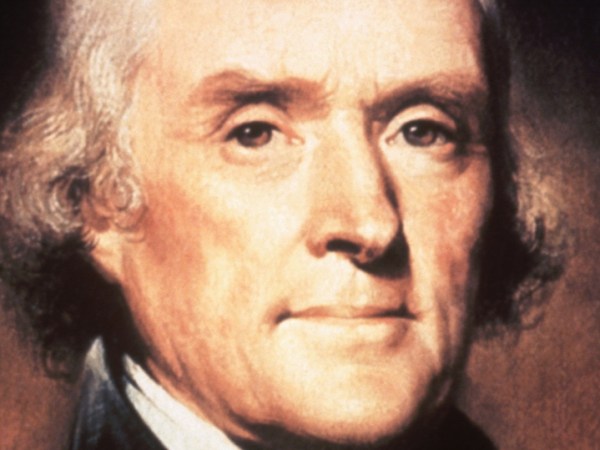
Thomas Jefferson played no direct role in authoring the federal Constitution. He wasn’t even in the country at the time. He was living in France as the U.S. Ambassador. Indeed he was at least equivocal about key elements of the document, despite the fact that much of it was the work of his friend and protégé James Madison, who kept him informed about the progress of events by post from the United States. But Jefferson was of course a central figure in the creation of the American Republic and a critical figure in defining executive power under the federal Constitution both as Secretary of State and one of two principal advisors to George Washington and then, later, during his two terms as President. He spoke clearly to the question at the heart of the Court’s immunity decision and very clearly disagreed with the reasoning and any idea that Presidents weren’t subject to the law.
I should start by saying that we don’t have just Jefferson to go on. You can’t read any part of the discussions of the Constitutional Convention, the discussions leading up to it or the debates over it, without seeing that the idea that the President would be immune from the criminal law over his conduct in office would have struck these people as simply absurd. But Jefferson himself came at the question later from a different perspective, not as a theoretical matter but as a retired chief executive who had actually wielded presidential and prerogative power and believed that at least in some cases he had exceeded his powers in the interests of the nation.
Read More