

While we’re still in the extended Thanksgiving weekend, I wanted to take a moment to thank all of you, especially our members but all of our readers, on behalf of everyone at TPM. We literally couldn’t do it without you. It’s a member funded publication. The overwhelming percentage of our revenue comes directly from your monthly and annual membership fees.
We are, paradoxically and oddly at this point, a huge success story, in this strange relative sense of moving forward, having stable finances and getting ready for a hugely consequential election. This would be normal and unremarkable if not for the fact that almost everyone else is struggling or going under. It’s entirely because of our readers and their dedication to what we do. You’ve consistently been there for us. Which is amazing. And we thank you for it.
In addition to keeping us solvent it has also been a liberation for us inasmuch as basically our entire focus, both editorially and in terms of our business, is reader satisfaction. That should be the case for any successful publication. But when most of the revenue comes from advertising much of that focus is only indirect. You need to keep readers happy because without happy readers you can’t keep the advertisers happy. They’re the source of the money.
If you’re looking to do us another solid, let me remind you we’re trying to hire a new reporter and we’re looking to spread the word. You can see more on that here.
Thank you and have a great rest of the weekend.



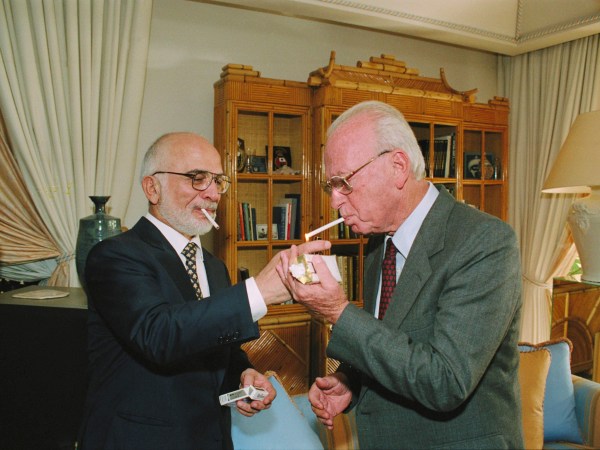
After an email exchange TPM Reader TW flagged to my attention this Times symposium on the Oslo Process. It’s quite good, better than we usually have any business expecting from daily journalism. If you’re too young to remember the Oslo years or aren’t familiar with it, you’ll learn a lot from reading it. It’s quick and conversational, not a challenging read. If you are familiar you’ll probably learn some new nuances and details. The gist and one many of us know is that peace was genuinely sought after by both sides and I think it was really possible. History is full of contingencies, things that might have gone one way or another. Those contingencies build on each other to create what is usually the illusion of inevitability. But there were also basic structural flaws to the process and the standing participants which led to failure.
The core structural flaw was that the process was open-ended. In theory there was a five year deadline, but just what was supposed to happen over that five years or what end state it would arrive at at the end of five years was never clear. That meant that enemies of the process on both sides had plenty of time to destroy it. And they were able to do that because the players in power on the both sides were weak.
Read More






In a few recent posts we’ve discussed the question of whether one state or two states is the most logical or possible resolution to the Israeli-Palestinian conflict. (You can see my argument here.) A few days ago TPM Reader RC sent me this April Foreign Affairs article, Israel’s One-State Reality. It was written by three scholars at GW and another at the University of Maryland. The piece was interesting to me because it illustrates a lot of what the one state argument is really about. As the title suggests, the article is not so much an argument that one state in Israel-Palestine is a solution to anything but an assertion that it is the current reality.
In other words, Israel’s not a country that functions as a democracy while controlling occupied territories whose final status will be decided at some point in the future. It’s a single country in which all Jews have political and civil rights and most Palestinians have limited civil rights and no political rights. Given that the post-67 occupation has persisted for 56 years, this argument has many merits to it. But what is the import of that assertion? In itself it’s simply a definitional claim. That part comes next. It’s an argument for the withdrawal of US support and some escalating framework of sanctions to compel Israel to come up to international standards in which one ethnic group or most of it facing systemic legal discrimination just isn’t okay.
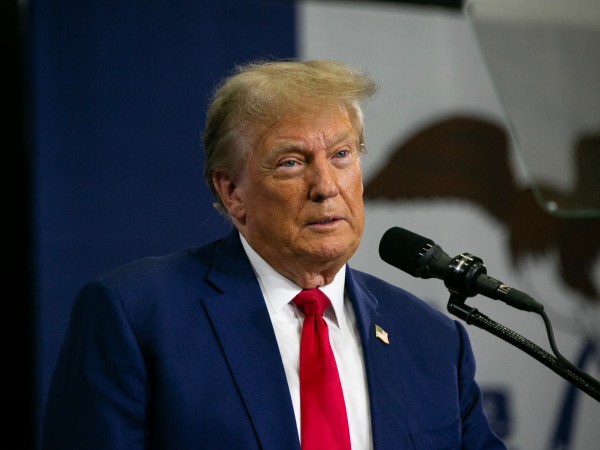





I recognize that this post is somewhat preaching to the choir. But I wanted to discuss Elon Musk’s lawsuit against Media Matters for America. If you haven’t followed this closely a brief recap: Since purchasing Twitter, Musk has been in a battle both to make the platform a free-fire zone for racists, Nazis and other violent and bad actors and keep advertisers, who don’t want to be associated with those people, on the platform. He has made the matter more coherent by, incrementally over the last year, himself becoming the most prominent of those racists and Nazis. This is not hyperbole. He now routinely promotes and explicitly agrees with the most ghastly and dangerous forms of antisemitism and racism.
The pattern is consistent and clear: 1) Musk either promotes or parrots racist or anti-semitic speech. 2) Activist groups catalogue the prevalence of such speech on the platform and in some cases records advertisements appearing immediately adjacent to those posts and speech. 3) Advertisers get upset and pull their ads. 4) Elon Musk gets upset and sues (or threatens to sue) the activist group. It has the fixed pattern and regularity of cellular respiration, only with money and bad people.