The Latest
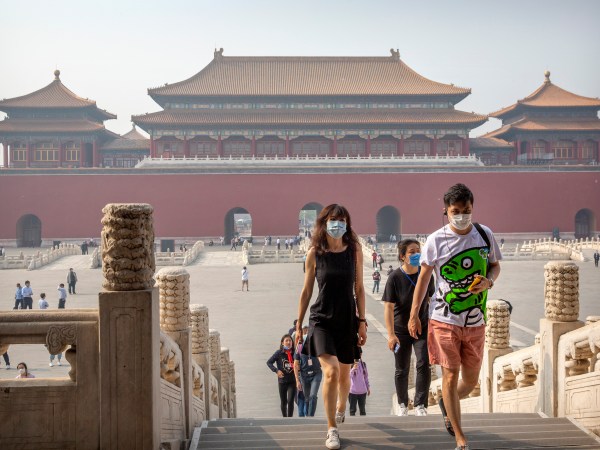
Visitors wearing face masks to protect against the new coronavirus walk through the Forbidden City in Beijing, Friday, May 1, 2020. The Forbidden City reopened beginning on Friday, China’s May Day holiday, to limited visitors after being closed to the public for more than three months during the coronavirus outbreak. (AP Photo/Mark Schiefelbein) Visitors wearing face masks to protect against the new coronavirus walk through the Forbidden City in Beijing, Friday, May 1, 2020. The Forbidden City reopened beginning on Friday, China’s May Day holiday, to limited visitors after being closed to the public for more than three months during the coronavirus outbreak. (AP Photo/Mark Schiefelbein)
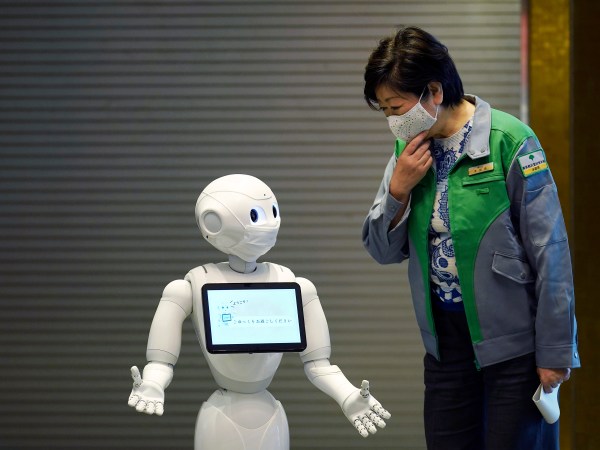
A humanoid robot Pepper with a face mask  greets Tokyo Gov. Yuriko Koike at the lobby of a hotel for the new coronavirus COVID-19 patients with mild symptoms during a media preview in Tokyo Friday, May 1, 2020. Prime Minister Shinzo Abe said Thursday he planned to extend a state of emergency beyond the scheduled end of May 6 because infections are spreading and hospitals are overburdened. (AP Photo/Eugene Hoshiko) A humanoid robot Pepper with a face mask  greets Tokyo Gov. Yuriko Koike at the lobby of a hotel for the new coronavirus COVID-19 patients with mild symptoms during a media preview in Tokyo Friday, May 1, 2020. Prime Minister Shinzo Abe said Thursday he planned to extend a state of emergency beyond the scheduled end of May 6 because infections are spreading and hospitals are overburdened. (AP Photo/Eugene Hoshiko)
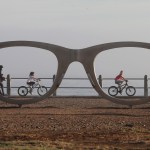
People exercise on the promenade in Cape Town, South Africa, Friday May 1, 2020 as the Governrnent begin a phased easing of its strict lockdown measures in a bid to cut down on the spread coronavirus. For the first time in five weeks, people were permitted to walk outside for exercise between 6 a.m. and 9 a.m. (AP Photo/Nardus Engelbrecht)(AP Photo/Nardus Engelbrecht) People exercise on the promenade in Cape Town, South Africa, Friday May 1, 2020 as the Governrnent begin a phased easing of its strict lockdown measures in a bid to cut down on the spread coronavirus. For the first time in five weeks, people were permitted to walk outside for exercise between 6 a.m. and 9 a.m. (AP Photo/Nardus Engelbrecht)(AP Photo/Nardus Engelbrecht)
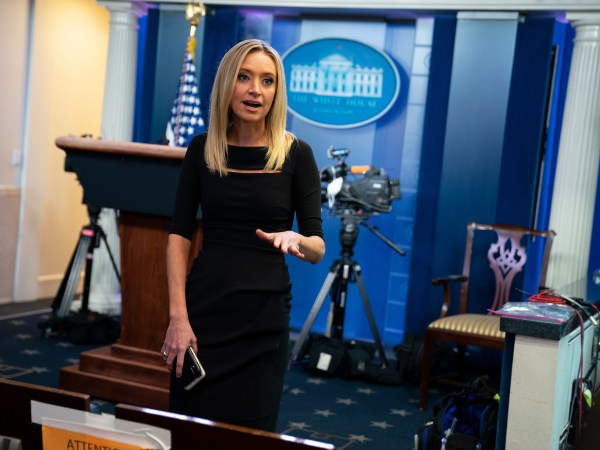
White House press secretary Kayleigh McEnany talks with reporters in the briefing room of the White House, Thursday, April 30, 2020, in Washington. (AP Photo/Evan Vucci) White House press secretary Kayleigh McEnany talks with reporters in the briefing room of the White House, Thursday, April 30, 2020, in Washington. (AP Photo/Evan Vucci)
Brutal Numbers and That Failing IHME Model
05.01.20 | 9:05 am

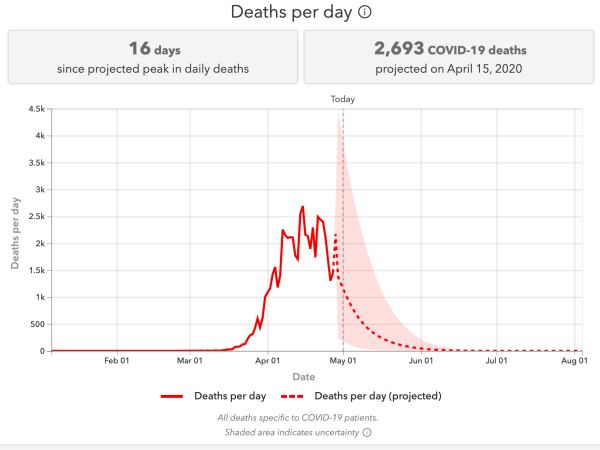
There is a common aphorism in the world of statistics: ‘All models are wrong but some are useful.’ It captures an important point: Models aren’t predictions as a psychic might make so much as attempts to organize data and think critically about uncertainty. The COVID19 model out of the Institute for Health Metrics and Evaluation at the University of Washington has become something of a canonical model for the COVID19 epidemic in the United States, in part because it appears to have been adopted by the White House task force. I wanted to take a moment to look at just how far out of line it has become even with current data.

The models estimates have bounced around a fair amount. It started high, jumped back considerably and has crept back up since. This isn’t a sign of a problem in itself. It is an attempt to model the course of a disease that didn’t exist six months ago. As we proceed it is supplemented with new data.

But consider these numbers. The latest estimate, released on April 29th projected 72,433 cumulative deaths through August 4th – a range from 59,343 to 114,228. But as of this morning the Johns Hopkins University data tracker shows that 63,019 people have already died. And if we look at the data compiled by the COVID Tracking Project 13,252 of those have died (or at least been reported) in the last seven days.

Read More