

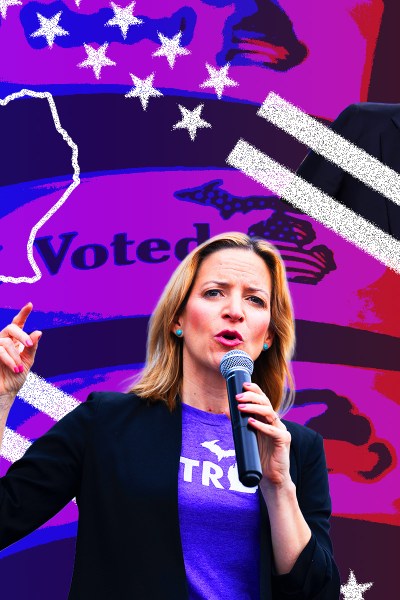

Michigan election officials oversaw primary elections this week and also dealt with the Trump administration sending federal elections monitors to oversee polling sites in three blue municipalities — one of which Trump has repeatedly targeted with his election conspiracy theories.
While the Justice Department, under Democratic and Republican administrations, does regularly send election monitors to observe voting in Michigan and other states, the decision to send DOJ monitors to key polling sites in Michigan was suspect given this DOJ’s focus on investigating Trump’s election conspiracy theories. And, although, as election officials have noted, the presence of federal monitors in Detroit, Lansing, East Lansing, and Hamtramck was uneventful — their presence did still stir up fear and unease, election officials said.
“The fact that the DOJ felt it was necessary in the first place, it served to cast doubt,” Ingham County Clerk Barb Byrum told Votebeat. “Now, tomorrow, they can speak with authority having been here — is that going to lend credit to future claims, even when they’re nonsense?”
It is, of course, no coincidence that the administration sent federal monitors to oversee elections in parts of Michigan where voters typically elect Democrats in an important battleground state that has previously been ground zero for 2020 election conspiracy theories. It’s just one of many ways that the Trump administration has tried to exert control over election administration and sow seeds of doubt in the election system.
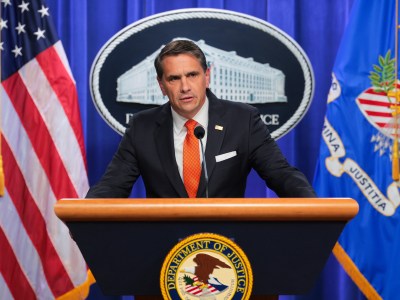
Back in June, as my colleague Josh Kovensky reported, DOJ Voting Section Deputy Chief Timothy Mellett wrote in a letter to Detroit officials that voting monitors that were present in 2024 identified voting concerns related to allegedly long voting lines caused by a lack of provisional ballots. This is something that Detroit City Clerk Janice Winfrey disputes.
Mellet sent similar letters to officials in Lansing and East Lansing as well.
In response to the letter sent to Detroit, Winfrey said that the DOJ had drawn a “baseless conclusion that then becomes the pretext for additional monitoring of Detroit elections,” and that Mellet’s claims “are not a valid pretext for increasing monitoring in Detroit.”
“Michigan law provides not only a variety of ways to vote, but also plenty of opportunities to get involved in the election process,” Michigan’s Democratic Attorney General Dana Nessel wrote in response to the DOJ’s letter last month.
“The law even provides parameters for federal and congressional poll monitors. We encourage everyone to participate and see for themselves how secure and fair our elections are – but make no mistake, my office stands ready to hold accountable those who attempt to unlawfully interfere with or intimidate Michigan election workers,” she added.
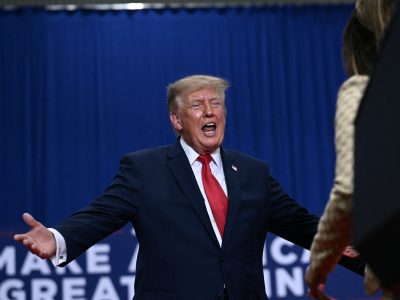
Nevertheless, the monitors were present at several polling places during Tuesday’s primary election and no issues have been reported by the DOJ thus far. But that did not stop President Trump from immediately promoting conspiracy theories about how the vote was counted in Detroit in the wake of Abdul El-Sayed’s victory.
“Wayne County (Detroit) in Michigan is one of the most corrupt voting areas in the United States, if not the World. It is strictly Third World! Miracles happen in Wayne County, including more votes being cast than there are voters, by a lot,” he wrote in a Truth Social post Wednesday.
As always, there’s lots more to unpack this week. Let’s dig in.
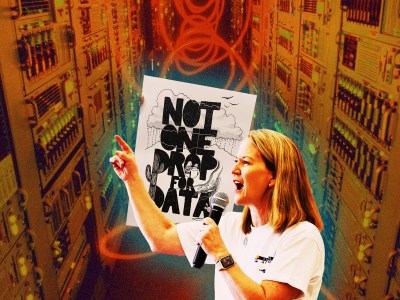
Two More Losses for the DOJ’s Campaign to Seize Voter Data
Yes, the DOJ has been handed two more losses in its failing campaign to seize sensitive voter data from the states. Last week, the DOJ earned its 19th loss to date (with zero wins) after a federal judge dismissed a case against Illinois with prejudice. Days later, it was handed its 20th loss after a federal judge similarly dismissed a case against Colorado.
Like the many other judges in the cases before him have concluded, U.S. District Judge Colleen Lawless ruled that the federal government is simply not entitled to the state’s sensitive voter data, which includes Social Security and driver’s license numbers.
For many many months now, the DOJ has been demanding that at least 44 states and Washington, D.C. hand over sensitive voter roll data. The DOJ has been relying on provisions in the Help America Vote Act (HAVA), the National Voter Registration Act (NVRA) and the Civil Rights Act of 1960 (CRA) to make its (very weak) case.
Lawless pointed out in his ruling that the CRA does not entitle the federal government to this type of information.
“…,the Court finds Title III does not provide the Attorney General with the authority to compel production of the unredacted voter registration list, and the written demand was deficient as a matter of law,” he wrote.
“Dismissal is additionally warranted because the Attorney General’s written demand did not include both a sufficient basis and legitimate purpose for requesting the unredacted voter registration list,” he added.
Then, early this week, U.S. District Judge Philip Brimmer, also ruled that the state’s unredacted voter rolls are not something the federal government is entitled to and also pointed out the administration never provided a “basis” for its request.
Voters Incorrectly Flagged As Potential Noncitizens in Texas
Over 2,000 voters were recently incorrectly flagged as potential noncitizens in Texas. The Secretary of State’s office is now directing election officials to reinstate the voters that it had incorrectly flagged as ineligible, Votebeat reported.
Per Votebeat, the state elections director, Christina Adkins, confirmed the citizenship status of some of the 2,724 registered voters who were flagged as potential being noncitizens. Adkins, however, did not confirm how many of the 2,724 voters flagged provided proof of citizenship to the Texas Department of Public Safety.
Yikes. So, how does such a mistake happen?
The voters were flagged after the state put its voter rolls through the Federal Systematic Alien Verification for Entitlements (SAVE) system, which has recently been used by the Trump administration to purge supposed noncitizens from the voter rolls. The system, however, which was originally developed as an immigration tool to verify immigration status of people applying for certain governmental benefits, is known to be unreliable.
So, it’s no surprise that a mistake like this happened and the whole episode helps bolster the case for why the database that the Department of Homeland Security is trying to force states to run their voter rolls through is not effective.
Votebeat reported that we don’t know exactly how many voter registrations have been canceled in total. Kristin Miles, the Bastrop County elections administrator and president of the Texas Association of County Election Official, made the following statement to Votebeat: “Counties are following appropriate list maintenance procedures under Texas law, and will ensure eligible voters whose registrations were cancelled are reinstated, and that only U.S. citizens remain on the voter rolls.”
In Other Election News:
TPM: Missouri Republicans Count on Foot Dragging to Help Jam Through Gerrymander
NBC News: Democrats put redistricting amendment on Maryland’s midterm ballot
The New York Times: For Trump, the Year Is Always 2020



OT but, since I got here first, I’d just like everyone to know our Newfoundland, Cirdan, was born in Michigan. I like to think he was a reflection of the citizens of that State: a gentle giant who could not be pushed around. (He was a bit slobbery, which could be overlooked due to his overall pleasant temperment.) He lived to be 16 years old; provided us much joy. In his memory I wish Michiganders the best in the coming elections and days following.
You got pictures?