


One of the key arguments for a great power — other than the great power itself wanting to be one — is that they act as a guarantor of stability and the status quo. That is far from the only public or global good. And a great power will ensure that status quo on its own terms and mostly to its own advantage. But if you have any acquaintance with history, you know you can do a lot worse than relative peace and the status quo. Trump’s Iran War has been a bracing illustration of all these realities. Once the great power starts letting things break, those breakages can start multiplying very fast. Eventually you’ll find a new equilibrium, of course. But eventually can take a long time. And again, even a passing acquaintance with history tells us that things can suck without end for extended periods of time.
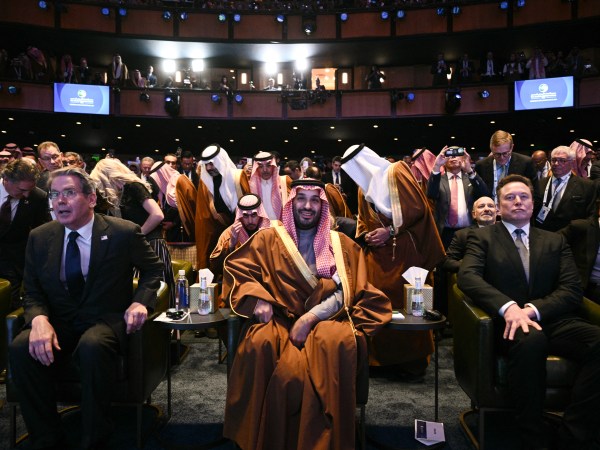
There’s an interesting New York Times piece from over the weekend that illustrates all these things. We know the outline. But it provides new details. As a knock-on effect of the U.S. war with Iran, the ongoing battle between Saudi Arabia and the Houthi rebel government in Yemen has again become hot. In recent weeks, the Houthis have partly cut off Saudi Arabia’s other path to the ocean. Put simply, the Saudis can export oil through the Strait of Hormuz or the Red Sea. The former has been mostly closed for months. Now the Houthis are in de facto or near control of the second. That’s a big crisis for the Saudis. This is part of the larger U.S.-Iran battle because the Houthis are clients of Iran. And Iran’s core strategy has been to create enough pain for the U.S.’s regional allies that they will force the U.S. to end the war. Remember, each time the U.S. attacks Iran, they respond by attacking the various Gulf emirates.
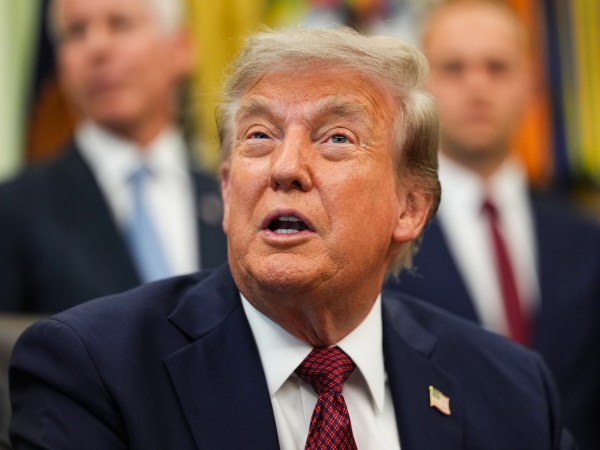
One of our great doctrines here in the Editors’ Blog is that all power is unitary. Lose or gain it in one place, and you lose or gain it in equal measure everywhere else. That’s catching up with Donald Trump. He got into the Iran War as a way to escape the emotionally crushing experience of declining popularity and power at home. But his ebbing power went with him to the Persian Gulf. And now it’s arrived in Israel, too. This was obscured for a while by the fact that the U.S. has almost unimaginable military power and a constitution which, as it has evolved if not how it was originally intended, puts almost no short-term limits on a president’s ability to wage war. But the two were always umbilically connected. It was the pain of bad news at home that spurred Trump to jump so recklessly into his Iran debacle. And it is the same unpopularity that has him so desperate to end high gas prices and inflation before the midterms. They’re all connected.
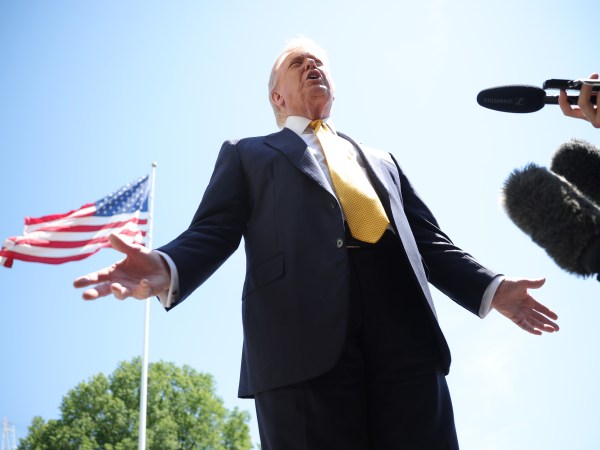
Trump has no poker face. To live in Trump’s era is not only to see his inner life but to be engulfed by it. It’s hard to think of a case in which the deciding player between warring powers has more clearly signaled his desperate desire to get out of a conflict on almost any terms. The Iranians have internet too. And they can see all of this. They have now issued a fresh set of new demands: end sanctions, leave the region, pay reparations, release frozen assets and more — in addition to make the Strait of Hormuz a permanent Iranian toll road. More or less total capitulation.
We are still, bizarrely, having to make sense of the Iran-U.S. “deal” on the basis of two or three different texts which are circulating on an unofficial basis. Meanwhile, the U.S., at least, refuses to release the text of the so-called “memorandum of understanding.” The Iranians are being somewhat more forthcoming, at least through their quasi-official state news agencies. But President Trump being a pathological liar shouldn’t obscure the fact that the Iranian regime is rather less than a reliable narrator. There’s surprisingly little public discussion in the United States about what conceivable good rationale there is for keeping the agreement secret while the White House is at least nominally trying to build public support for it. How can you know whether the deal is a good deal if you don’t know what the deal is? This is not a rhetorical question.
Read More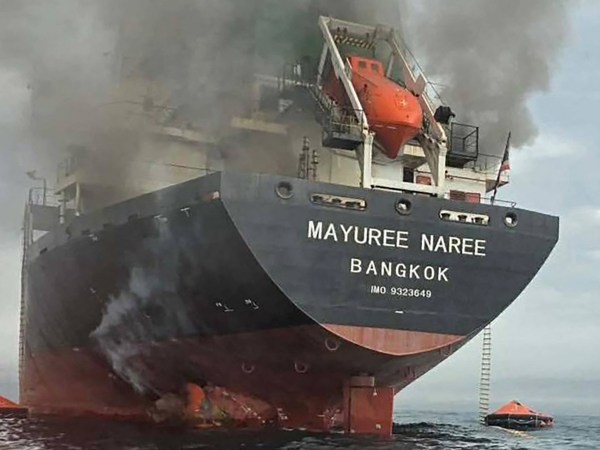
We again have a possible ceasefire agreement between the U.S. and Iran presented by President Trump as a deal to end the war he started back in February. It is a great victory, he claims. What we really have is a replay of a core feature of the spring and summer of 2026, as commentators and countries try to strip away the packaging and relentless razzmatazz from the White House and see what is really included in this deal. How much skepticism will the White House face since observers have been through maybe 1o or 20 cycles of this over the last four months?
And what’s in the deal this time?
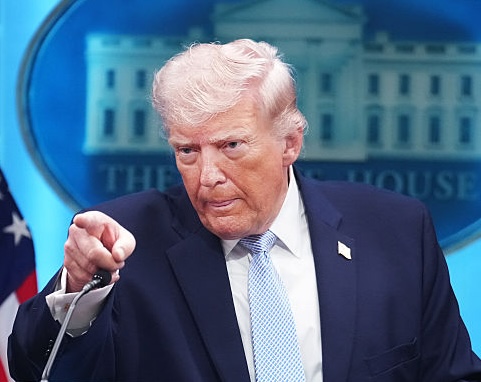
I wanted to share a few more thoughts on the current ceasefire and negotiations between the United States and Iran. As I noted earlier, there’s something so rich about sending JD Vance to lead the negotiations since the vice president has bent over backwards to signal to everyone who will listen (or write stories) that he was absolutely, positively against the war in the first place. President Trump has sent Vance to conduct and really own negotiations that almost certainly wouldn’t go well for the United States.
This cannot be an accident.
I started this post before the news broke that the first attempt at negotiations had broken down or, at least for now, had failed. That news just tightened the box into which Trump placed Vance. If the war resumes, Vance owns that continuation because he walked away from the negotiating table. It’s almost as though he gave the original order. If the negotiations fail, that’s on Vance too.
So where are we now?
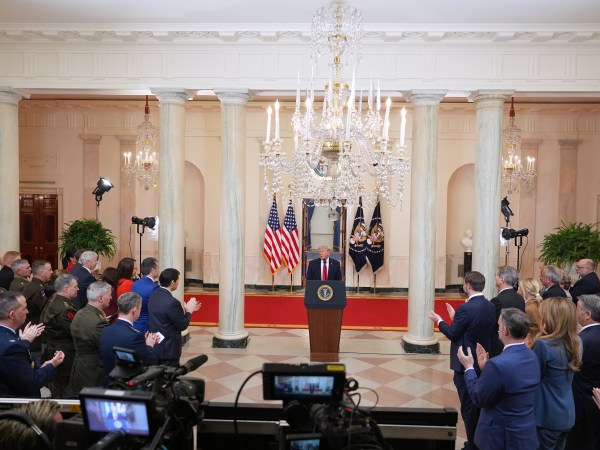
I want to reiterate all the points I made about Trump’s speech last night. Just for the sake of his own political standing, the whole idea was a mistake. It wasn’t a good speech. It wasn’t delivered well. And it didn’t either make favorable news or actually address the issues that have the public or energy markets upset. I didn’t realize as I was watching the speech that his vague “two to three weeks” prediction of when the war will end was really just a restatement of what we might call the Trumpian Constant, the prescribed duration after Trump will, purportedly, always have gotten things worked out and awesome. The time before the Obamacare replacement plan is released, when infrastructure week will finally arrive. I mean, two weeks is genuinely a cliche with Trump or, in more modern parlance, a meme. Trump just tacked on another week. As you might have seen there are lots of charts floating around showing how the price of oil and oil futures spiked pretty dramatically during his speech.
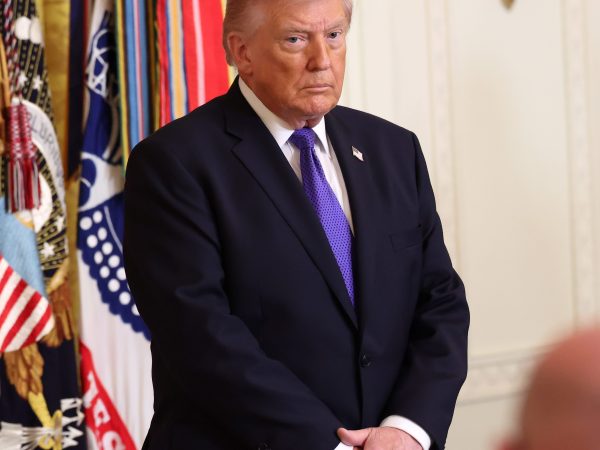
This post follows up on the previous two posts about President Trump’s weak hand in trying to end his Iran War with something short of a humiliating climb-down from his demands for “regime change” and “unconditional surrender.” Trump’s claim yesterday of “very, very strong talks” with Tehran turn out, predictably, to be third-party talks aimed at coaxing Tehran into talking at all. As Reuters reports in this new (paywalled) story, Iran is actually dramatically upping its demands since the start of the war. Those include guarantees of no future attacks, reparations for war damage and formal control of the Strait of Hormuz.
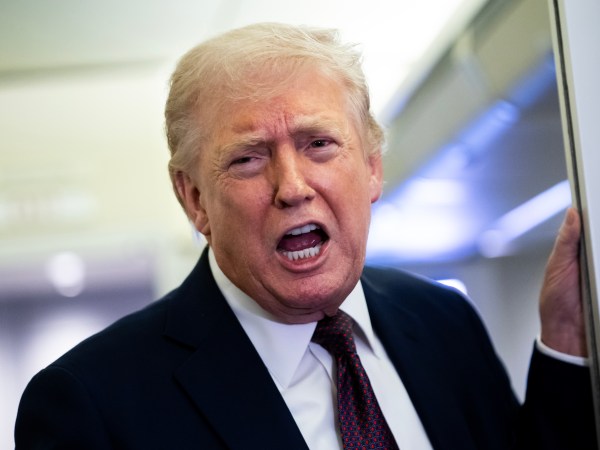

Beyond the bluster and carnage let’s look at the current situation in the war between the U.S. and Israel and Iran. I wrote most of this post before the overnight news that Trump is essentially suing for peace. But all of it still applies. And it comes down to one remarkable dynamic.
Despite the U.S. dominating the skies and almost every other combat domain, Iran has seized and holds the initiative in the war itself, forcing the U.S. to react to it and, in Trump’s hands, do so erratically and helplessly. Iran has the strategic initiative, despite constant and incredibly damaging attacks by the United States and Israel. Indeed, getting Iran to stop its primary retaliatory measure — throttling the Strait of Hormuz — now appears to be the main U.S. war aim. In other words, the main goal of the U.S. now is to get Iran to cease its retaliation for the U.S. starting the war in the first place.
The U.S. was already trying to get Iran to the bargaining table, according to this report last night from Axios. The fact that the U.S. is, reportedly, considering how to “package” cash payments to Iran (i.e. release frozen assets) is a testament to just how far we are from “unconditional surrender.” Meanwhile, this morning’s news confirms that the U.S. is getting talks started, or at least hoping to do so. Of course the simplest way to get Iran to release the strait is to stop the war. But the U.S. can’t do that, at least not openly, since that would amount to a massive and humiliating defeat.
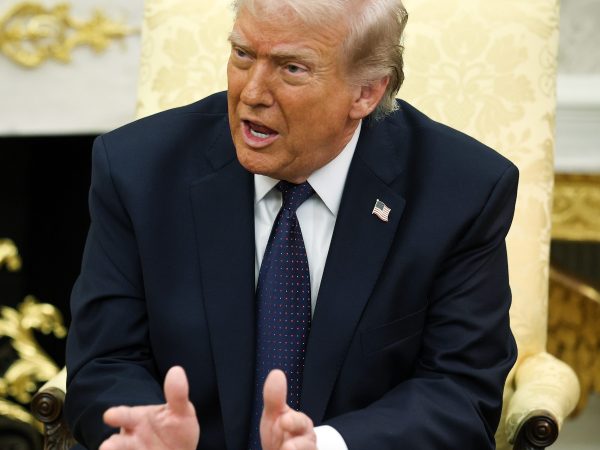
Donald Trump’s Iran war is playing out like a Defense Department war game in which a neophyte is schooled in the stodgy and risk-averse reasons why a couple of generations of presidents and joint chiefs of staff have resisted demands to overthrow Iran’s clerical regime by force. Well, yes, we do have a super, super powerful military, the schoolers might say, and Iran is still using rusted-out jets we sold the Shah half a century ago, but here’s the thing …. and you go from there.