


TPM Reader TB dropped me a note this afternoon about today’s second post. He liked it. Then he wrote this: “You’ve pretty much conclusively won the argument on SCOTUS reform, starting with immediate unilateral expansion. You’ve written comparatively much less about the filibuster and I’m among those unconvinced that just nuking it is the best way forward or that that’s a win as a platform plank. Not passionately against it, just not clear on how concretely that plays out as a long-term win.”
I’ve written pretty extensively about abolishing the filibuster. But I haven’t done so in quite some time. So I welcome the opportunity to do so again.
I’d put the matter in three related arguments: 1) It’s bad on the merits and defies if not violates the Constitution. 2) It hurts Democrats disproportionately. 3) The existence of the modern filibuster is a major driver of the loss of confidence in public institutions.
Read More





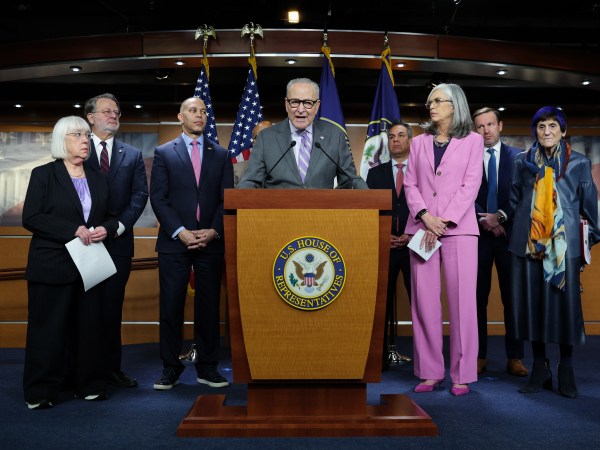





Kate and Josh discuss Trump’s lust for an eternal presidency, the redistricting wars and Karine Jean-Pierre’s disastrous book tour.
Read More




On Monday I saw a bunch of people on Bluesky mentioning and praising this essay by Andrea Pitzer. It’s quite good. I recommend reading it. It’s about the recent podcast discussion between Ezra Klein and Ta-Nehisi Coates. And that conversation turns a lot on the much-derided column Klein wrote about Charlie Kirk and how “Kirk was practicing politics in exactly the right way.”
Regular readers know that I have a number of enduring disagreements with Klein. They’re actually more and less than disagreements. They’re more like dispositional disagreements. Pitzer says up front that a lot of people are dumping on Klein now and she’s not trying to do that or at least not add to that. (And I second that for what I write below.) What she sets out to do is explain why she thinks Klein is “lost” in the present moment (a point Klein actually agrees with) and, secondarily, why Coates, whether you agree with him specifically, is not. Again, it’s worth reading Pitzer in her own lucid words rather than just my synopsis. But I would summarize it thus: Pitzer says that Klein has something called “bright-kid syndrome,” by which she means the idea that a smart and hyper-educated young(ish) person like Klein can and should come up with a prescription or fix to the ills he sees in front of him. It’s not quite like the “one weird trick” of memeland. But it’s kind of like that, inasmuch as it rests on the assumption that the intractable and overwhelming can actually be solved if you think about it hard enough, if you have enough cleverness and ingenuity.
Read More