


Over the weekend I noticed an example of one of the most significant features of the last decade-plus in American politics, though it’s one that still remains too little remarked upon. Lauren Egan writes a newsletter covering the Democratic Party for The Bulwark. Sunday night’s edition was about pundit and political analyst Stuart Rothenberg, “He Was a Legendary Independent Pundit. Then Trump Arrived.” Basically, How did Stuart Rothenberg come down with, as MAGA puts it, Trump Derangement Syndrome? Toward the end of the piece, Egan gets at what I think is the underlying issue here and some of the commonality I’m about to note.
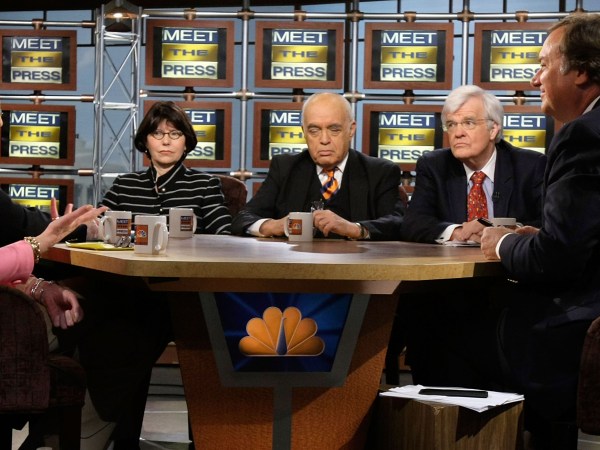
Let’s start this story in the late ’80s and early ’90s. At the time, there were a handful of men — pretty much all men, as I recall — who played a very specific role in the political-journalistic ecosystem. They were rigorously, perhaps obsessively, non-partisan and were go-to people on basic questions of politics. They’d appear on shows, be on call for quotes for journalists at the big papers. Rothenberg and Charlie Cook played that role in the electoral analysis and predictions space. Larry Sabato also occupied that space, though he also played in the political analysis one. In the latter space were Norm Ornstein (AEI) and Thomas Mann (Brookings). I think they were on PBS Newshour for a long time as a pair. Their analysis was on the mechanics of governing, less the explicitly political stuff and generally not electoral stuff.
Yesterday, we talked about the global Authoritarian Movement or Authoritarian International (with the convenient acronym “AI”). Today, I wanted to talk about something slightly more specific. It’s part of the same phenomenon, perhaps a subset of it, but it’s distinct.
Back during Trump’s first term, people in the anti-Trump world became intensely, if superficially, engaged with the inner-workings of Russia under Vladimir Putin, particularly the aggressive use of influence and disruption operations in competitor states, as well as the use of “kompromat” to maintain control over Russian oligarchs and key people — allies and enemies — abroad. One of the features of that world is that it’s really not extortion. It can be an oddly stabilizing system because everyone kind of has something on everyone else. In any case, this became a big part of the Trump opposition world during Trump’s first term. What did Putin have on Trump? What did he want? When did it start?