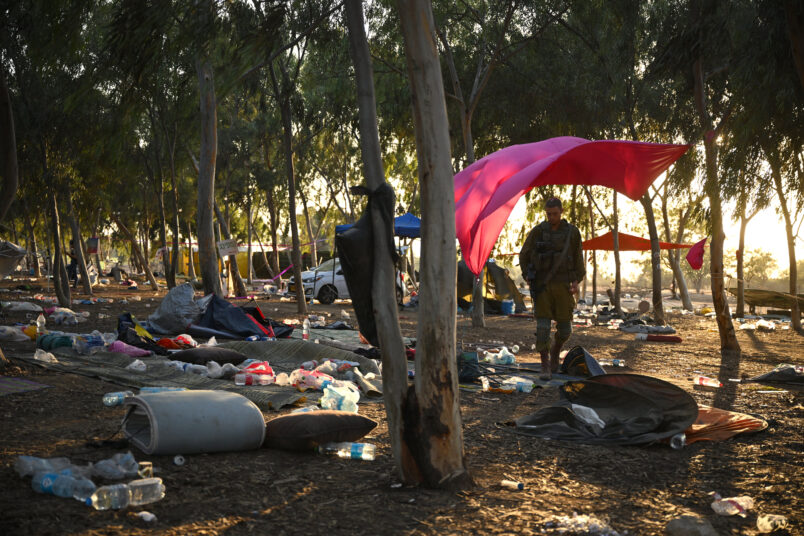
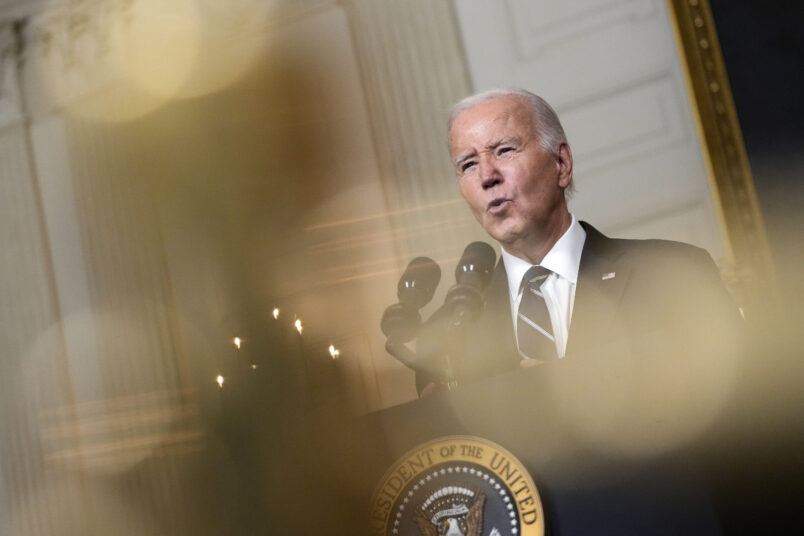
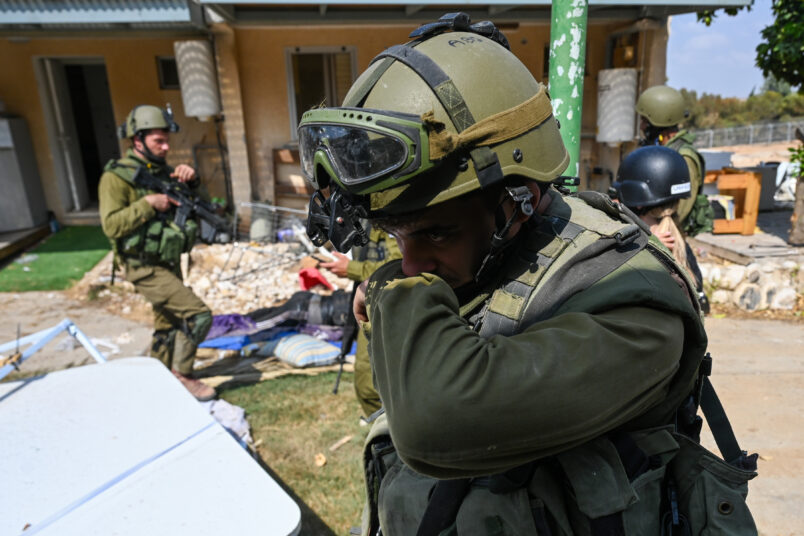
You can take our Rio Grande buoys from our cold, dead hands, Texas Gov. Greg Abbott (R) told the Biden administration in a Monday letter.
Continue reading “Abbott: We Need Rio Grande Buoys To Protect From Invasion”Dead Bounce Ron and the High Roller / Private Jet Doom Loop
As we continue to watch the ignominious collapse of Ron DeSantis’s campaign (predicted many months ago by yours truly but not like I’m focusing on that or anything), there’s a curious bit of backstory I’m reminded of. But before we get to that I wanted to flag this weekend New York Times article. It’s so passively devastating I think DeSantis’s estate might have a plausible wrongful death claim against the authors.
Most of the attention to this article has focused on a scooplet about that infamous gay/trans-bashing video. The story was that it was put together by some unknown fan in the DeSantis-o-sphere. The campaign simply picked it up and amplified it. The Times reports that in fact it was produced by a campaign staffer who then gave it to a Ron fan site to release so that the campaign could then pick it up from the fan. In other words, the campaign laundered it out for some plausible deniability.
My takeaway from the piece was different: The campaign appears to be trapped in a sort of people-hating, private-jet-taking death loop. We learn from the article that Ron and wife Casey really, really like flying on private jets, which of course cost a ton of money. I confess that I’m not a huge fan of flying. But if I were, a private jet would probably be pretty cool. But it’s also not hard to see their extreme attachment to private jets as part of or at least a symbol of not liking being around regular people. Maybe not liking being around anybody at all. Some people just want the privacy to unwind with a handful of pudding.
Continue reading “Dead Bounce Ron and the High Roller / Private Jet Doom Loop”The Great Irony Of The Rush To Try The MAL Case Before Election Day
A lot of things happened. Here are some of the things. This is TPM’s Morning Memo. Sign up for the email version.
Damned Either Way
One aspect of the Mar-a-Lago case that hasn’t gotten much attention lately but deserves mentioning: The accommodations and multiple chances over many months for Trump to surrender the documents effectively narrowed the window for a prosecution and created the circumstances we’re in now.
I don’t think that was avoidable, but I also don’t think the government should be punished on both ends. Let me explain.
The government bent over backwards throughout 2021 and deep into 2022 to accommodate Trump and secure the missing classified documents. That all took time. The August 2022 search of Mar-a-Lago came almost 19 months after the end of Trump’s presidency.
I know you’re thinking: For chrissakes, why continue to accommodate Trump?!?! I think that was the right thing to do on the merits, but also practically. If the government hadn’t been deferential and accommodating, they risked getting beat up by judges along the way. It could have been hard to secure search warrants and possibly even subpoenas if the government hadn’t given Trump enough time to demonstrate his bad faith and unfair dealing over the classified documents.
But the effect is one that U.S. District Judge Aileen Cannon and judges on appeal should keep in mind. By doing the proper thing and giving Trump plenty of time to comply with the demand to return documents, the government is now in the position of having to deal with external consequences like: (i) Trump declaring his candidacy for president in 2024 before the government indicted him; (ii) Trump more effectively making the bogus claim that the government is interfering in the election; (iii) the Bragg prosecution in NYC beating the MAL case to the punch and creating new scheduling challenges; and (iv) narrowing the very tight window to bring the MAL case to trial before the 2024 election.
The government, unlike the defense, has to serve multiple masters: its own institutional imperatives, its own desire to win, the defendant’s rights, and the public interest. That makes things more complicated for prosecutors, as they should be. But it also means that prosecutors should be judged on their conduct in total, which in this case means giving them credit for the accommodations they made on the front end and not punishing them for it.
Aileen Cannon Is Gonna Be A Wild Card
The new trial schedule for the Mar-a-Lago prosecution of Trump is not on its face insane. I was hoping for a March or April trial date so that if it gets delayed again (which seems inevitable) there would be plenty of cushion to re-schedule it over the summer and still get it done before Election Day. The May trial date she landed on, though, still provides a little such cushion. So it’s not alarming.
Two things in her pre-trial schedule do jump out:
- Giving Trump a month to argue with prosecutors over a protective order over the classified information in the case. The law requires entry of such an order (i.e., it’s not optional), and it shouldn’t take that long for the parties to confer. It feels like she’s rewarding Trump for failing to confer with prosecutors in the first place. But it’s not the end of the world.
- On the back end of her schedule, there’s a tight crunch between when she will rule on the handling of classified information at trial and the start of the trial itself. It sets up a situation where any appeals of her ruling will likely delay trial. This is fixable, though, in future schedule adjustments. So again not the end of the world.
All of these little delays and accommodations add up, and the truth is if Cannon keeps making little concessions here and there, none of which on their own give grounds for appeal or provoke public outrage, then she can effectively delay the trial past election in a way that won’t be challengeable – and won’t even provoke much outcry if it’s too late.
The Meadows Texts Keep On Giving
The WaPo highlights a Mark Meadows text that the Jan. 6 committee had access to:
In a text message that has been scrutinized by federal prosecutors, Meadows wrote to a White House lawyer that his son, Atlanta-area attorney Blake Meadows, had been probing possible fraud and had found only a handful of possible votes cast in dead voters’ names, far short of what Trump was alleging. The lawyer teasingly responded that perhaps Meadows’s son could locate the thousands of votes Trump would need to win the election. The text was described by multiple people familiar with the exchange.
Jack Smith Talks To Brian Kemp
The Georgia governor confirmed he’s spoken with Special Counsel Jack Smith’s team as part of its Jan. 6 probe.
It Takes A Village
NYT: DOJ Pours Resources Into Scrutinizing Trump
Put Empower Oversight On Your Radar
The NYT looks into the group that is serving as a pipeline for supposed whistleblowers that Republicans are using to fuel their bogus investigations of Biden.
Put Them On The Spot
Even though they know it won’t pass this Congress, Senate Democrats are eager to get Republicans on the record voting against Supreme Court ethics reform.
Alabama On Collision Course With SCOTUS
GOP lawmakers in Alabama have jammed through another congressional map with a single majority Black district in defiance of the recent Suprme Court ruling.
In Memoriam
On Tueday, President Biden is expected to establish a national monument to Emmett Till and his mother, consisting of three sites in Illinois and Mississippi.
A Mixed Bag
Princeton historian Kevin Kruse on Florida’s new curriculum standards on African American history.
Passing The Buck
The Twitter X Files
Elon Musk attempted to rebrand Twitter as “X.”

It’s Hard Being Mike Pence
Mike Pence’s only chance of winning the GOP nomination in 2024 is if Trump is somehow knocked out of the race. Pence is positioning himself as the heir apparent were some misfortune to befall Trump. He’s Trump without the baggage. Trump with honor, perhaps. But it requires Pence to thread an elephant through the eye of a needle, which is awkward and ends up looking like this:
Dana Bash to Pence after he claims he's not worried about Trump's rhetoric: "That's pretty remarkable that you're not concerned about it given the fact that they wanted to hang you on January 6." pic.twitter.com/PTuI664FjP
— Aaron Rupar (@atrupar) July 23, 2023
Like Morning Memo? Let us know!
When Greenland Was Green: Ancient Soil From Beneath A Mile Of Ice Offers Warnings For The Future
This article is part of TPM Cafe, TPM’s home for opinion and news analysis. It was originally published at The Conversation.
About 400,000 years ago, large parts of Greenland were ice-free. Scrubby tundra basked in the Sun’s rays on the island’s northwest highlands. Evidence suggests that a forest of spruce trees, buzzing with insects, covered the southern part of Greenland. Global sea level was much higher then, between 20 and 40 feet above today’s levels. Around the world, land that today is home to hundreds of millions of people was under water.
Scientists have known for awhile that the Greenland ice sheet had mostly disappeared at some point in the past million years, but not precisely when.
In a new study in the journal Science, we determined the date, using frozen soil extracted during the Cold War from beneath a nearly mile-thick section of the Greenland ice sheet.
The timing — about 416,000 years ago, with largely ice-free conditions lasting for as much as 14,000 years — is important. At that time, Earth and its early humans were going through one of the longest interglacial periods since ice sheets first covered the high latitudes 2.5 million years ago.
The length, magnitude and effects of that natural warming can help us understand the Earth that modern humans are now creating for the future.
A world preserved under the ice
In July 1966, American scientists and U.S. Army engineers completed a six-year effort to drill through the Greenland ice sheet. The drilling took place at Camp Century, one of the military’s most unusual bases — it was nuclear powered and made up of a series of tunnels dug into the Greenland ice sheet.
The drill site in northwest Greenland was 138 miles from the coast and underlain by 4,560 feet of ice. Once they reached the bottom of the ice, the team kept drilling 12 more feet into the frozen, rocky soil below.

In 1969, geophysicist Willi Dansgaard’s analysis of the ice core from Camp Century revealed for the first time the details of how Earth’s climate had changed dramatically over the last 125,000 years. Extended cold glacial periods when the ice expanded quickly gave way to warm interglacial periods when the ice melted and sea level rose, flooding coastal areas around the world.
For nearly 30 years, scientists paid little attention to the 12 feet of frozen soil from Camp Century. One study analyzed the pebbles to understand the bedrock beneath the ice sheet. Another suggested intriguingly that the frozen soil preserved evidence of a time warmer than today. But with no way to date the material, few people paid attention to these studies. By the 1990s, the frozen soil core had vanished.
Several years ago, our Danish colleagues found the lost soil buried deep in a Copenhagen freezer, and we formed an international team to analyze this unique frozen climate archive.
In the uppermost sample, we found perfectly preserved fossil plants — proof positive that the land far below Camp Century had been ice-free some time in the past — but when?

Dating ancient rock, twigs and dirt
Using samples cut from the center of the sediment core and prepared and analyzed in the dark so that the material retained an accurate memory of its last exposure to sunlight, we now know that the ice sheet covering northwest Greenland — nearly a mile thick today — vanished during the extended natural warm period known to climate scientists as MIS 11, between 424,000 and 374,000 years ago.

To determine more precisely when the ice sheet melted away, one of us, Tammy Rittenour, used a technique known as luminescence dating.
Over time, minerals accumulate energy as radioactive elements like uranium, thorium, and potassium decay and release radiation. The longer the sediment is buried, the more radiation accumulates as trapped electrons.
In the lab, specialized instruments measure tiny bits of energy, released as light from those minerals. That signal can be used to calculate how long the grains were buried, since the last exposure to sunlight would have released the trapped energy. https://www.youtube.com/embed/TpZVa7O863A?wmode=transparent&start=0 How optically stimulated luminescence works.
Paul Bierman’s laboratory at the University of Vermont dated the sample’s last time near the surface in a different way, using rare radioactive isotopes of aluminum and beryllium.
These isotopes form when cosmic rays, originating far from our solar system, slam into the rocks on Earth. Each isotope has a different half-life, meaning it decays at a different rate when buried.
By measuring both isotopes in the same sample, glacial geologist Drew Christ was able to determine that melting ice had exposed the sediment at the land surface for less than 14,000 years.
Ice sheet models run by Benjamin Keisling, now incorporating our new knowledge that Camp Century was ice-free 416,000 years ago, show that Greenland’s ice sheet must have shrunk significantly then.
At minimum, the edge of the ice retreated tens to hundreds of miles around much of the island during that period. Water from that melting ice raised global sea level at least 5 feet and perhaps as much as 20 feet compared to today.
Warnings for the future
The ancient frozen soil from beneath Greenland’s ice sheet warns of trouble ahead.
During the MIS 11 interglacial, Earth was warm and ice sheets were restricted to the high latitudes, a lot like today. Carbon dioxide levels in the atmosphere remained between 265 and 280 parts per million for about 30,000 years. MIS 11 lasted longer than most interglacials because of the impact of the shape of Earth’s orbit around the sun on solar radiation reaching the Arctic. Over these 30 millennia, that level of carbon dioxide triggered enough warming to melt much of the Greenland’s ice.
Today, our atmosphere contains 1.5 times more carbon dioxide than it did at MIS 11, around 420 parts per million, a concentration that has risen each year. Carbon dioxide traps heat, warming the planet. Too much of it in the atmosphere raises the global temperature, as the world is seeing now.
Over the past decade, as greenhouse gas emissions continued to rise, humans experienced the eight warmest years on record. July 2023 saw the hottest week on record, based on preliminary data. Such heat melts ice sheets, and the loss of ice further warms the planet as dark rock soaks up sunlight that bright white ice and snow once reflected.

Even if everyone stopped burning fossil fuels tomorrow, carbon dioxide levels in the atmosphere would remain elevated for thousands to tens of thousands of years. That’s because it takes a long time for carbon dioxide to move into soils, plants, the ocean and rocks. We are creating conditions conducive to a very long period of warmth, just like MIS 11.
Unless people dramatically lower the concentration of carbon dioxide in the atmosphere, evidence we found of Greenland’s past suggests a largely ice-free future for the island.
Everything we can do to reduce carbon emissions and sequester carbon that is already in the atmosphere will increase the chances that more of Greenland’s ice survives.
The alternative is a world that could look a lot like MIS 11 — or even more extreme: a warm Earth, shrinking ice sheets, rising sea level, and waves rolling over Miami, Mumbai, India and Venice, Italy.
This article is republished from The Conversation under a Creative Commons license. Read the original article.
Republicans Keep Making Every Single Fight About Abortion
To hear them tell it, House Republicans are solely focused on fiscal conservatism, on undercutting the appropriations levels agreed to in the Kevin McCarthy-Joe Biden debt ceiling law so they can “rein in federal spending.”
That’s what they’d like to be fighting about. But their actions, the riders they’ve larded up these bills with, reveal a different priority: an obsession with fighting battles in the culture war, a fixation on extinguishing any semblance of abortion access in particular, no matter the repeatedly demonstrated political radioactivity of the issue post-Dobbs.
Continue reading “Republicans Keep Making Every Single Fight About Abortion”Listen To This: Indictment the Third
A new episode of The Josh Marshall Podcast is live! This week, Josh and Kate discuss the potential, looming Donald Trump indictment in Jack Smith’s January 6 case and House Republicans’ torpedoing of the government funding process.
You can listen to the new episode of The Josh Marshall Podcast here.
Trial Dates, Accountability and the 2024 Ballot
As you can see, Trump Judge (in every sense) Aileen Cannon has scheduled ex-President Trump’s documents case trial for May 2024. This wasn’t as soon as prosecutors wanted. But Cannon rejected Trump’s request for an indefinite delay until after the 2024 election. I wanted to share some thoughts on what this all means for the rule of law generally as well as for the 2024 election.
I was corresponding this morning with a former federal prosecutor who sees this decision as a significant win for Trump on this reasoning: We assume that in the coming days or weeks federal prosecutors will indict Trump for felonies tied to January 6th. Now we have two federal trials in addition to the state trial in New York and a likely one in Georgia. By scheduling the trial in May, Cannon has left very little time to schedule a January 6th trial prior to the May/documents trial. A federal judge in D.C. would be quite unlikely to schedule the two federal trials at the same time. That leaves it highly likely that the January 6th trial gets scheduled after the May 2024 documents trial.
Continue reading “Trial Dates, Accountability and the 2024 Ballot”One Georgia County Perfectly Demonstrates The Republican Party’s Dramatic About-Face On Mail-In Voting
Lumpkin County is a bit of Northern Georgia that includes part of the Chattahoochee National Forest and is perhaps best known as the site of a 19th century gold rush. It’s a Republican stronghold that former President Trump won by nearly 60 points in the 2020 presidential race. The local GOP also backed Trump allies’ chaotic and conspiratorial efforts to overturn his loss in Georgia long after those votes were counted. Last August, over eighteen months after President Biden was inaugurated, the Lumpkin County Republicans spearheaded an effort to encourage other county party’s to donate to a group that was behind conspiracy-fueled and thoroughly discredited efforts to audit and challenge mail-in ballots.
Now, less than a year after leading that push to baselessly question mail-in ballots, the Lumpkin County Republican Party has become one of several GOP organizations engaged in an abrupt about-face embrace of early voting techniques.
As we have noted on TPM, last month, the Republican National Committee launched an initiative to encourage supporters to adopt voting practices that had been demonized by the various “Big Lie” conspiracy theories about Trump’s defeat. Local organizers should encourage “vote by mail or early in-person, and ballot harvest where permitted,” the RNC said. RNC Chairwoman Ronna McDaniel, who worked with the Trump campaign in 2020 to criticize some of these very same techniques and baselessly suggest they were connected to fraud, is now leading this pro-vote-by-mail effort. As the RNC has pitched Republicans on voting early and by mail, it has attempted to walk a delicate tightrope, arguing they are simply trying to beat Democrats at their own game and that using these voting techniques is now totally great thanks to the GOP’s “efforts to Protect Your Vote in 2022.”

The motivation for this shift is clear. Despite Trump’s conspiracy theory mongering, there is no evidence whatsoever of widespread fraud in the 2020 election or issues posed by early or mail-in voting. However, there are indications the right-wing misinformation campaign around voting and Trump’s loss encouraged Trump voters to believe the voting system hopelessly rigged, and suppressed turnout.
But while the incentives of re-embracing early and mail voting are clear, not everyone in the GOP is happy with the encouragement of early voting methods. The new initiative has sparked backlash from conspiracy theorist Mike Lindell, and hasn’t exactly earned full support from Trump.
Major media outlets have begun to join TPM in reporting on the awkwardness, and some of this coverage has noted that the Lumpkin County Republican Party is one of the GOP organizations changing their tune on voting. Both the Washington Post and the Atlanta Journal Constitution published stories earlier this month which noted the Lumpkin County Republican Party had recently launched a “Unite The Right” initiative to “encourage Republicans to vote early and by mail and to help ensure the ballots are counted by tracing and ‘curing’ them.” Of course, “Unite the Right” is the same name as the infamous neo-Nazi rally that led to violence in Charlottesville, Virginia in 2017.
The Lumpkin County Republican Party’s new voting initiative is an especially clear illustration of what a dramatic turnaround this has all been. Last August, the party made a $1,200 donation to a group called VoterGA and urged other county GOP organizations in Georgia to follow their lead. VoterGA was one of the leading organizations pushing false claims about the 2020 election in that state and filing lawsuits aimed at challenging the results. Much of VoterGA’s work has been focused on disputing mail-in ballots, insisting counterfeit ballots were injected into Georgia’s count, and calling for the sort of audits that proliferated after 2020 and that experts have dubbed “politically motivated fiascos.” While many of VoterGA’s claims have been thoroughly debunked, at least one of their lawsuits remains ongoing.
“Lumpkin County wants to lead the way in supporting VoterGA.org and challenges all other GA counties to provide their financial support to this great organization!” the party’s chairwoman, Katherine James, said in a statement announcing the donation.
VoterGA’s wild claims about the election made their way to Fox News and even to Trump himself. The group is led by Garland Favorito, who has also spread conspiracy theories about 9/11 and the JFK assassination.
Favorito praised the Lumpkin County Republican Party in a statement of his own as they made their donation last August.
“We are humbled and honored that the Lumpkin Co. GOP placed their trust in us more than any other organization to support their members,” Favorito said. “We are also deeply grateful that they are challenging other counties to do the same.”
Yet less than a year after following Favorito down his rabbit hole, the Lumpkin County Republican Party has gone from trying to get other local GOPs to challenge mail-in-votes to encouraging voters to cast them. James, Favorito, and the Lumpkin County Republican Party did not respond to requests for comment on this story. According to the Washington Post, after the initial launch, the party’s “Unite The Right” initiative was renamed to “avoid echoing the name” of the Charlottesville neo-Nazi rally. It is now called “United Saves America.”
Cannon Sets May ’24 Trial Date For Trump Docs Case
The Florida judge overseeing President Trump’s Mar-a-Lago classified records trial won’t give the former President what he wants — for now.
Continue reading “Cannon Sets May ’24 Trial Date For Trump Docs Case”How To End Debt Ceiling Brinkmanship For Good
A lot of things happened. Here are some of the things. This is TPM’s Morning Memo. Sign up for the email version.
What Killing The Debt Ceiling Actually Looks Like
I want to use the news that the White House has set up a team to explore ways to kill or work around the debt ceiling as a jumping off point for talking about how to end the GOP’s hostage-taking on this issue. It looks very different from what’s happened over the past decade and is much more robust than the magical solutions people were demanding from the Biden White House just a few weeks ago.
If you really want to end the brinkmanship that the Republican Party has engaged in for more than a decade now, you have to think big and long term. You can’t wait until the country is on the brink of a default to fall back on a platinum coin or the 14th Amendment or whatever other outside-the-box solution you might favor.
There are a few things you have to do first, in reverse chronological order:
- Act Early: To calm the markets and creditors, you have to announce that you’re disregarding the debt limit way in advance. You can’t let the drumbeat of default talk build over time and begin to strain markets and create a crisis atmosphere. You have to pre-empt all of that with a measured, deliberate, transparent, forward-looking strategy that takes the crisis element out of play.
- Create A Mandate: But before you do that, you have to build popular support for a debt-ceiling workaround. I don’t mean getting people fired up about the debt ceiling because that ain’t happening. But you do have to campaign on it, make it a part of your political agenda, and be able to declare that you were elected after having explicitly said what you were going to do. In short, you have to give yourself a mandate.
- Lay The Groundwork: Meanwhile, you need advocacy groups, think tanks, and scholars flooding the zone with legitimate research, compelling arguments, targeted white papers, and convincing op-eds explaining over and over what needs to be done and why, how your workaround won’t tank the markets, why it will better protect the economy than the alternatives, and impressing upon the public the urgency of stopping debt ceiling brinkmanship.
- Work The Courts: Finally, if your workaround is going to face legal challenges – and it almost certainly will – you need to be laying the jurisprudential foundation for it years in advance. You need to figure out your workaround’s legal vulnerabilities. You need to start crafting defenses now, then test them in court. You may need to use cases that are totally unrelated to the debt ceiling to build the legal framework for bolstering your workaround or defending against legal attacks on it.
It’s easy for me to say it now, but in the absence of almost any of the above having been done in advance of this year’s debt ceiling hostage-taking, I was deeply skeptical that the Biden White House would or even could take any of the recommended dramatic steps to upend the GOP’s favored debt-ceiling dynamic, which is to create a crisis and then demand concessions for ending the crisis.
Democrats wasted the decade between the last serious debt-ceiling standoff and this one, when the steps I outline above could and should have been taken to shield themselves from a replay of what Republicans did to Obama. Refusing to negotiate with Republicans simply isn’t enough. You can try to pretend that the debt-ceiling isn’t a pressure point, but it’s already been proven to be. It was proven again this year.
The ultimate goal is to neutralize any crisis atmosphere by not letting it develop in the first place. You don’t have your own Treasury Department issuing countdown warnings. You don’t track the date of “default” like the ball dropping in Times Square on New Year’s Eve. You create all the predictability and provide all the assurances that the markets and creditors need way in advance, from your first day in office. You shift the entire paradigm.
The news that the White House has a team looking at the issue is a small but potentially important step – if it is part of a larger strategy along the lines I’ve outlined here.
Trump Losing His Ever-Loving Mind
As we await a Trump indictment in the Jan. 6 case, you should have on your radar some of the incitement he’s been engaging this week:
Indictment Watch
Just Security: Unpacking the “Surprise” Crime in DOJ’s Target Letter to Trump
Randall Eliason: Here’s what the indictment might look like
David French: Building a Legal Wall Around Donald Trump
Weird Episode In DC Federal Court
Trump judge scolds Special Counsel Jack Smith’s team for causing a delay in unrelated Jan. 6 case.
Federal Judge Blasts Tucker Carlson’s Jan. 6 Propaganda
A Reagan-appointed federal judge in DC rejected the QAnon shaman’s bid to throw out his own guilty plea and took aim at the Tucker Carlson’s Jan. 6 propaganda.
‘Try That In A Small Town’
- Paul Waldman: Jason Aldean cashes in on the right-wing fantasy of violent retribution
- WaPo: The outrage over Jason Aldean’s ‘Try That in a Small Town,’ explained
- The music video, which Country Music Television has pulled from its rotation, was shot in front of a Tennessee courthouse that was the site of a 1920s lynching:
I share the video so you can see the imagery yourself.
Have A Great Weekend With Whichever One You See!

Like Morning Memo? Let us know!