Bob Moses—Visionary, Organizer, Teacher—Risked His Life For Voting Rights

This article is part of TPM Cafe, TPM’s home for opinion and news analysis.

At a time when voting rights are under assault, it is important to remember the legacy of Bob Moses, a brilliant community organizer who died on Saturday at age 86. Moses was a key architect of the civil rights movement’s campaign to enlist Southern Black workers and sharecroppers to register to vote, a campaign that eventually pressured Congress to pass the 1965 Voting Rights Act, a momentous victory which in the decades since the Republican Party has steadily sought to erode.

“Bob Moses was a hero of mine,” tweeted former President Barack Obama. “He inspired generations of young people looking to make a difference.”

Moses attended his first civil rights rally, in Newport News, Virginia in 1960. The fiery Rev. Wyatt Walker had just delivered a rousing speech extolling the virtues of Martin Luther King Jr. as the leader of the civil rights movement. Moses, then 25 years old, made his way to the front of the crowd. As Taylor Branch reports in Parting the Waters, Moses asked Walker, “Why do you keep saying one leader? Don’t you think we need a lot of leaders?”

Moses recalled that after participating in that demonstration, he had a “feeling of release” after a lifetime of accommodating himself to constant racial slights. “My whole reaction through life to such humiliation was to avoid it,” Moses recalled, “keep it down, hold it in, play it cool.”

Moses was soon working for the Student Nonviolent Coordinating Committee (SNCC) in Mississippi, devoting himself to bottom-up leadership, empowering ordinary people, challenging the top-down style practiced by King and others who emerged from the Black church tradition. Moses saw himself as a catalyst, not a leader. Many students and Mississippi residents, inspired by Moses’s example, joined SNCC’s voter registration campaign.

Moses grew up in a Harlem housing project. His father, a post office worker, instilled in his son a belief in the basic dignity of “the common person.” The gifted Moses passed a citywide examination to gain admission to Stuyvesant High School, a prestigious public school in Manhattan. In 1952 he earned a scholarship to Hamilton College in upstate New York, where he was one of three Black students. There he was attracted to the writings of French philosopher Albert Camus, who stressed that individuals should refuse to be victims of circumstance and instead endeavor to act as agents of change. After his junior and senior years, Moses worked at summer camps in Europe and Japan sponsored by the pacifist group American Friends Service Committee.

Moses went to Harvard for graduate school in philosophy. He earned his master’s degree in 1957 but dropped out of the Ph.D. program after his mother died and his father suffered a nervous breakdown. He moved back to New York and found a job teaching math at the Horace Mann School, an elite private institution.

In 1959 he visited veteran civil rights organizer Bayard Rustin, hoping to find an outlet for his idealism. Rustin put Moses to work as a volunteer. While working with Rustin, Moses saw the newspaper stories about the student sit-ins in Greensboro, North Carolina in February 1960. He was impressed by the defiant looks on the faces of the students, who appeared fearless and unflinching. “They were kids my age,” he later said, “and I knew this had something to do with my own life.”

Moses was keen to go to the South, so Rustin introduced him to Ella Baker, who was running the headquarters in Atlanta, Georgia, of the Southern Christian Leadership Conference (SCLC). In 1960 Moses moved to Atlanta, found a room at the YMCA, and reported to the SCLC office. Baker had allowed the SNCC volunteers to use the SCLC office, and Moses found the SNCC students more interesting than the SCLC ministers. Baker taught Moses about organizing, sharing her belief in the power of ordinary Black people to change their lives if they could gain the self-confidence to do so.

Following the sit-ins, some SNCC leaders wanted to continue the direct action protest, including the Freedom Rides. But Baker and others believed that the next stage should be voter registration. To outsiders, this may have seemed a tamer approach, but in fact it was fraught with danger.

Mississippi’s constitution included restrictions on voter registration, measures such as literacy tests and poll taxes. The tests were administered by white voter registrars, who asked would-be Black voters arbitrary and arcane questions, so that even well-educated Blacks were typically refused registration on literacy grounds. Most Blacks did not bother to try to register. In at least a dozen Mississippi counties, not a single Black citizen was registered to vote.

If Blacks, who represented a majority of adults in many Mississippi counties, had voted in large numbers, they would have controlled the schools, the police, the courts, and the other levers of government. Most whites would have done almost anything — inside and outside the law — to make sure that did not happen. Over the next four years, the quiet, philosophical Moses would be shot at, attacked, imprisoned, and beaten as he led the voter registration fight. His calm and courage inspired others to take a stand.

Tom Hayden, who worked with Moses in the South, believed that Moses’ greatest traits were his humility and his ability to listen.

“When people asked him what to do, he asked what they thought,” wrote Hayden in a 2005 essay. “At mass meetings, he usually sat in the back. In group discussions, he mostly spoke last.”

“Some say Bob was more a mystic than an organizer,” Hayden recalled. “If so, he was the most practical mystic I ever met. He was an organizer of organizers who organized people to free themselves of organizers.”

Moses used McComb, Mississippi, a town of 13,000 people near the Louisiana border, as his base, establishing an SNCC office in the Black Masonic Hall. Word soon spread about SNCC’s voter registration classes, and residents of nearby counties began asking for similar workshops.

On August 15, 1961, Moses accompanied three prospective voters to the Amite County Courthouse in Liberty, Mississippi, and stood by as they filled out forms. Driving back to McComb, he was arrested by police on a bogus charge. He was convicted, was given a 90-day suspended sentence, and spent two days in jail. Moses’s calls to the U.S. Justice Department to protest this harassment went unanswered. On August 22, after bringing two other Blacks to the Liberty courthouse, Moses was attacked with a knife handle by Billy Jack Caston, a cousin of the local sheriff, and was wounded badly enough to need nine stitches. Moses refused to back down and continued to the courthouse, covered in blood, where he was promptly arrested and jailed. Moses then did something almost unheard of: he pressed charges against Caston. But an all-white jury acquitted him.

Other SNCC staffers and volunteers faced similar violence in retaliation for their voter registration efforts. Local high school students responded by stepping up their resistance. After participating in SNCC’s workshops on nonviolence, they began sitting in at the Woolworth’s lunch counter, tried to register to vote, marched, and got arrested. In October, after the high school principal refused to readmit several students involved in the protest, more than 100 of them organized a prayer vigil in front of the city hall. As police began arresting the high-schoolers and as white thugs began attacking them, Moses and two other SNCC staffers, Bob Zellner and Charles McDew, tried to protect the students. Police arrested the three SNCC workers and sentence them to four months in jail.

SNCC staff and volunteers found it increasingly difficult to persuade rural Mississippians to register to vote. Blacks in Mississippi knew that their homes could be burned and that they could be shot and killed by white segregationists while local law enforcement officials — some also belonging to the Ku Klux Klan or the White Citizens Councils — sided with the vigilantes. Between 1961 and 1963, 70,000 Mississippi Blacks tried to register. Only 4,700 — 5 percent of the state’s voting-age Blacks —succeeded. In December 1962 Moses told the Voter Education Project, “We are powerless to register people in significant numbers anywhere in the state.”

John F. Kennedy’s administration told SNCC that it liked its voter registration efforts, but when SNCC staffers called the U.S. Justice Department appealing for protection or for prosecution of white vigilantes and local police, who assaulted and intimidated civil rights workers, it was to no avail. FBI agents in Mississippi looked the other way when local cops abused civil rights workers.

During the first half of 1963, it was clear that SNCC’s voter registration campaign had stalled.

With the support of Allard Lowenstein, a professor at North Carolina State University, Moses expanded the program. In 1964, renamed Freedom Summer, Lowenstein and Moses recruited over a thousand volunteers — most of them white college students from prestigious universities — to come to Mississippi.

White Mississippians retaliated with vicious violence. In June 1964 three SNCC volunteers were murdered in Neshoba County, Mississippi, just as hundreds of new recruits were being trained at a college in Ohio. On the last night of training, Moses spoke to the volunteers and urged anyone who might be uncertain to go home. Only a handful did.

Their primary task was organizing the Mississippi Freedom Democratic Party (MFDP). The volunteers mobilized Blacks to participate in “freedom schools” (where they discussed Black history and current issues and learned about the Mississippi Constitution so they could pass the literacy test) and to vote in order to send an integrated delegation to the Democratic Party convention in Atlantic City, New Jersey. The murders and the presence of privileged white college students drew significant media attention to SNCC’s efforts. But President Lyndon B. Johnson, worried about alienating southern whites in the November 1964 presidential election, refused to seat the MFDP delegates instead of the segregated delegation. Johnson offered the MFDP delegation only token seats in the delegation, which the MFDP rejected.

At the end of 1964, Moses resigned from SNCC. He left Mississippi uncertain whether it, or the broader civil rights movement, had made much of a dent in the state’s white political power structure.

It had. SNCC’s effort, along with King’s March from Selma to Montgomery, had pushed Congress to pass the 1965 Voting Rights Act. That year, only 6.7 percent of Mississippi Blacks were registered to vote. But four years later the number had jumped to 66.5 percent. The act, which outlawed literacy tests and other obstacles to voting, was an important tool for civil rights activists to challenge other barriers to Black political participation, such as gerrymandering of city council, state legislature, and congressional districts in order to dilute Black voting strength. By 2000, Mississippi had 897 Black elected officials in local and state offices, plus Congress — the largest number of any state in the country. The number of Black officials in other Southern states also increased dramatically. (Today, Blacks constitute 38% of all voters in Mississippi — the highest of any state in the country — but the state has not had a Black candidate win statewide office since Reconstruction.)

In 1966 Moses moved to Canada to avoid the draft during the Vietnam War. In 1969 he moved to Tanzania, where he taught math. After President Jimmy Carter declared amnesty for draft resisters in 1976, Moses returned to the United States.

He picked up where he had left off at Harvard, completing his Ph.D. Then he joined his organizing work with his math expertise. When he discovered that his daughter’s middle school in Cambridge, Massachusetts, did not offer algebra, he became a volunteer math teacher at her school and began to develop techniques for teaching the subject to low-income students, modeled on SNCC’s freedom schools.

In 1982 he was awarded a MacArthur Fellowship (the MacArthur Genius Award), which he used to establish the Algebra Project. The project focuses on bringing high-quality public education to students who live in poor areas throughout the nation. In 1996, Moses, who viewed math literacy as a civil rights issue, returned to Mississippi to teach math at Lanier High School in Jackson, using its classrooms as a laboratory for developing the project, including mobilizing parents and the Black community to support the students, and training teachers in its techniques. It takes students with low scores on state math tests and preparing them for college level math by the end of high school. Three of Moses’ children joined him as Algebra Project teachers.

By the 1990s, the Algebra Project’s model had reached 10,000 middle school students and 300 teachers a year in 28 cities, but its efforts were partly undermined by President George Bush’s No Child Left Behind program, which emphasized teaching to and preparing students for state tests. With support from the National Science Foundation, however, the Algebra Project rebounded and expanded its work. In 2001 he and Charles Cobb coauthored Radical Equations: Civil Rights From Mississippi to the Algebra Project, in 2001.

Today, teachers at hundred schools around the country use the Algebra Project’s methods, while Moses continued to teach at Lanier High School, as well as at Cornell, Princeton, and NYU, using the same organizing techniques he developed in Mississippi.

In 1999 Moses came to Occidental College in Los Angeles to receive an honorary degree and get faculty and students involved in his Algebra Project. At a packed meeting of about a thousand people, a student asked him, “What do you think we should do to deal with racism in America?”

“What do YOU think we should do?” Moses replied.

Bob Moses “was larger than life and one of the great exemplars of our humanity!” tweeted scholar-activist Cornel West upon hearing about Moses’ death. “Let us never forget him!”

“Bob Moses was a moral visionary,” Heather Booth, a long-time organizer and veteran of Freedom Summer, told me following his death. “He inspired and guided so many of us, based on his belief in local people’s ability to change the world if we organize. Especially now, in the face of a new Jim Crow attack on our freedoms, we need to commit to carry on the struggle. We’ll never turn back.”


Peter Dreier is professor of politics at Occidental College and author of “The 100 Greatest Americans of the 20th Century: A Social Justice Hall of Fame.”
Is Vaxed America Running Out of Patience?

I wanted to share some thoughts and snippets of news following up on the GOP vaccine switcheroo. But first I wanted to share this LA Times article that helped me think more broadly about the issue. Reporter Brittny Mejia went to a pop-up vaccine clinic in LA to talk to people who were finally getting vaccinated after waiting months into their eligibility. The people who turned out at this clinic were mainly Latino immigrants, so not the demographic that has garnered the most attention in the mainstream media discussion. The reasons ranged the gamut: they’d had COVID and assumed continued immunity; they didn’t want to or couldn’t take time from work; they had general apprehensions about a vaccine without a long testing history; they’d heard conspiracy theories women becoming infertile. In some cases, it was perhaps some vague mix of one or more of these and just continuing to put it off – apathy for lack of a better word.

What jumped out to me is that basically none of the couple dozen people who showed up the day Mejia was there had held out for any ideological or political reasons. And in most cases – as their being there to get their shot makes clear – they were ultimately convincible. Many people who have heard stories of alarming side effects can be convinced by actual data or reassurance from people in their community they trust. We can make policy decisions that make it easier on people who don’t feel free to miss a day or more of work.

Continue reading “Is Vaxed America Running Out of Patience?”

House GOPers Want To Punish Cheney And Kinzinger For Defecting Over Jan. 6

A lot of things happened. Here are some of the things.

Payback Time

As the House select committee investigating the insurrection gets set to hold its first hearing Tuesday, House Republicans are more closely focused on punishing their two colleagues who have agreed to serve on the committee.

  • As foreshadowed for a few days, Nancy Pelosi appointed Rep. Adam Kinzinger (R-IL) to the committee, joining Liz Cheney as the only Republicans on the now nine-member committee.
  •  One unnamed GOP member told CNN: “Supporting Pelosi’s unprecedented move to reject McCarthy’s picks was a bridge too far.”
  • A move afoot among Freedom Caucus members to get Cheney and Kinzinger booted from their committee assignments.
  • House GOP leadership may not have the appetite for a fight over the wayward GOPers: Pelosi could ultimately restore their committee assignments herself.
  • GOP Frosh With A Big About-Face: Rep. Nancy Mace (R-SC) has gone from outspoken opponent of the Big Lie to quietly falling in line with the rest of the House GOP conference.
  • Weak. Outgoing Sen. Pat Toomey (R-PA), who is not a proponent of the Big Lie, is playing along with the politicization of the House select committee’s work:

Trump Still Pumping Up The Big Lie

The former president rallied supporters in Arizona over the weekend:

  • Touting the bogus Arizona election “audit,” Trump bizarrely predicted that Texas would embrace the audit movement. (Trump won Texas.)
  • Vengeance was in the air, with speakers railing against Republicans insufficiently loyal to Trump: “You know the ones, the backstabbers,” GOP gubernatorial candidate Kari Lake cried.
  •  A state GOP lawmaker who had opposed GOP-led changes to state’s election laws was booed off the stage.

Fringe Congressman Blames His COVID On China

Rep. Clay Higgins (R-LA), of Crimestoppers fame, announced on Facebook Sunday that he, his wife and his son have COVID:

  • Propagating conspiracy theories, Higgins called it the “CCP biological attack weaponized virus.”
  • Higgins said it was the second time he has had the virus, claiming he and his family first had it in January 2020 “before the world really knew what it was.”
  • It’s not clear if Higgins has been vaccinated or if his earlier illness was confirmed to be COVID via testing.
  • Anthony Fauci, speaking generally about the COVID resurgence: “We’re going in the wrong direction.”

Must Read

“The Most Influential Spreader of Coronavirus Misinformation Online”

Tom Barrack In Court Today

After winning his release with a historically large $250 million bond Friday in California, former Trump confidant is expected to appear in federal court Monday in Brooklyn for his arraignment on foreign lobbying and obstruction of justice charges.

Florida Sheriff Running An … Intel Unit?

The Pasco County sheriff is sending around a four-page letter telling select citizens that they will be under enhanced police scrutiny.

  • The revelation comes from the Tampa Bay Times, which had previously reported on the sheriff’s intel operation:

First the Sheriff’s Office generates lists of people it considers likely to break the law, based on arrest histories, unspecified intelligence and arbitrary decisions by police analysts.

Then it sends deputies to find and interrogate anyone whose name appears, often without probable cause, a search warrant or evidence of a specific crime.

  •  Separately, the TBT also revealed a separate program the sheriff runs that “uses schoolchildren’s grades, attendance records and abuse histories to label them potential future criminals.”

‘Worst Human Being Known To Man’

Tucker Carlson confronted on video by random citizen at fly fishing shop in Montana.

LOLOL

A South Korean broadcaster has apologized after totally losing its mind during the Olympic opening ceremonies, pairing hilariously inappropriate images with countries’  teams:

  • Other examples:
    • Romania: Count Dracula
    • Mongolia: Genghis Khan
    • Marshall Islands: former U.S. nuclear test site

Do you like Morning Memo? Let us know!

Portman Gripes Over Pelosi’s Plans On Taking Up Infrastructure Proposals

Sen, Rob Portman (R-OH), who is helping to negotiate the bipartisan infrastructure proposal, on Sunday took aim at House Speaker Nancy Pelosi’s (D-CA) commitment to not bring the bipartisan infrastructure proposal to the floor until the reconciliation package is ready for a vote. Continue reading “Portman Gripes Over Pelosi’s Plans On Taking Up Infrastructure Proposals”

Fauci Warns Country ‘Going In Wrong Direction’ As COVID Rates Rise Among Unvaccinated

White House chief medical adviser Dr. Anthony Fauci on Sunday warned that the U.S. is “going in the wrong direction” with the highly contagious Delta variant spread prompting a surge in COVID-19 cases, especially amongst people who are unvaccinated. Continue reading “Fauci Warns Country ‘Going In Wrong Direction’ As COVID Rates Rise Among Unvaccinated”

Toomey Swipes At Dems As Jan. 6 Committee Gears Up For First Hearing

Days before the House select committee investigating the events of Jan. 6 holds its first hearing, Sen. Pat Toomey (R-PA) on Sunday painted investigations into the deadly Capitol insurrection as a move that works “politically to the advantage of Democrats to try to keep this issue in the forefront.” Continue reading “Toomey Swipes At Dems As Jan. 6 Committee Gears Up For First Hearing”

Pelosi Appoints Kinzinger To Jan. 6 Committee Following GOP Walkout

House Speaker Nancy Pelosi (D-CA) on Sunday announced the appointment of Rep. Adam Kinzinger (R-IL) to the House select committee investigating the events of Jan. 6, days after Minority Leader Kevin McCarthy (R-CA) withdrew all five of the Republicans he chose for the panel. Continue reading “Pelosi Appoints Kinzinger To Jan. 6 Committee Following GOP Walkout”

The Trump Admin Feuded With Local Leaders Over Pandemic Response. Now The Biden Admin Is Trying To Turn Back A Page In History

This article is part of TPM Cafe, TPM’s home for opinion and news analysis. 

As the U.S. recovers from the pandemic, the Biden administration is working to rebuild relationships across levels of government, from the top to the bottom, that were strained during the presidency of Donald Trump.

In November 2020, Biden offered urban leaders a seat at the table in coronavirus recovery efforts, promising to avoid partisanship. Addressing the National League of Cities in March 2021, Harris praised urban leadership on COVID-19 – cities like Seattle and New York were among the first to respond to the pandemic, developing testing protocols, tracking new infections and supplying equipment for hospitals – and highlighted the administration’s plans to help pay for improvements to local infrastructure.

The COVID-19 crisis highlighted the importance of government leaders working together.

The U.S. government system, called federalism, shares power among the national, state and local governments. This system allows local control over most day-to-day government decisions. Local control means that policies can be tailored to the needs and limitations of each community.

But with the onset of COVID-19 in early 2020, tensions in this shared system boiled over. Instead of collaborating, the federal government rebuffed state and local governments desperate for critical information and lifesaving supplies.

States and cities competed over medical equipment, testing capacity and supplies and other needs. Densely populated cities, many feuding with the federal government, were hardest hit.

Federalism seemed to fail, slowing the response and leading to deaths.

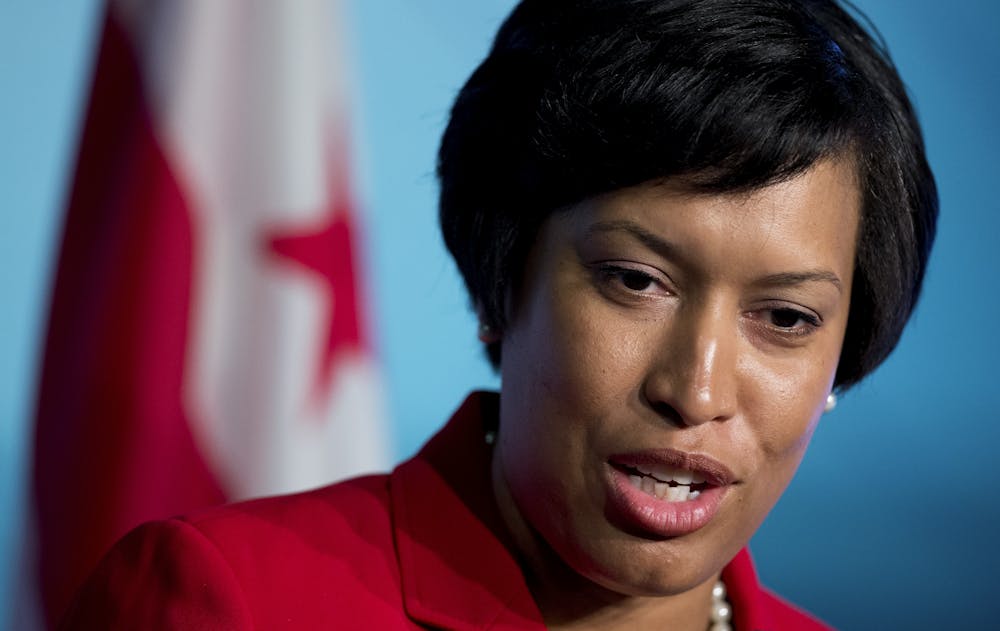
Washington, D.C. Mayor Muriel Bowser
Washington, D.C., Mayor Muriel Bowser called successfully in 2016 for raising the district’s minimum wage to $15, stepping in where the federal government had failed to act.
AP Photo/Manuel Balce Ceneta

Change in approach

In contrast to the previous administration, the Biden administration is treating local governments as key partners in a variety of areas, including public health.

It has taken steps to give local policymakers more control over the allocation and distribution of COVID-19 vaccinations, while setting national policies to hasten the availability of vaccines.

Reasserting closer relationships between the federal government and state and local partners may signal a shift toward more collaboration in general.

The federal government can use its power and position to drive change at the local level. A more collaborative relationship can help the federal government understand communities’ needs, leading to new policies and priorities. Close partnership may also increase awareness of federal resources that are available, helping state and local governments identify programs to better support their residents.

But as our research shows, federal dominance can also be counterproductive.

How federalism does – and doesn’t – work

Federal and state governments are responsible for national or regional priorities, such as defense, diplomacy and the raising and redistribution of tax revenues.

But local governments deliver the most-used public services, including schools, transportation, parks and public health. As a result, local governments are perhaps the most important in people’s daily lives.

Local governments both make and implement policy. In areas where the federal and state governments are silent or inactive, local governments often innovate to address community needs. That freedom to innovate helps local governments generate policies that can work their way up and across the federal system.

For example, despite backlash from state and national leaders, various cities – like Austin, Los Angeles, Virginia Beach and Washington, D.C. – have led the way on social and environmental policies, adopting and advocating for higher minimum wages, fracking limitations, sanctuaries for Second Amendment rights and reducing law enforcement violence.

Scholars have noted changes in the dynamics of these relationships throughout history. During some eras, the federal government has more power over policymaking. At other times, state and local governments exert greater influence.

For example, President Lyndon B. Johnson’s Great Society welfare programs – Medicare, Medicaid and food stamps – increased the federal government’s influence on state and local governments. New federal requirements mandated spending on social programs, often requiring matching funds from state and local governments. And new state and local agencies had to be established to implement federal priorities.

Federal dollars shared with local governments to fight poverty came with strings attached. Examples include requirements to meet environmental standards and adopt nondiscrimination policies.

With the advent of welfare reform in the mid-1990s, the federal government relaxed some of these requirements. As a result, state and local governments were given more flexibility over policy and spending decisions.

Our recent research indicates the balance of power in the federal system affects government performance and the safety of Americans. During the COVID-19 response, the federal government failed to partner with state and local governments. As a result, there were problems finding and delivering crucial supplies like masks and ventilators, leading to needless deaths.

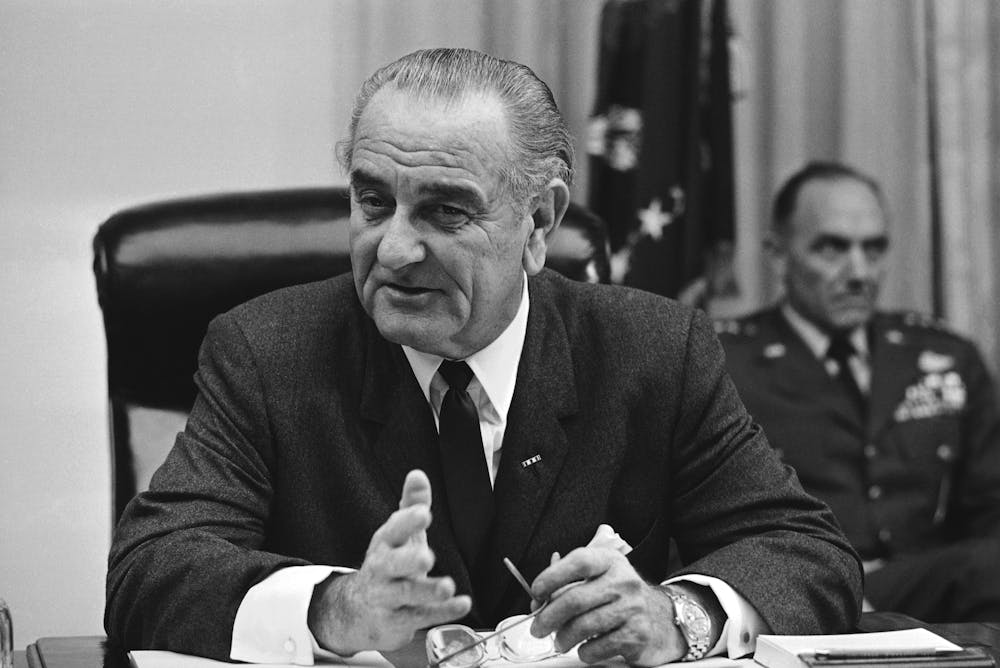
President Lyndon Johnson, sitting at his desk in a suit, tie and white shirt.
President Lyndon Johnson, shown here, expanded the authority of the federal government with his Great Society programs.
AP Photo

Critical work

Historically, presidents have taken a range of approaches to managing the federal system.

Johnson’s Great Society programs expanded the authority of the federal government. Federal agencies gained the power to create and manage the details of the effort to eradicate poverty, hunger and discrimination.

President Richard Nixon’s “new federalism” sent money in so-called “block grants” to state and local governments to carry out different federal initiatives. This allowed local governments some power over policy design and implementation.

President Ronald Reagan’s “pragmatic federalism” emphasized privatization – using private-sector organizations to deliver services – and decentralization. Reagan used markets to deliver government services through competitive contracts and grants.

In more recent years, scholars have accused Presidents George W. Bush and Barack Obama of returning to the more coercive federalism of Johnson’s Great Society. To encourage state and local governments to adopt federal priorities, federal funds under these presidents again included strings, increasing tensions between these levels of government.

[Understand what’s going on in Washington. Sign up for The Conversation’s Politics Weekly.]

Under President Trump, these tensions reached an apex. Cities clashed with the federal government over immigration policy, law enforcement violence and health care – and, ultimately, over how to handle the pandemic.

Biden’s approach

Much of Biden’s proposed sweeping infrastructure plan addresses problems of rural and urban areas, such as caregiving, clean energy and health care. Other parts confront regional issues, such as transportation, where states play an important role.

With the understanding that coordination among all levels of government helps address problems more effectively, one step Biden might take is to revive the U.S. Advisory Commission on Intergovernmental Relations. This commission operated from 1959 to 1996, offering presidents and federal agencies guidance on issues that spanned the federal system’s layers. The commission helped address abuses of power in the federal system and strengthened partnerships between governments.

As scholars, we know that policy issues are rarely independent. Global climate change affects local transportation policies, while health care issues are often closely linked to education and agriculture.

Local governments are important players in the federal system. Over the next year, they will be critical in continued efforts to vaccinate the American public and prepare for disasters like hurricanes and wildfires.

Given the complexity of modern policy problems, renewed consideration of how all levels of government can approach such big issues could help solve them.


Ana Maria Dimand is an assistant professor of Public Policy and Administration at Boise State University.

Benjamin M. Brunjes is an assistant professor of Public Policy at the University of Washington.

This article is republished from The Conversation under a Creative Commons license. Read the original article.

The Conversation