


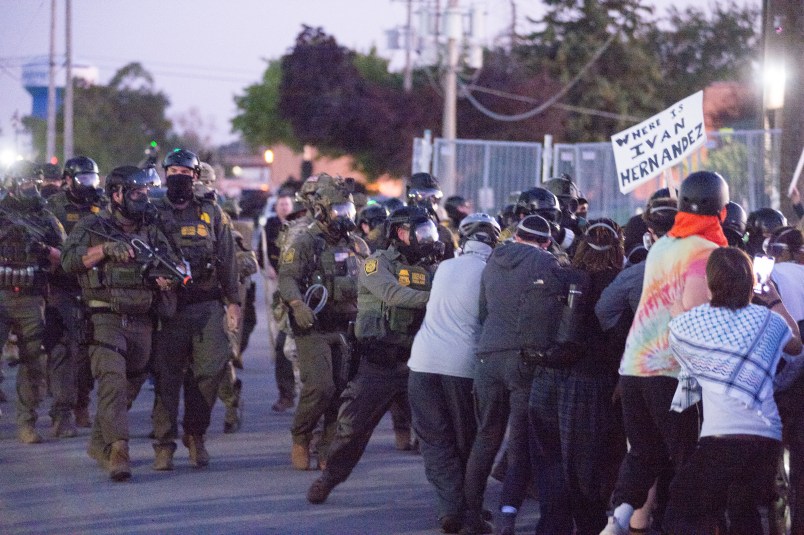
It’s been a journey with Greg Bovino over the past few months.
We’ve learned a lot: He dislikes protestors. He likes “state instruments of hard power.” And, per a recent deposition video taken in a Chicago case, he takes his orders directly from DHS Secretary Kristi Noem.
Bovino has spent the past year rocketing up the Trump administration’s publicity rankings, going from an obscure posting along the U.S.-Mexico border to one of the most visible hype men for a mass deportation campaign. Under Bovino’s lead, in California and in Chicago, these operations have trained their focus on intimidating the residents of largely liberal cities. That’s meant staging high-profile operations like a Black Hawk helicopter raid on a South Side Chicago apartment building and detaining citizens who have protested their tactics.
Those detentions have been followed by several prosecutions that have crumbled after making contact with skeptical judges. But in fragments of a deposition, court filings this week, and recent public statements, Bovino and senior ICE officials discussed how simple they would like to make things: why not just investigate and arrest the protestors?
“I’ve told my officers to go hard against people that are advocating threats, violence, death, against others in the form of threats,” Bovino remarked at one point during a deposition.
He also confirmed key details about how his roving brand of repression works. Bovino said that he reports directly to Secretary Noem, and that Operation Midway Blitz, the Chicago operation, involves 220 agents.
Bovino’s language is militaristic throughout the recording. It’s not at all clear why. Take, for instance, how he describes his role in Operation Midway Blitz:
“I have command responsibility of all assets under me for Operation Midway Blitz that are assigned to Customs and Border Protection,” he stated.
Do CBP officers typically have “command responsibility”? Are their subordinates and resources usually “assets”?
Other officials in the mass deportation campaign have said similar things. ICE Chief Todd Lyons told the Washington Times last month that he intended to use “all our criminal investigative skills” to probe who is behind protests. “We really have to follow the money and see exactly where that’s going.”
In Chicago, per one court filing, ICE Chicago field director Russell Hott purportedly replied “no” after an attorney asked if he agreed that “it’s unconstitutional to arrest people for being opposed to Midway Blitz.”
With Bovino, the interview fragment released this week is largely a game of cat-and-mouse. An attorney representing journalists, clergy, and protestors tries to prompt Bovino to repeat under oath what he’s said publicly: “If someone strays into a pepper ball, then that’s on them. Don’t protest, and don’t trespass,” he told a local Chicago news reporter last month.
Instead, Bovino tries to tie his “don’t protest” worldview towards separate activities that might be considered worthy of investigation. Insulting Bovino may not be a crime, for example, but making death threats against federal agents qualifies. Even here, Bovino blurs the line: he adds calls to “block our exits” as speech worthy of criminal investigation.
“That certainly does raise my suspicion and certainly amps up, the level of threat by their language,” he said. “A vast gulf of difference between those individuals doing that and an individual exercising their First Amendment rights by telling me they hate me or they want me to get outta the area, or ‘F you’.”



No, they’re subordinates and resources are not usually “assets.” That misunderstanding is due to a transcription error. Bovino actually referred to his subordinates as “asshats.”