


When is Wisconsin not electing a Supreme Court justice?, weary voters may ask.
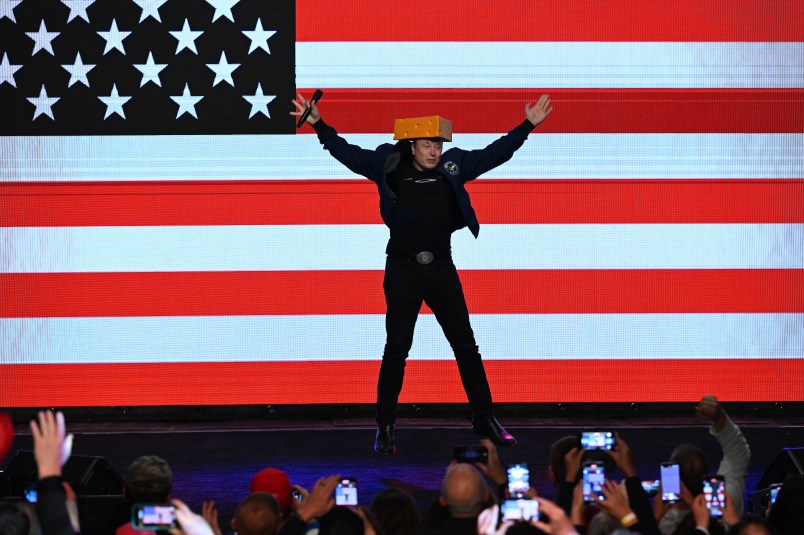
The seemingly rapid-fire judicial elections have captured national attention since at least 2020, when liberal Jill Karofsky upset Trump-endorsed incumbent Dan Kelly and reduced the court’s conservative majority to a bare 4-3. Three years later, Janet Protasiewicz beat the returning Kelly again, in what was then the most expensive judicial race in United States history (and one that gave the liberals a majority). That spending record was shattered in 2025 when liberal Susan Crawford won, maintaining the liberal majority despite Elon Musk’s $25 million contribution to Republican-backed Brad Schimel (and his attempts to bribe Republican voters with oversized $1 million checks).
The race in 2026 shouldn’t reach the fever pitch of the previous two. Unlike 2023 and 2025, it won’t decide the court’s majority. But gone are the days when swing-state judicial races were reduced to the province of the political obsessive — Donald Trump’s attempts to steal the 2020 election made sure of that.
Retiring Justice Rebecca Bradley had some refreshing candor on the way out
A particularly brain-melting feature of the American judicial system is the insistence that judges are nonpartisan, despite that many at the state level campaign on ideological issues and are supported by the major parties and their donors. Bradley, the right-wing justice who opted against running for reelection despite initially indicating her intent to, put up no such pretense in her August farewell statement.
“I will not seek re-election to the Wisconsin Supreme Court because I believe the best path for me to rebuild the conservative movement and fight for liberty is not as a minority member of the Court,” she said.
Check the language — her opposition to running again isn’t because it’s inappropriate for a GOP activist to sit as a judge, but because it’s proving an inefficient way to advance a right-wing agenda. At least she’s honest!
It’ll be a partisan slugfest, despite the conservative’s protestations
Maria Lazar, a conservative state appeals court judge and leading Republican-backed candidate, has said that she won’t say on the campaign trail how she’ll vote on potential cases, lamenting that judicial ethics have been “thrown out the window” in recent races. This is likely a dig at Protasiewicz, who was unusually candid during her race about her stance on expected redistricting and abortion cases.
Lazar can try to be high-minded, but the race will fall along flat partisan lines. A former assistant attorney general under Gov. Scott Walker (R), she defended a notorious anti-union law in high-profile court hearings, fought for an aggressive Republican gerrymander and defended voter ID laws and abortion restrictions.
Chris Taylor, a liberal judge at the 4th Circuit Court of Appeals and the leading candidate backed by Democrats, was formerly a member of the Wisconsin state assembly representing parts of Madison and worked as public policy director for Planned Parenthood of Wisconsin.
The new justice will likely participate in the major redistricting challenges that could upend the state
Challenges to Wisconsin’s absurdly Republican-friendly gerrymander were expected as soon as Protasiewicz flipped the court’s majority, but they’ve moved very slowly.
The state Supreme Court declined to take up a case challenging the maps this summer without explanation. But it did recently appoint three-judge panels to hear two of the ongoing lawsuits against the gerrymander in state court. One lawsuit was filed by Wisconsin Business Leaders for Democracy, and the other by Wisconsin voters.
The judges, though, seem in no hurry to wrap the cases up before the 2026 midterms (the judicial election is held in April). When an attorney for the voter plaintiffs pushed the court on a timeline to get new maps in place by March so they can be used for the midterms, a judge replied (in regard to motions that are part of the case) that “we’ll decide them when we can decide them,” per the Associated Press.
The court’s liberal majority is a brand-new dynamic
The court hadn’t had a liberal majority in 15 years — and, as an expert argues persuasively to the Wisconsin Examiner, perhaps hadn’t had a clear and dependable liberal majority “in living memory.”
It’s another shockingly anti-democratic idiosyncrasy from a 50-50 state (in which Republicans currently control six of eight U.S. House seats).
The court is already resetting those political dynamics, handing down major rulings including that an 1849 state law does not forbid abortion in the state and upholding Gov. Tony Evers’ (D) ban of conversion therapy.
Liberals have a chance to entrench their majority for years
If Taylor (or some blackhorse late entrant) wins the election, liberals will almost certainly hold the court until at least 2030, since only one liberal judge is up for reelection in that window.





Wisconsin approved cat gif…
To its credit, the cat is much more attractive, and interesting, with a cheese on its head than Elmo is.
I believe I would also find its thought more engaging.
I’m so old, I can remember when Wisconsin was a progressive beacon and a hub of innovation in government and education. Sadly, the voters killed that when they decided to give Republicans a chance, for a change. Talk about your camel sticking its nose in the tent. Then entering and tearing the entire thing down.
These signs of hard-won progress should inspire the rest of the nation. Look forward to 2026 with hope and plans to resist and win.
As if the insane tariff policies have not created sufficient uncertainty to depress US growth, there is a second ugly trend emerging. In plain vanilla autocracies like Russia and China, taking the fixed physical assets of foreign investors is quite straightforward. Russia, for example, took over car manufacturing plants, petrochemical plants, and other stranded businesses in the post-invasion period in 2022, leaving many investors to regret their failure to exit the market earlier. For the few that have not been taken over and still have a special relationship with the regime, the blowback in their home countries is quite intense. The overall result is that Russia has shifted to lower-quality substitutes, e.g. Indian or Chinese, where possible.
Globally, with the exceptions of Latin America and a few countries in Asia, the trend away from investment, especially “greenfield” investment in new facilities, has been down. Indeed, it appears that most of what Trump got for his tariffs were promises to invest at some point. Nobody showed up with the $22 trillion Trump said was incoming.
A case in point is the ongoing assaults on the wind industry. Rather than simply nationalize, the stranded assets go to rich friends. They can be American, Saudi or Emirati, or something else, as long as they invest Trumpishly. Marc Rowan, who interviewed for Bessent’s job (he still could get it), runs Apollo Global Capital. Shaken by the hanky-panky surrounding the $4 billion Revolution Wind Project off Rhode Island, Orsted today sold off a 50% stake in the Hornsea offshore wind project off the Yorkshire coast in the UK. Good for me, but not for thee.
While attacking renewable energy with one hand, the insatiable energy maw of AI is being fed by warping the playing field. It’s an interesting approach to taking over capital assets. Looking at Russia, however, it is clear that foreign investors tire of this game quite quickly. The reason they are there in the first place is because they have technological sophistication not found locally. Stealing stuff, unless you have a remarkable reverse engineering capability, is a fool’s game. Russia seized European assets under Putin’s 442 decree in 2024. Foreign direct investment (FDI) flowing into Russia today is essentially zero, even with the Chinese declaring their unending support. It is really hard to get people to take risks when it is apparent that larger hands are manipulating the game. The US has long consistently been the top global destination for FDI precisely because it avoided the mistakes of Putin and Xi, keeping grabbing hands at bay with legal systems that protect property of all market participants, not just friends of the autocrat.
“Talk about your camel sticking its nose in the tent. Then entering and tearing the entire thing down.”
More like taking a dump!