

WASHINGTON (AP) — The Obama-era program that shields young immigrants from deportation and that President Donald Trump has sought to end seems likely to survive for at least another year.
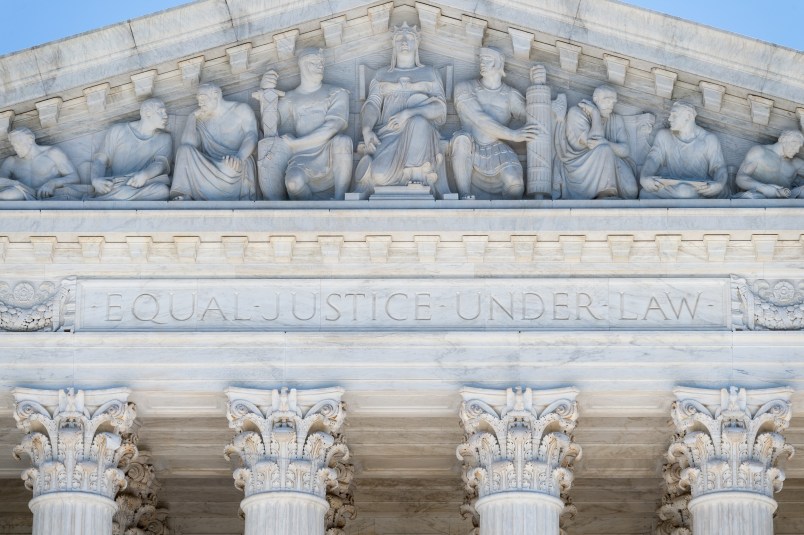
That’s because the Supreme Court took no action Friday on the Trump administration’s request to decide by early summer whether Trump’s bid to end the Deferred Action for Childhood Arrivals program was legal. The program has been protected by several federal courts.
Based on the high court’s usual practices, the earliest the justices would hear arguments in the case would be this fall, if they decide to hear the case at all. If arguments take place in October, a decision would not be likely before 2020, when it could affect the presidential campaign.
The administration “never asked for a stay of the rulings below which to us indicated it has known all along that there’s no real rush to resolve these important issues,” said Theodore Boutrous Jr., a lawyer in Los Angeles who represents some young immigrants who challenged the administration’s plans.
Trump and Congress could take the issue out of the court’s hands altogether if they strike a deal on the program known as DACA, perhaps even in negotiations to end the partial government shutdown.
The immigration case is among several high-profile issues the court has apparently decided not to add to its calendar for decision by late June. Other pending appeals involve Indiana abortion restrictions, whether the main federal employment discrimination law protects LGBT people and Trump’s policy to limit military service by transgender people. The court also has yet to act on a separate administration request to let the transgender policy take effect, even before the case is decided.
On immigration, the administration sought to end DACA in 2017, but federal courts in California, New York and Washington, DC, have prevented it from doing so. A federal judge in Texas has declared the program is illegal, but refused to order it halted.
DACA has protected about 700,000 people who were brought to the U.S. illegally as children or came with families that overstayed visas.
The Obama administration created the DACA program in 2012 to provide work permits and protection from deportation to people who, in many cases, have no memory of any home other than the United States.
The Trump administration has said it moved to end the program under the threat of a lawsuit from Texas and other states, raising the prospect of a chaotic end.
Then-Attorney General Jeff Sessions determined DACA to be unlawful because President Barack Obama did not have the authority to adopt it in the first place. Sessions cited a 2015 ruling by the federal appeals court in New Orleans that blocked a separate immigration policy implemented by Obama and the expansion of the DACA program.
Texas and other Republican-led states eventually did sue and won a partial victory in a federal court in Texas. Civil rights groups, advocates for immigrants and Democratic-led states all have sued to prevent the end of the program.
In November, a three-judge panel of the federal appeals court in San Francisco ruled that the administration decision to end DACA was arbitrary and capricious.
The appeals court noted that the federal government has a long and well-established history of using its discretion not to enforce immigration law against certain categories of people.
While the federal government might be able to end DACA for policy reasons under its own discretion, it can’t do so based on Sessions’ faulty belief that the program exceeds federal authority, the court held.
The administration has twice tried to sidestep the appeals courts and win a swift ruling by the Supreme Court. The justices rejected a first attempt last year as premature. In taking no action so far on the second request, the high court is signaling that it considers the issue less urgent than the administration does.






I’m sure this is a great relief to the Dreamers … as jack-booted ICE agents continue to run amok, wantonly terrorizing every community they visit. Good times.
The Supreme Court said Trump has the legal and constitutional authority to keep Muslims from coming into the country so why shouldn’t he have the same authority to remove furriners who are already here? It’s all part of the same program to make America 100% white and Pence style xtian.
Yeah, and that makes you wonder what will happen in 2021 when (hopefully) Democrats have control of the executive branch again. How will ICE respond to having limits placed on it? Will they trip to run rampant in spite of the orders of the president and director? I bet we’ll hear a lot of anger from agents that can’t throw their racism around anymore…and from some who will be glad to have the system become more humane again.
It can’t continue the way it is now, it’s become way too cruel…and ideally we’d get a reformed, renamed ICE with new rules that place limits on it and confine its worst impulses. We do need an organization that monitors the border and the people who come and go from the US, but what we have now is a short step from racist fascism and it just needs to be redone.
My thought exactly. ICE will continue to terrorize Dreamers.