

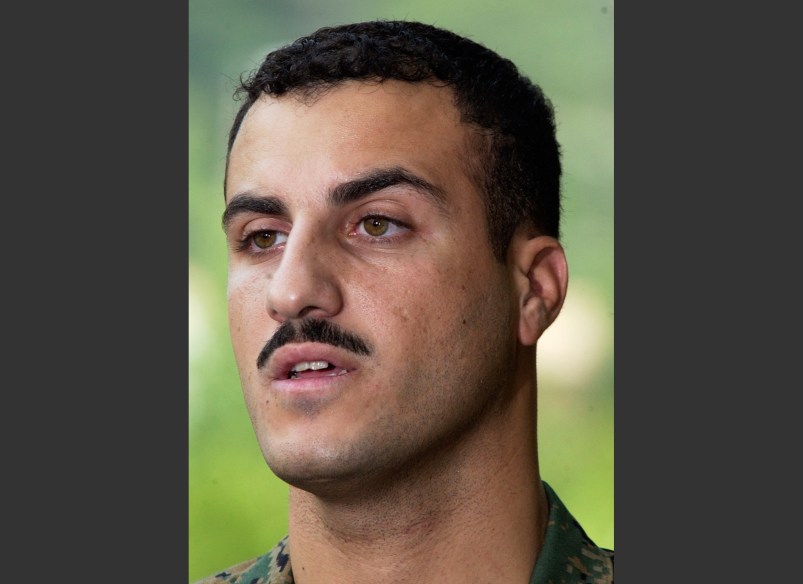
RALEIGH, N.C. (AP) — A U.S. Marine who vanished a decade ago in Iraq was convicted Monday of desertion for leaving his post there and then fleeing to Lebanon after a brief return to the U.S.
The judge at Camp Lejeune, Marine Maj. Nicholas Martz, ruled in a bench trial that Cpl. Wassef Hassoun was guilty of deserting for the 2004 and 2005 disappearances. Hassoun was also convicted of causing the loss of his service pistol.
Sentencing is expected later this week after more witnesses are called. A spokesman for the U.S. Marines, Capt. Stewart Coles, said in a release that Hassoun faces a maximum penalty of 7 ½ years in prison, reduction in rank and a dishonorable discharge.
While the judge determined Hassoun intentionally fled during the two disappearances at the heart of the case, his ruling leaves the defendant facing a less severe punishment than he did at the trial’s outset. Had he been convicted of all charges and specifications, he could have been sentenced to a maximum of 27 years in prison.
Hassoun was found not guilty of a theft charge related to his pistol, and his conviction for losing the pistol represents a lesser offense included under the military’s destruction of property charge. Hassoun was also found not guilty on one of three specifications related to the desertion charge.
Prosecutors argued during trial that Hassoun made preparations to flee his base in Fallujah in 2004 and told others that he planned to leave. They displayed quotes during opening statements attributed to Hassoun: “I’ll leave and go to Lebanon. I’m not kidding.”
They said he was unhappy with how U.S. servicemen treated Iraqis during interrogations and that he was upset that training and a second deployment to Iraq kept him from being with a woman with whom he’d entered an arranged marriage.
Defense attorneys maintain that Hassoun was kidnapped by insurgents in 2004. They argued that the case against the Muslim serviceman began with a “rush to judgment” by Navy investigators after suspicious comrades told investigators about comments Hassoun made about the conflict between his native Lebanon and Israel.
Days after his 2004 disappearance in Iraq, Hassoun appeared blindfolded and with a sword held above his head in an image purportedly taken by insurgents. An extremist group claimed to be holding him captive.
But Hassoun soon turned up unharmed at the U.S. Embassy in Beirut, Lebanon, saying he’d been kidnapped. Officials were suspicious, and he was returned to Camp Lejeune in 2004 while the military considered charging him.
After his return, Hassoun was allowed to visit family in Utah but disappeared a second time in early 2005. Hassoun traveled to Lebanon but was detained by that country’s authorities after Interpol issued a bulletin related to his deserter status, the defense said. The defense says court proceedings in Lebanon lasted until 2013, and Hassoun turned himself in to U.S. authorities after the government there lifted travel restrictions.
The defense conceded Hassoun’s travel to Lebanon in early 2005 constituted an unauthorized absence, and he has pleaded guilty to that lesser offense. Prosecutors, however, still pursued the more serious desertion charges.
Copyright 2015 The Associated Press. All rights reserved. This material may not be published, broadcast, rewritten or redistributed.





Fucker’s lucky he wasn’t shot.
I seem to remember this incident with this particular soldier. No one knew for sure at first if he was really kidnapped or staged the whole thing. I think he’s getting off easy in terms of a shorter sentence. But I can also understand how hard it would be to be a Muslim in the US Marine Corp. in Fallujah during those awful years of the Iraq War. That was before the so-called “Surge”. That would have been hard on any soldier, especially one that saw himself as perhaps among the very people the marines were told to fight against. He seems to have had an identity crisis of sorts while fighting that war.