


A lot of things happened. Here are some of the things. This is TPM’s Morning Memo.
A Huge Clusterf***
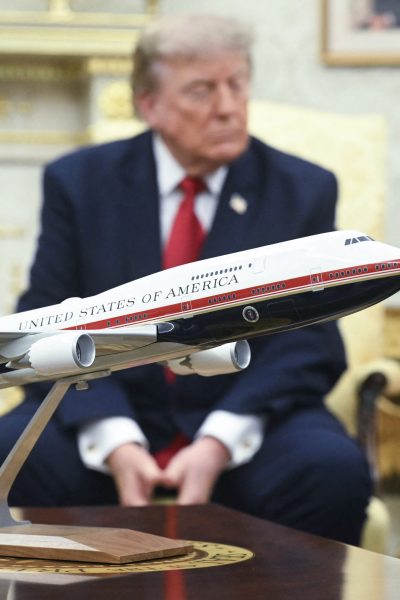
The Trump administration’s Air Force One leak investigation targeting the New York Times is encountering severe turbulence already.
In an overnight filing, the Trump DOJ admitted to serious errors in how it has handled the case so far — and in a huge concession that it attempts to mask as reasonableness it has put on hold for two weeks all of the subpoenas aimed at NYT reporters.
The major errors by federal prosecutors in Manhattan are largely of their own making, a result of a rushed investigation intended to appease an outraged President Trump, embarrassed that the NYT exposed his Qatari-gifted 747 as having subpar missile defense capabilities compared to the existing fleet of Air Force One aircraft.
Now that the case has been unsealed, we have a much clearer picture of what happened. Let’s break it down:
New Subpoenas Revealed
This all kicked off when a total of five grand jury subpoenas were issued to NYT reporters. The feds successfully served three of them on reporters Julian E. Barnes, Eric Lipton and Eric Schmitt. They were unable to serve subpoenas on reporters Tyler Pager and Adam Goldman.
But we learned yesterday that in addition to the grand jury subpoenas, the feds had also subpoenaed the phone records of the reporters from their phone providers. Or to put it more precisely, they sought toll records and subscriber
data for the phone numbers they believed to be associated with the reporters.
Feds Go After Reporters’ Families
The feds turned out to be at least partially mistaken about the reporters’ phone numbers, the NYT told the federal judge overseeing the case, because they actually targeted phone numbers of family members of the reporters, including:
- the mother of a reporter who is “a mental health professional with confidential client relationships.”
- the spouse of a reporter who is “the general counsel of a major law firm.”
- another spouse of a reporter.
In response, prosecutors vaguely waved at a “law enforcement database”:
Any subpoenas served for a phone number not used by one of the movants was a result of information in a law enforcement database indicating that the phone number was associated with the movant. If the Government determines that these phone numbers were not used by the movants, the Government will not pursue the corresponding subpoena(s).
More on the phone records subpoenas below.
Big Screwup #1
Second Circuit Court of Appeals precedent, which covers New York, establishes a reporter’s privilege and requires the government to meet certain elements to overcome that privilege, one of which is to show that the information it seeks from the reporter cannot be obtained from any other source.
The government appears to have not considered that precedent in this case, the NYT alleges, citing correspondence from the government:
The Government’s letter itself confirms that the Government did not even consider this Second Circuit precedent when it should have done so: before it issued the subpoenas. Instead, the Government apparently began evaluating the legality of the subpoenas after it began preparing its response to the Motion to Quash.
But don’t take the NYT’s word for it. Prosecutors essentially conceded the point last night when they told the judge that they’re going to hold off enforcing any of the subpoenas for two weeks. It’s a remarkable concession, given the stakes of the case:
[T]here are particular investigative steps that the Government is seeking to take in the near term that the Government anticipates will be material to this Court’s assessment of application of any qualified reporter’s privilege here.
Translation: Judge, we’re going to go do some more investigating to see if we can obtain elsewhere the information that we had hoped to obtain from the reporters because you’re going to ask us about whether we tried to get it elsewhere and we don’t have a good answer for you on that.
It would be a mistake, however, to read this as merely incompetence. This kind of rushed investigation, without even basic research on the legal terrain prosecutors are venturing into, reinforces what was obvious from the get-go: This isn’t about nabbing leakers (or not solely about that); it’s about retaliating against the NYT.
Big Screwup #2
The NYT alleges that prosecutors misled it and the court by failing to disclose the existence of the phone record subpoenas even as the litigation over the testimonial subpoenas was getting underway. Prosecutors deny that allegation and contest the timeline of events that the NYT offers. But regardless of the tussle over the exact timing and who knew what when, prosecutors now essentially concede that they erred on the law (emphasis mine):
Although Department policy authorized non-disclosure of the subpoenas, in light of additional caselaw that the Government identified after the issuance of the subpoenas, the Government determined on July 17 that it was appropriate to alert counsel to those subpoenas so that counsel could advance any arguments—regardless of merit—in furtherance of their motion.
As you can see, it’s a total clusterfuck. Marcy Wheeler aptly headlined her post on this mess: “SDNY Asks for Two Weeks to Unfuck the Leak Investigation It Fucked Up in Rush to Please Trump”
Where Does That Leave Us?
While there’s a schadenfreude in the Trump DOJ being exposed in public for having botched the case, this isn’t simply a matter of making errors or bumbling or being in over their heads. Rather, these kinds of errors, mistakes, irregularities, overreaches, improprieties, and abuses are a prerequisite for President Trump to be able to use the Justice Department as a sword against the disfavored and shield for the favored.
Following the law, abiding by precedent, adhering to internal procedures, demonstrating candor to the court, conducting oneself with professionalism — all of those things get in the way when you’re using DOJ for your retribution.
That is what has been exposed here.
For Your Radar …
Sen. John Cornyn (R-TX) appears to be hinging his decision on whether to advance Todd Blanche’s nomination as attorney general out of the Judiciary Committee not just on the ending the anti-weaponization slush fund but also on the IRS immunity given to President Trump.
Cornyn brought up both elements of the bogus settlement agreement of Trump’s lawsuit against the IRS, Politico reports. “Those are the issues we’re continuing to discuss with the administration to see whether we can get a modification of the settlement agreement,” said Cornyn.
That’s a bigger demand than Sen. Thom Tillis (R-NC) wanting Congress to ban the slush fund in return for his vote to advance Blanche out of committee. It also requires a lump of flesh from Trump himself, even if he never deserved the immunity in the first place.
Cornyn doesn’t seem to be messing around: “Well, does he want to get confirmed or not?” the senator said when asked if he expected concessions from the White House.
News? Tips? Feedback? Please let me know. For sensitive information, use the encrypted methods here.


Heather & Paul
Got to stop reading MM before I go to the comments, or I’ll never be frist again!
You read the MM?
Dinner before dessert.