



A lot of things happened. Here are some of the things. This is TPM’s Morning Memo.
Behold the New U.S. Political Map
Wow. It’s impossible to get my head around the sweeping changes to the map coming out of last night. It’s going to take few days to process it all. Just wow.
The final totals in the House and Senate aren’t in yet and might not be known for several more days, but as it stands now, the outcome leaves Democrats with congressional majorities that look a lot like what they won in the 2008 election that swept Barack Obama into office in the aftermath of another unpopular Middle East war.
The NYT is projecting that Democrats will wind up with 55 Senate seats and 258 seats in the House. After the 2008 election, Democrats had 56 Senate seats and 257 House seats. (This is never a perfect comparison because the numbers fluctuate throughout each Congress, with deaths, party switches, etc.) But that only tells part of the story.
What about the sheer gain of 10 Senate seats? Republicans picked up 10 Senate seats in the 1994 election, but Democrats haven’t added that many seats since they picked up 15 seats in the 1958 election, the beginning of a Democratic Senate majority that would last until the 1980 election.
And the gain of 42 House seats? You don’t have to go that far back: Democrats picked up 41 seats in the 2020 election.
But matching the size of Democratic majority after 2008 — ±257 seats — means equalling the high water mark for Democrats since the 1994 election, the seminal election which ended their 42-year House majority. To put it in the context of our current politics, this Democratic majority will be significantly bigger than any recent Republican majority. The GOP high water mark in the House in the modern era was 247 seats after the 2014 election.
With the results still coming in, this isn’t about pinpointing which records have been set yet, but just about giving you some sense of the historic comps.
Trifectas
Beyond the Senate and House, entire states turned completely blue, with statehouse trifectas (governor plus control of both legislative chambers) in:
- Pennsylvania
- Wisconsin
- Michigan
- Minnesota
- likely Arizona and maybe Alaska
Democrats broke statehouse trifectas in Georgia, Iowa, New Hampshire, Ohio, and Texas. They will hold a majority of governorships for the first time in 16 years.
Notable Firsts
- Muslim senator: Abdul El-Sayed in Michigan
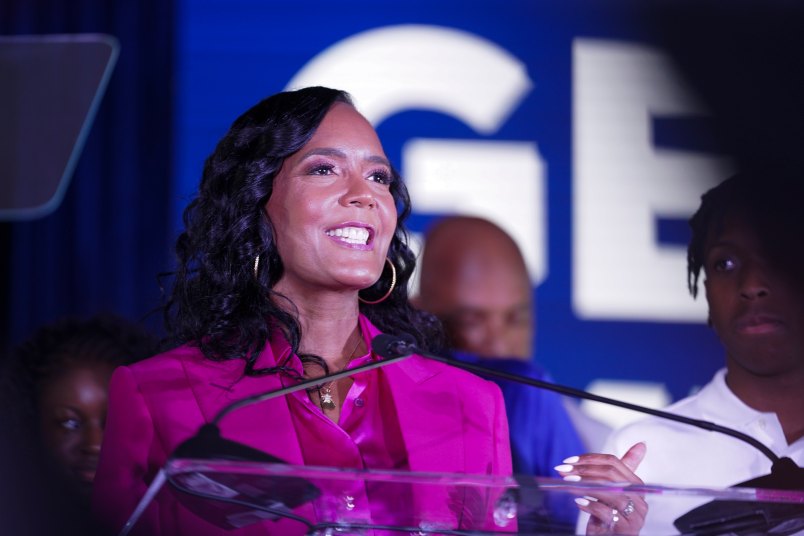
- Black female governor: Keisha Lance Bottoms in Georgia
- Native American female governor: Deb Haaland in New Mexico
- Openly gay male senator: Chris Pappas in New Hampshire
Biggest Upset of the Night:

Biggest Wow of the Night: Texas
The dual toxicity of Donald Trump and Ken Paxton finally brought a blue wave to Texas that had been nearly 30 years in the making. Gone in one fell swoop are:
- Attorney General Ken Paxton
- Gov. Greg Abbott
- Lt. Gov. Dan Patrick
The View from Across the Pond
- BBC: Democrats take control of US Congress as voters resoundingly reject Trump’s Republicans
- The Telegraph: Trump Crushed in Midterms
- The Independent: Trump told Americans to ‘pretend I’m on the ballot.’ They did — and voted against him
Races Still Outstanding
- Mississippi-Senate: Regardless of what happens, an amazing showing by Scott Colom.
- Alaska-Senate: A lot still to be figured out, especially with ranked-choice voting.
From the GOP Insider Perspective …
The inside-the-beltway pubs framed last night’s result in GOP terms, as they usually do:
- Punchbowl: “Extinction-level event for Hill GOP”
- Semafor: “Generational wipeout”
- Politico: “Massacre”
- Axios: “Blue tsunami breaks MAGA”
Not a Fluke Election
We’ve had some fluky elections in the past 20 years, where Republicans in particular have fielded bad candidates or where the timing of vacancies has created outlier results. But this was so broad-based that there was nothing fluky about it.
I look in particular at the Senate races across the South: South Carolina, Florida, Georgia, Mississippi, and Louisiana. Even the losing Democratic candidates had remarkably strong performances. The groundswell was nationwide.
What Didn’t Happen: No Couping
Election interference spearheaded by the Trump DOJ in the weeks and months before the election was an unprecedented abuse of the powers of the federal government to undermine free and fair elections to try to preserve the power of the president’s party in Congress.
But it started to become apparent late last week that there was no master plan or strategy for Main Justice that went beyond a relatively meager effort to use the Big Lie of rampant noncitizen voting as a pretext for contesting California elections. But even that largely fell apart by Election Day. The separate effort to block certification of the Senate race in Alaska (where the other Dan Sullivan is on track to finish FOURTH) was its own particular weirdness.
What remained unknown was whether the White House had its own plan for more sweeping and direct election interference through sheer use of force. In the end, nothing along those lines materialized at all.
I ran through two different checklists on Monday of different levels of election interference to look for on Election Day and essentially none of that came to pass. The third act of the play — the post-election period — was ripe for Trump-driven chaos if there were a lot of close races and control of the House and/or Senate hung in the balance. The Democratic sweep took that off table.
American Redemption
America will always break your heart but then find a way to redeem herself.
There remains an enormous amount of work ahead. The immediate work is to contain Trump for two more years. That is essential work, and it won’t necessarily yield decisive, crowd-pleasing outcomes like impeachment or criminal convictions or other much-needed public forms of accountability. But that doesn’t mean it can’t be effective and politically beneficial. Regardless, it is absolutely necessary.
Coming into the election, I thought containing Trump was the best we could hope for — and frankly that public expectations among Trump foes were too high for what could be done beyond that. Rebuilding and reforming would have to come after winning the White House in 2028.
But the Democratic gains at the state level open up new avenues to begin some of the forward-looking work sooner: starting to repair the colossal damage Trump has inflicted, rebuilding civil society, enlarging and enriching public life in America, reforming a weakened political system that Trump was able to exploit.
All of those efforts can start now at the state level and set the stage for what can happened federally if and when Democrats control the White House and congressional majorities. It’s a chance for a flourishing of new kind of politics, reforms, initiatives, and approaches. See what works and apply it nationally.
But … having a firm new grasp on the levers of power does not in itself fundamentally change America.
The ingredients that led to Trump all remain: a broken information ecosystem; a virtually unrestricted campaign finance system; unsustainable levels of economic inequality and wealth concentration; and an emptiness at the heart of American political life. Perhaps worst of all, one of the two major political parties has abandoned democracy.
After the disaster of Trump’s second election, I wrote that this is no longer merely a political problem but a cultural one. Politics can only do so much. The greatest danger in MAGA’s authoritarian impulses was its abuse of the power of government to dictate culture: white, Christian, native born, intolerant, militaristic, and male dominant. It was the most perverse possible response to the existential threats of climate change and AI.
Regaining power doesn’t reclaim culture, but it’s a heck of a start.
News? Tips? Feedback? Please let me know. For sensitive information, use the encrypted methods here.


Collins lost to Democratic nominee Troy Jackson, 46% to 54%, with 88% of the estimated vote reporting, according to The Associated Press.
Im still in shock, but this pretty much covers it…
I said this last night, it is glorious!