Three-hundred million dollars is a lot of money, especially for a service built around so few characters.
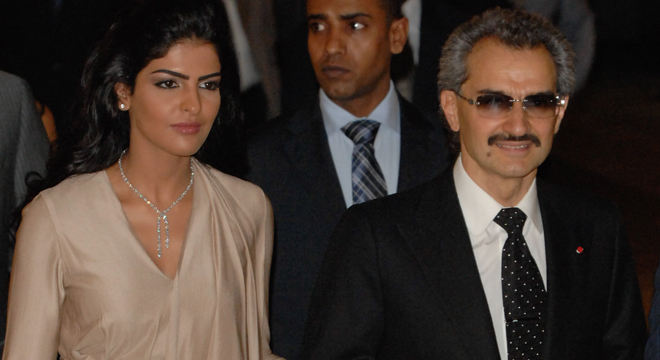
And yet, the big news in social media on Monday was that Saudi Prince Alwaleed bin Talal forked over that much money through his holding company in order to acquire a stake in Twitter, the San Francisco-based microblogging platform that recently unveiled a substantive redesign in an effort to broaden its appeal beyond a reported 200 million active users around the world.“Our investment in Twitter reaffirms our ability in identifying suitable opportunities to invest in promising, high-growth businesses with a global impact,” Alwaleed, 56, said in a statement on the website of Kingdom Holding, his investment company.
Kingdom Holding’s executive director for private equity Ahmed Halawani further explained the move: “We believe that social media will fundamentally change the media industry landscape in the coming years. Twitter will capture and monetize this positive trend.”
The investment gives Alwaleed (alternatively spelled “Al Walid” or shortened to just “Walid” in English), a 3 percent stake in the company, according to the New York Times Dealbook, which would put Twitter’s overall valuation at close to $10 billion.
Kingdom Holding also owns a 7 percent stake in Rupert Murdoch’s News Corporation, and varying stakes in Apple, eBay, Time Warner, among numerous other high-performing companies in the U.S. and across the globe. In fact, Kingdom Holding’s website boasts of it being “the largest foreign investor in the US.”
Alwaleed’s holding company is the largest in Saudi Arabia and behind the “Kingdom Tower,” one of the tallest buildings in the world.
Aside from Alwaleed’s stated interest in Twitter, Dealbook points out that the use of Twitter as a primary medium of communications during the so-called “Arab Spring” uprisings of early 2011 might have had something to do with the investment from Kingdom Holding. Dealbook reports:
Twitter has been increasingly popular in the Arab world, where it was credited with playing a role in the recent social uprisings across North Africa and the Persian Gulf. Arabic-language messaging is the fastest-growing segment on Twitter, according to the data intelligence company Semiocast. The volume of Arabic messages increased 2,146 percent in the 12 months ended Oct. 31.
Some media outlets are championing the move as a boon for Twitter, saying the company received a direct “cash boost” or “cash cushion,” from the deal, forestalling the need for an IPO, which Twitter has resisted so far, despite the apparent eagerness of investors. (Alwaleed is also one of those interested in participating in a Twitter IPO, Reuters reported, though he has ruled out any plans to buy any more shares at present, while the company is still private).
However, it is worth noting that Kingdom Holding reportedly didn’t buy the shares from Twitter directly. According to Fortune, the investment was structured as a secondary, so Kingdom Holding would have had to purchase its shares from Twitter’s current crop of private investors. If accurate, that would mean Twitter received nothing but publicity from the transaction, though it would have had to approve it.
Of course, a good portion of that publicity has been initially negative, given Saudi Arabia’s record on human rights and freedom of expression.
However, the concerns may be for naught, as GigaOm points out:
Those who are familiar with his investment philosophy say the prince doesn’t buy stakes in companies because he wants to influence them, but does so purely out of financial interest. Others have noted that even if Saudi Arabia did want to smother social media during an uprising, it wouldn’t have to put pressure on Twitter in order to do so, since it already controls the internet.
Indeed, Saudi Arabia was reportedly blocking activist Twitter accounts from public view back in 2009.
And Twitter’s own founders have resisted calls for censorship or filtering of the numerous tweets posted by users around the globe. The company posted a memorable blog entry during the middle of the Egyptian Revolution in January saying that “the Tweets Must Flow.”
And to further temper fears of any impending undue influence on Twitter, Alwaleed has reportedly “ruled out asking for a board seat or trying to influence strategy at Twitter,” according to Reuters.
Plus, Kingdom Holding is but a number of other high-profile investors that have this year bought stakes in Twitter, including DST Global, the investment company owned by Russian billionaire Yury Milner, which reportedly bought a $400 million stake in the company in August. A secondary funding round completed at the same time saw existing investors purchase another $400 million-worth of Twitter, according to the company.
Intriguingly, Twitter has remained tight-lipped on the latest transaction, only confirmed that it occurred and providing no further details. We’ve reached out to Twitter for any additional information and will update when we receive a response.