Updated 4:16 pm ET, Wednesday, January 18
What once seemed a solid bedrock of support from many members of Congress for two controversial anti-piracy bills is quickly eroding, with several more prominent lawmakers coming out against the bills, which are known as the Stop Online Piracy Act (SOPA) in the House and the PROTECT ACT (PIPA) in the Senate.
“I’m going to vote NO on #PIPA and #SOPA. The Internet is too important to our economy,” Sen. Scott Brown (R-MA) tweeted on Tuesday afternoon, on the eve of a massive blackout planned by many popular U.S. websites opposed to the bills.
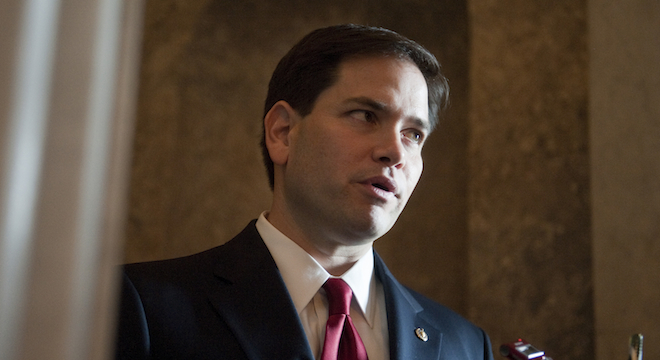
Sen. Marco Rubio (R-FL) detailed exactly why he was switching sides from a co-sponsor of PIPA to a detractor in a longer post on Facebook titled “A Better Way to Fight the Online Theft of American Ideas and Jobs.”
In recent weeks, we’ve heard from many Floridians about the anti-Internet piracy bills making their way through Congress. On the Senate side, I have been a co-sponsor of the PROTECT IP Act because I believe it’s important to protect American ingenuity, ideas and jobs from being stolen through Internet piracy, much of it occurring overseas through rogue websites in China. As a senator from Florida, a state with a large presence of artists, creators and businesses connected to the creation of intellectual property, I have a strong interest in stopping online piracy that costs Florida jobs.
However, we must do this while simultaneously promoting an open, dynamic Internet environment that is ripe for innovation and promotes new technologies.
Earlier this year, this bill passed the Senate Judiciary Committee unanimously and without controversy. Since then, we’ve heard legitimate concerns about the impact the bill could have on access to the Internet and about a potentially unreasonable expansion of the federal government’s power to impact the Internet. Congress should listen and avoid rushing through a bill that could have many unintended consequences.
Therefore, I have decided to withdraw my support for the Protect IP Act. Furthermore, I encourage Senator Reid to abandon his plan to rush the bill to the floor. Instead, we should take more time to address the concerns raised by all sides, and come up with new legislation that addresses Internet piracy while protecting free and open access to the Internet.
Meanwhile, Reps. Ben Quayle (R-AZ) and Lee Terry (R-NE), two co-sponsors of SOPA, are both quietly removing their names from the official list of co-sponsors, POLITICO reported on Wednesday morning.
The news of the defections came on the same day that up to 7,000 U.S. websites — including Google, Wikipedia and Craigslist — blacked out parts or all of their homepages in protest of the bills, a protest started by Reddit. Many of the sites are also promoting the OPEN Act drafted by Rep. Darrell Issa (R-CA) and Sen. Ron Wyden (D-OR) as an alternative to SOPA. Physical protests are also planned by tech entrepreneurs and developers in New York City and San Francisco.

Anti-SOPA/PIPA advocacy groups Demand Progress (left wing) and Don’t Censor the Net (right wing) also announced on Wednesday that they were teaming up to launch VoteForTheNet.com, a new effort designed to encourage voters to “work against candidates” who support the legislation and other forms of “Internet censorship.”
Both SOPA and PIPA would give the U.S. Attorney General the power to force foreign domains to be blocked from U.S. Internet users based on accusations of piracy from copyright holders, namely Hollywood and the American recording industry.
Not surprisingly, the lobbying groups representing those industries — the Motion Picture Association of America (MPAA) and the Recording Industry Association of America (RIAA) are among the staunchest supporters of the bills, as is News Corporation CEO Rupert Murdoch and the editorial board of News Corp’s recently acquired American newspaper, The Wall Street Journal.
Full disclosure: I was a former employee of a News Corporation publication, the subscription-based iPad news publication “The Daily,” from November 2010 to August 2011. I do not share any of the views of Mr. Murdoch or The Journal on this subject (among many others).
Late update: As several readers have pointed out, Sen. John Boozman (R-AK), originally a co-sponsor of the legislation, has also posted a note on Facebook on Wednesday afternoon withdrawing his support for PIPA. As Boozman wrote: “I can say, with all honesty, that the feedback I received from Arkansans has been overwhelmingly in opposition to the Senate bill (S.968, the PROTECT IP Act) in its current form. That is why I am announcing today that I intend to withdraw my support for the Protect IP Act.”
Meanwhile, Sen. Roy Blunt (R-MO) , another original cosponsor of PIPA, took to Twitter to announce he, too, would no longer support the legislation. “We can find a solution that will protect lawful content,” Blunt tweeted. “But this bill is flawed & that’s why I’m withdrawing my support. #SOPA #PIPA.”
Blunt also posted a press release to this effect online, but his website was down at the time of this posting, perhaps to the volume of traffic pertaining to PIPA protests.
Sen. Jerry Moran (R-KS), an original cosponsor of PIPA, went so far as to replace his picture on Twitter with a black box reading: “Keep the Web #OPEN.”
Rep. Allen West (R-FL) announced his opposition on Twitter as well, but managed to get in a jab at Attorney General Eric Holder as well: “I will not be voting for #SOPA- the Stop Online Piracy Act. Eric Holder does not need any more power over free speech over the internet.”
Meanwhile, Democrats who hadn’t yet taken a position have come out against SOPA and PIPA as well. And those who had previously been against the legislation doubled-down on their opposition.
Sen. Jeff Markey (D-OR) announced he would be opposing the bills on Twitter. Rep. Keith Ellison (D-MN) and Rep. Mike Honda (D-CA) even blacked out their websites in support of the protests.