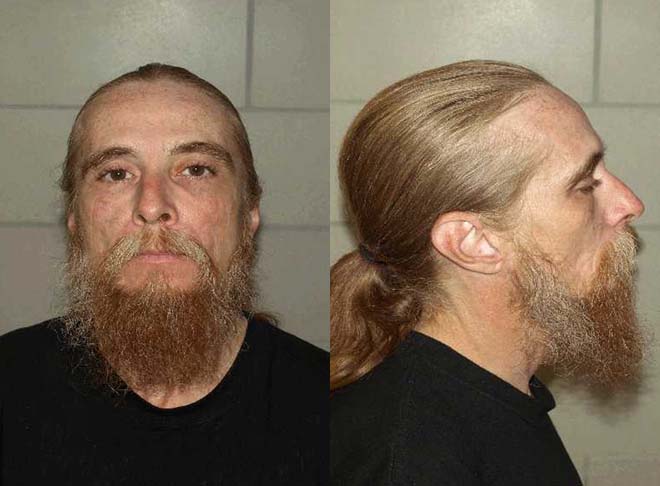
Federal prosecutors have moved to collect $35,000 from a California lawyer who signed an unsecured bond on behalf of Christopher Doyon, the homeless Anonymous hacker who called himself “Commander X,” after Doyon reportedly fled to Canada.
Doyon was arrested by the FBI back in September and charged with taking part in a distributed denial of service (DDoS) attack on the city of Santa Cruz’s computer servers in protest of an anti-camping law. “Commander X” put out a press release on Feb. 11 claiming he used an “underground railroad and network of safe houses” to reach the Canadian border where he hiked through the forest to the “relative safety of the nation of Canada.” The letter demanded that the U.S. drop charges against the other Anonymous defendants and that President Obama “immediately grant a full executive pardon to Bradley Manning, and order an end to the investigation of Julian Assange.”Ed Fry, a lawyer who has been involved in the the Occupy movement in Santa Cruz, told TPM he met Doyon during the summer of 2010 and put up the bond to help out a friend. He doesn’t think the law will catch up to Doyon, who joined up with the Occupy movement after being released.
“I don’t expect him to be caught. He’s pretty Wile E. Coyote,” said Fry, adding that he last talked to Doyon around Christmas. He said signing the bond was a risk he had to take.
“It goes with the territory. I’m doing a lot of things above and beyond the call for lawyers, and I don’t expect any great rewards,” Fry said.
“I’m a lawyer, but I don’t have a lot of money,” Fry said. “But I did sign the bond for him, so they’re going to come after me for it. The best I can do for them would be monthly payments, I guess.”
Doyon’s lawyer Jay Leiderman, who previously told TPM that the distributed denial of service (DoS) attack his client was accused of executing was the equivalent of occupying the Woolworth’s lunch counter during the civil rights movement, said Thursday that he’s been in communication with Doyon in an attempt to convince him to return and fight the case in court.
Leiderman said he knew Doyon was frustrated by the condition of his release, which included being banned from accessing Twitter or IRC chats. Several alleged members of Anonymous charged with various DDoS attacks of the defendants have been arguing that such limits violate their First Amendment rights.
The government disagrees.
“[T]he prohibitions against the participation in, use and accessing of IRC and Twitter websites are reasonable restrictions that do not violate the First Amendment,” the government argued in a recent filing.
“Given that defendants retain the right to use their computers and other digital devices, prohibiting them from participating in, using or accessing IRC and Twitter are reasonable restrictions; particularly in light of the fact that there are a multitude of viable alternatives (other than IRC and Twitter) through which defendants could express their views and communicate with others,” federal prosecutors wrote.
Despite Doyon’s grievances, Leiderman says he didn’t know Doyon was jumping bail until he skipped out on a February court hearing.
“It’s the lawyer’s equivalent of being dateless on prom night,” Leiderman told TPM. “You’re just standing around with a pretty silly grin on your face, waiting for someone to show up.”
Still, Leiderman says he plans to stick with Doyon’s case if he’s caught or returns voluntarily. But he’s not even convinced Doyon actually fled to America’s neighbor to the north.
“For all I know he’s sitting in Santa Cruz having a good laugh,” Leiderman said.