Facebook on Friday applauded Congress for shelving the two pieces of anti-piracy legislation which it called “harmful” and which brought about the wrath of a huge portion of the Internet.
As Facebook posted in a note on its Washington, D.C. page on Friday afternoon:
We are relieved that Congress has recognized the serious damage the PROTECT IP Act (PIPA) and the Stop Online Piracy Act (SOPA) could cause to the Internet and are pleased that congressional leaders have decided not to move forward on these bills. We want to thank the millions of Facebook users who shared their views with us, with members of Congress, and with their friends and families on this important issue, and who changed the direction of this harmful legislation. We appreciate that lawmakers have listened to our community’s concerns, and we stand ready to work with them on solutions to piracy and copyright infringement that will not chill free expression or threaten the economic growth and innovation the Internet provides. You can read more about Facebook’s view on the anti-piracy bills here: http://www.facebook.com/FacebookDC?sk=app_329139750453932
Facebook was a late entry into the piracy debate online. While Reddit and Wikipedia had been contemplating going black in protest of SOPA and PIPA for weeks before they actually did so on Wednesday, January 18, Facebook didn’t really publicly comment on the bills until “Blackout Day,” actually rolled along. Nor did Facebook black out any parts of its website on Wednesday, unlike the upwards of 70,000 other websites that did so.
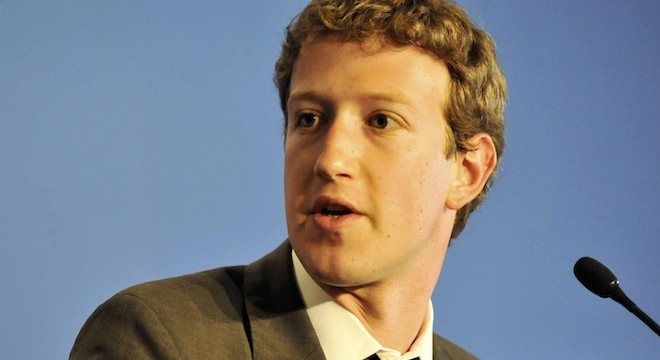
But by Wednesday afternoon, Facebook founder and CEO Mark Zuckerberg had weighed in with his own note slamming the bills as hurtful to the Internet and saying the “world today needs political leaders who are pro-internet.”
Zuckerberg also pointed out that Facebook had been involved in the debate in Washington, but behind the scenes.
“We have been working with many of these folks for months on better alternatives to these current proposals,” Zuckerberg wrote.
Other Facebook executives followed suit, posting their own shorter notes criticizing the bill and reminding users that Facebook was standing up for their rights.
Even then, Facebook refrained from making some of the more drastic changes to its pages that even Google and Craigslist did on Wednesday by censoring parts of their websites.
Facebook did, however, follow the pattern of linking to an online petition where users could sign their names in opposition to the bills.
Sources close to Facebook told TPM that the website refrained from going dark at least in part because it wanted to facilitate a dialogue about the bills and educate people on its own website, the most popular social network in the world and the second-most visited page aside from Google, according to tracking firm Alexa.
As Facebook has grown into the world’s most popular social network, its relationship with Washington has become both stronger and more conflicted. Facebook has scooped up many former government employees and big-wigs to help with its lobbying efforts and late last year filed to create its own political action committee (“FB PAC”).
But it also got a slap on the wrist and a stern warning from the Federal Trade Commission following the conclusion of a user privacy investigation in late November 2011. Facebook’s also gotten into mild trouble with governments around the globe for storing user data and its facial-recognition photo-tagging software.
But with its cautious but unmistakably critical stance of SOPA and PIPA, it’s clear that Facebook is quickly learning how to tip-toe the tightrope when it comes to balancing political concerns, its own concerns, and the concerns of its users.