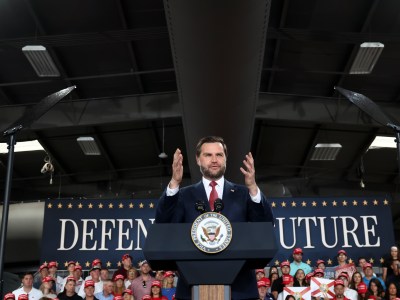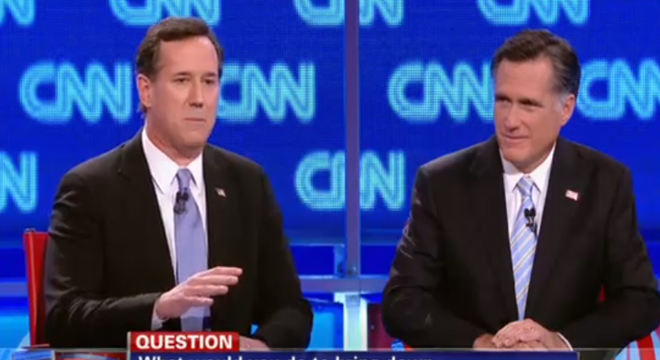
In the comic book version of the 2012 GOP presidential contest, Rick Santorum would be known as Dr. Chaos. An ex-senator whose name was almost lost to history, Santorum donned his signature sweater vest and transformed into the larger-than-life conservative who’d expose all of Mitt Romney’s existing weaknesses — and create a few new ones.
Santorum’s own campaign proudly reflected on their contribution to the race just after he announced he was stepping aside: We knocked Romney off his economic message, they said.
“[Santorum] was able to further the conversation about life, about protecting the unborn, about marriage between one man and one woman,” Hogan Gidley, Santorum’s communications director, told TPM. “I think those things are important and Rick was very clear about not having to sacrifice those things to try and curry favor.”To understand just how far Santorum rose from obscure long-shot to legitimate, sometimes-frontrunner, consider this: In November 2011, Santorum stood in an Iowa library annex and declined to correct a man who called President Obama “a Muslim.” The eyebrow-raising moment never garnered mainstream coverage, though cameras from all three major networks were in the room as it happened. Three months later, Santorum, then the surging candidate in the race, did the same thing in Florida and suddenly it was national news.
No one, probably not even Santorum, ever believed he would become Romney’s main primary challenger. But thanks largely to a solid grassroots campaign on the ground in Iowa, and a consistent social conservative message, he demolished expectations: Santorum won 11 state and territorial contests versus 23 for Romney and two for Newt Gingrich, an incredible achievement for a candidate who was outraised more than 5-to-1 by Romney and his super PACs. At several points, Santorum fell just short of dealing a potentially game-changing blow to Romney in must-win states like Michigan, where Romney’s father was governor, and Ohio, the biggest prize on Super Tuesday.
But in executing an expectations-busting campaign, Santorum lured Romney far away from his economy-based message, forcing the presumptive nominee to take some positions that Republicans believe will be easy for the Obama campaign to exploit.
“In the short term, [Santorum’s campaign] is a net negative because he has hurt Romney’s favorables with women and independents,” said Ford O’Connell, an unaffiliated GOP strategist. “In the long term, it could be a net positive, because Santorum really took Romney out of his comfort zone, particularly when it came to talking about social conservatives and social conservative issues.”
Team Santorum, for its part, is glad they temporarily derailed the train.
“I think Rick was able to bring and draw attention to things that oftentimes are swept under the rug and only talked about in certain company and private rooms,” Gidley told TPM. “I think he elevated conservatism in the public square and made people realize it’s OK to be a conservative again. You don’t have to muddy the waters with conservatism.”
As Santorum swept up the votes of evangelicals and social conservatives across the country — dramatically exposing Romney’s trouble rallying a big chunk of the GOP base — he pushed the entire GOP campaign further to the right. Nothing was sacred when it came to make-or-break issues for independent voters. Contraception? Santorum was morally opposed. The death of Osama bin Laden? Santorum believed announcing it was a bad idea. College? Santorum thought it was for snobs.
None of this was on message for the GOP, and Romney — desperate to make the election about the economy — clearly wasn’t happy about it.
“We’ve seen throughout the campaign if you’re willing to say really outrageous things that are accusative, attacking of President Obama, that you’re going to jump up in the polls,” a frustrated Romney said in the midst of his toughest fight with Santorum, over Romney’s home state of Michigan. “I’m not willing to light my hair on fire to try and get support. I am who I am.”
But Santorum was who he was, too — and because of that, Romney was forced to fight Santorum on his territory, most notably on contraception. Romney publicly endorsed the Blunt amendment, one of several moves that left him with a big deficit among the female electorate.
Now Romney has to shift to the general election. And thanks to Romney’s maneuvers to respond to Santorum throughout the primary, that’s going to be tough. Santorum gave Romney enough time to bounce back, O’Connell said, but only if Romney learns to avoid following future attempts to knock him off message.
“I put the blame on Romney, really, more than Santorum,” O’Connell said, “because Romney followed him down that hole. That’s why the question is whether or not he learned that lesson.”