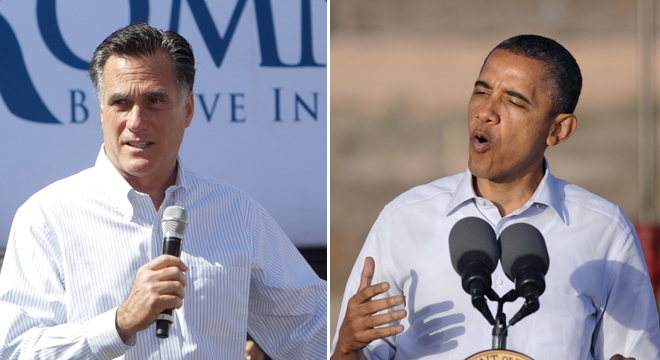
If you’ve been paying attention, you may have learned from media reports that the 2012 presidential election will be all about the economy. And with good reason — insert any cliche here along the lines of “Americans vote their pocketbooks,” or “It’s the economy, stupid.”
But sometimes that edict, while undeniably true, makes it seem like President Obama and his GOP challenger will be running around the country with flow charts and Powerpoint presentations on economic growth and what they plan to do about it.This has come to a head this week because of the oral arguments on the legal challenge to President Obama’s signature health care reform law currently before the Supreme Court. The focus of Washington, DC and much of the national media is directly upon the issue, but some of the commentary on what the issue means for 2012 has amounted to casually waving it away as a non-factor.
If the Supremes decide that the individual mandate is constitutionally sound, it won’t convince skeptics of the program to embrace it. And it’s not going to stop GOP candidates from labeling it as a government overreach that is going to run up the deficit and lead to health service rationing.
If it’s found unconstitutional, it won’t make those who are already opposed to the law dislike it more. Or make those who say they support it like it more.
When the media refers to “the economy” as the number one issue, pollsters see it more precisely. They see 2012 as about the government’s role in the economy — a struggle between whether the federal government should or shouldn’t get involved in the business of the country. And getting involved in the health care market, nearly one fifth of the economy, is certain to fall into that category.
“When the public is single mindedly focused on the economy, every candidate has to talk about what they are going to do,” Michael Dimock, associate director of research at Pew told TPM. “I think health care has become the most vivd symbol of this debate over the proper role of government. The stimulus was, the bailout was, those are still emotionally charged debates that polarized people. Those have faded a bit into history, but health care remains front and center.”
So how does GOP frontrunner and former Massachusetts Gov. Mitt Romney say he’ll turn around the economy? He says a major component will reforming the tax code, but that may take some time. The first thing he says he’d do? Sign an executive order to “pave the way” to repeal the health care reform law, which is obviously way more complicated than making the promise. But it’s a major political position on the economy, and his biggest applause line on the trail.
Yes, there will be competing tax plans and some ideas on how to knock down the unemployment rate. But the days of large-scale plans to inject more spending in a direct attempt to revive the economy are gone. Candidates will be framing their positions in line with their general view on government with an eye toward touting the economic benefits as they see them. And that will include everything government touches.
In the ABC piece, Political Director Amy Walter wrote, “With more than 50 percent of Americans listing the economy as the ‘single most important’ issue in their vote for president, and just 3 percent picking health care, it’s pretty clear what voters want to hear from the candidates this fall.”
Surely, if you ask voters to point to a single issue from a list, the economy is going to be tops. But Gallup data released Wednesday that showed a much more complete picture. Americans are worried about the economy. Yet they are nearly as likely to to be worried “a great deal” about health care, along with a host of other issues. See the top three below.

So whether it’s something as longstanding and important as health care or something as new and specific as plans to build the Keystone XL pipeline, the political battle over “the economy” this cycle may seem a lot like many other campaigns to voters. “It might sound like a diversion from the issues of the day, but it becomes the way that the candidates discuss the economy,” Dimock said.