


There’s been a rollicking debate in the generally non-rollicking and pretty small world of academics, political types and journalists about why academics are so obscure and boring and why they won’t get in the game and start contributing and carrying their weight in our country’s public debates. That was the framing at least of the Times piece by Nick Kristof which (though iffy in itself) kicked off the conversation off. Here’s one response, for instance, from Daniel Drezner, a very publicly outspoken academic, who was in the curious position of having the publisher of his main outlet, Foreign Policy, not only agree with Kristof’s thesis but further crap on academics who try to write for a popular audience as “opaque, abstract, incremental, [and] dull” and goes on to say he’s going to stop publishing them anymore.
As a general matter, I think Drezner and a bunch of other generally youngish academics are right in their pushback when they say that contrary to Kristof’s claims, academics are actually a lot more involved in public debates today than they have been in a while. And a lot of that is because of the Internet and the paths to contact with the larger public has made possible. Think about Juan Cole. A vast contribution to the public conversation about the Middle East, entirely because of the Internet. There’s really little precedent in recent decades for anything like him in his area of study. And there are many other academics who have made public names for themselves via online writing, though in many cases writing themselves out of the academy in the process of doing so. If they manage both, it’s most likely they have tenure, which likely puts them well into their thirties or beyond.
As I thought about this though, I couldn’t help but see it through the particular prism of the decisions I made in my own life which cut pretty hard to the core of this discussion.
I was supposed to be a history professor. And a good bit of my decision to leave grew out of my growing sense of the deeply conventional, channeled nature of the profession, one in which I found paradoxically little outlet for creativity or novelty.

Whatever happens in November, the cultural politics of the country are clearly moving away from the right. It appears to be endangering a spasm of legislative hysteria in a number of deep red states. First, we had this rash of new laws painting religious people who don’t like gays as a minority in need of special protection. Now Kansas is considering forcing cities to notify residents of the dangers of the fluoride in the drinking water.

That and other fun on tap in next year’s (possible) McConnell-led Senate.
This trial could make Mississippi the first Abortion-free state in the country.
TPM Reader JG responds to my post on leaving academic life …
Reading your blog on academic life was so touching and resonant. It really encapsulates so much of what I went through in graduate school and I imagine so many other people have gone through.
Republicans now considering shutting down state governments over Obamacare.
A very, very good point about the public role of academics and the role of college and university instruction from TPM Reader JS (in response to this earlier post)…
One of the things I’ve always enjoyed about your blog is your historian’s perspective – I’m one too! But I think this discussion of academics’ supposed lack of engagement with broader national debates overlooks something critical: the classroom as a public space for engagement in the national conversation.
Fort Lee Mayor Mark Sokolich met Friday with federal prosecutors to discuss the Bridge scandal.
Nope. Russian Roulette as a gun safety lesson to prove you know the gun isn’t loaded just is not a good idea.
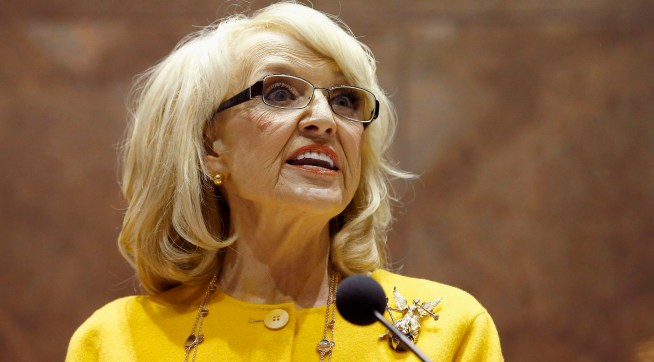
The backlash in Arizona over the anti-LGBT bill sitting on Jan Brewer’s desk has fully formed this week, with both of the state’s Republican U.S. senators urging her to veto it and the state’s business community coming out en masse against the bill. Fascinating stuff.