


Gayle Trotter, of the Independent Women’s Forum, who may actually be new to the whole gun issue, explains how young woman are speaking up about AR-15 rifles …
“Young women are speaking out as to why AR-15 weapons are their weapon of choice. The guns are accurate. They have good handling. They’re light. They’re easy for women to hold. And most importantly, their appearance. An assault weapon in the hands of a young woman defending her babies in her home becomes a defense weapon. And the peace of mind that a woman has as she’s facing three, four, five violent attackers, intruders in her home, with her children screaming in the background, the peace of mind that she has knowing that she has a scary-looking gun gives her more courage when she’s fighting hardened, violent criminals. If we ban these types of assault weapons, you are putting women at a great disadvantage, more so than men, because they do not have the same type of physical strength and opportunity to defend themselves.”
Here’s a really meaty and interesting essay in the new and relaunched TNR about gun ownership and what gun owners want. What Gun Owners Really Want by Walter Kirn.
There’s a lot there. But one point resonated with me because it’s a flip side of something I was trying to capture in my ‘non-gun tribe’ piece from a couple weeks ago. And that is that there’s a division between gun and non-gun people that is deeper than and not even necessarily aligned with the politics. And it has to do with people who have a basically familiarity and intimacy with them and those who don’t. Read More
10:27 — Hagel just offered an extended defense of his record and beliefs, arguing that he’s exactly in lock-step with the Obama administration’s policies on Iran (all options are on the table, including a military one); the budget sequester (would be a disaster); don’t ask, don’t tell (fully supports its repeal and will look to expand the benefits available to gay troops); and the role of women in combat (wants to work with the Joint Chiefs to open as many jobs as possible). He’s taken somewhat different positions in the past, particularly when it comes to sanctioning Iran and cutting Pentagon “bloat.” Obama wouldn’t nominate someone who didn’t share his core beliefs, but you can tell GOP senators are eagerly waiting for a chance to accuse him of flip-flopping.
Meet the conservatives trying to kill immigration reform.
10:50 – James Inhofe’s questioning of Hagel was quite a bit softer than I’d expected. GOP senators had once promised to do everything they could to block the Hagel nomination and said they thought they might have the votes to do so. If Inhofe is any indication, they’ve pretty much thrown in the towel. Inhofe just made a point of praising Hagel as a good friend and said “if you are confirmed” in a tone which suggested that that was precisely what he expected to happen.
With the Senate confirmation hearing of former Sen. Chuck Hagel (R-NE) beginning this morning, we’ve invited national security reporter Yochi Dreazen to liveblog the proceedings here in the Editors’ Blog.
Yochi was previously a national security reporter for National Journal and the Wall Street Journal and is a contributing editor at The Atlantic. He is currently working on a book titled “The Invisible Front: Love and Loss in the Era of Endless War,” on how one military family is grappling with post-combat mental health issues. It is scheduled to be published in early 2014 by Crown. Yochi has spent more than five years in-country in Iraq and Afganistan.
Please welcome Yochi. I think you’ll enjoy his insights.
Good morning, everyone. A quick thanks to Josh and David for having me on to live blog what should be an unusually interesting hearing. I wanted to offer three general thoughts about key things to watch for before it gets rolling: Read More
9:45 — Sen. James Inhofe, the new ranking Republican on the Armed Services Committee, has already penned a Washington Post op-ed which surprised no one by announcing that he’d vote against Hagel. Still, his opening remarks were interesting because they outlined the talking points other GOP senators will use when they go after Hagel. The main ones: Hagel has been out of step with both parties when it comes to Iran and Israel, he’s tried to hide his true views for political expediency, and he’s simply too dovish to lead the Pentagon. The key Inhofe line: Hagel subscribes “to a worldview that is predicated on appeasing our allies while shunning our friends.” Ouch.
11:15 — Finally, some fireworks. McCain just hit Hagel pretty hard for his past opposition to the Iraq surge: “History has already about made a judgment about the surge, sir, and you’re on the wrong side of it.” Hagel shot back, calling the Iraq war “the most fundamental, bad, dangerous decision since Vietnam.” The exchange was obviously motivated by politics — and certainly made for some good TV — but I think its worth giving both men a bit of credit for having an unusually honest debate about Iraq, which has utterly faded from public consciousness. I lived in Iraq for several years, lost many American and Iraqi friends there, and admit to both personal and professional frustration about how completely the war and its aftermath have been forgotten. Iraq remains worth of discussion and debate, and I’m glad this hearing has brought it back up, even if only for a few minutes.
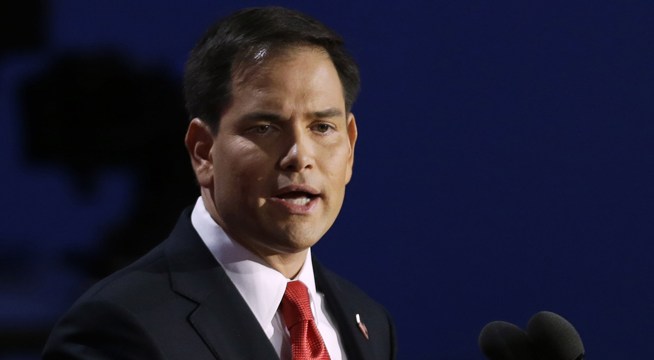
The early immigration reform efforts on Capitol Hill have drawn conservatives into a debate with each other over the relative political merits of joining Democrats in providing immigrants a path to citizenship.
The poles of that debate stretch from the argument that Republicans risk handing Democrats a permanent majority to the more panicked view that Republicans can’t afford not to support reform. In between, some hedge that reform might stanch the bleeding, but won’t revive the GOP’s standing with Latino voters.
As far as that argument goes, I think the truth lies somewhere in the middle. But confining the analysis to the question of how immigrant communities will respond to reform is an error. Read More