


To keep you up to date on all the news from the hearings we’ve opened our live-updating TPM Kagan Confirmation Hearings wire. You can see it down beneath the feature story or click here to see its own page. And our Supreme Court confirmations blogger Andrew Pincus will be joining us here in the main TPM blog with posts throughout the day as the different senators and witnesses speak.

Judiciary Committee Chairman Patrick Leahy spoke broadly in his opening statement, discussing the important role that the Supreme Court plays in our society. He described Elena Kagan’s record, emphasizing her association with Justice Thurgood Marshall–the legal lion who argument Brown v. Board of Education. And he gave the conventional advice to a nominee–be forthcoming, candid, clear, etc.
But ranking Repblican Jeff Sessions set forth a long bill of particulars. Read More
No, it wasn’t a campaign pledge for Obama. But it is striking how Blackwater (now rechristined Xe) has suddenly gotten a clean bill of health from the government and is back getting top dollar contracts — a couple big ones in just the last few days.
That’s Freshman Senator Byrd with Presdient Eisenhower, which puts things in a certain perspective. Click the image to see the rest of the images. Some great ones in there.

Byrd is third from the left, front row.
The pattern of opening statements is general compliments from Democrats and tough jabs from Republicans. Senator Kohl talks generally about the role of the Court and the role of judges, rejecting the “umpire” metaphor thrown out by Chief Justice Roberts in his confirmation hearing.
But Orin Hatch, a Republican from Utah, turns back to the question of experience. Read More
Democrats have started to step up their defense of the nominee. Senator Feinstein went through Kagan’s resume, and specifically expressed support for putting a non-judge on the Court. And Senators Feingold and Schumer have weighed in as well. Read More
It’s lucky that the Supreme Court left town this morning. It doesn’t have many fans on the Senate Judiciary Committee. Read More
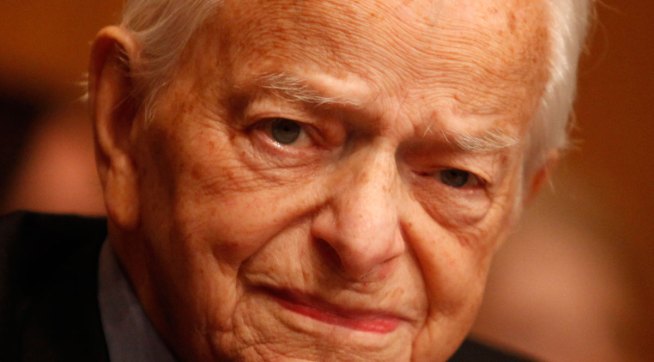
While remembering Robert C. Byrd today we would not do him justice without taking stock of the major blot on his public life: the fact that his early life and political career was inextricably bound up with the politics of racism. That much is not in dispute. Byrd spent the latter part of his life admitting as much and apologizing for it. The outstanding question is whether it compromised him in the bulk of his public career that took place after the 1960s when he became a more or less conventional Democrat on issues of Civil Rights.
First a brief review of the history. In his early twenties Byrd joined the Ku Klux Klan and became the leader of the unit is his small town in West Virginia. According to Byrd’s account he wrote the head of the national organization in late 1941 or early 1942 and said he wanted to join the organization. Eventually he was instrumental in recruiting a local group which eventually got the imprimatur of the national Klan and elected Byrd their “Exalted Cyclops”, or leader of the local group, in addition to “Kleagle”, or chief local recruiter. Read More