This is not a large point but it’s one worth articulating explicitly.
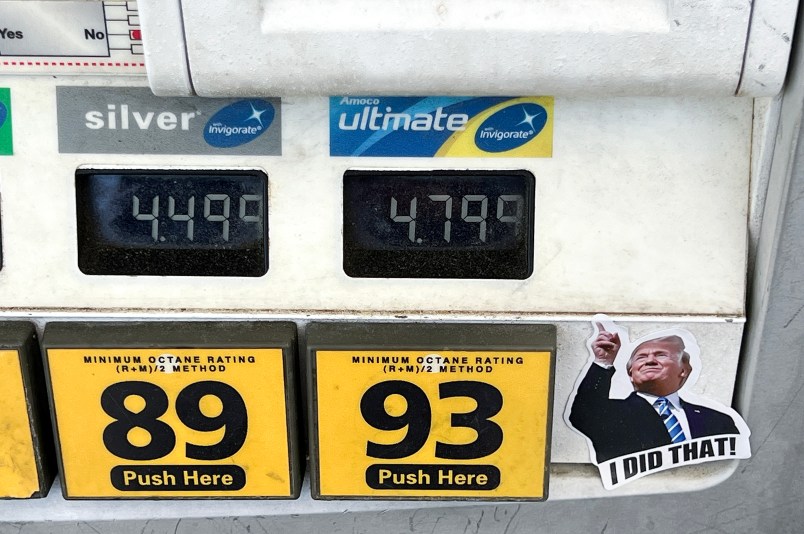
Politics, like life, isn’t fair. One of the surest examples of this is that presidencies rise and fall with gas prices. Those presidents usually didn’t really do anything to make them rise or fall. And it’s quite difficult for a president to pull them lower, except on the margins. Donald Trump’s recent, ongoing slide tracks closely with gas prices, repeating a decades old pattern — even down to this later (?) part of the Iran War in which faux ceasefires and collapses drive short term ups and downs. But Trump is close to unique in being more or less 100% to blame for them. Current gas prices are almost entirely because of the war with Iran and the closure of the Strait of Hormuz. Trump started that war. And, as I argued last week, he started it more or less out of the blue.
By “out of the blue” I mean that there wasn’t really any trajectory in international affairs that made it seem necessary or likely. If anything, it’s off-trend in recent U.S. foreign policy thinking — in both parties. Of course, there’s not zero backstory. The U.S. and Iran have been adversaries for almost half a century. There was the attack on Iran’s nuclear facilities in 2025. But there’s a reason there was so little discussion of the current conflict and so little attempt to build any support for it before it happened. No one was asking for it, and pretty few people (in the sense of mass politics) even realized it was in the offing. As I’ve argued, it was largely driven by Trump’s psychological needs, a way to assert dominance as his domestic power and popularity declined.
Whether any of this matters I don’t know. As noted, the president doesn’t usually need to be at fault. To use insurance terms, it’s a strict liability affair. But I wonder whether it has slightly more valence since … well, since Trump 100% did it. Perhaps the better question is whether the opposition can leverage it even more effectively given that, again, Trump 100% did this.