


My wording in this title is one part provocation. But there is a serious point to it.
American political debates use the term “elite” in a fairly impoverished way. Its use is pejorative rather than descriptive. The elites are the bad guys. And the good elites aren’t actually elites. We’re all familiar with this and perhaps it’s inevitable in a political culture so rooted in the imagery and ideology, if not always the reality, of popular rule and the power and valorization of the ordinary American.
But the elite, in a more descriptive and non-evaluative sense, has been perhaps the biggest reveal of this live subject experiment we’ve been a part of since late January. Law firms, universities, big business, news publications and a million other examples. We’ve all been amazed, disheartened, aghast, whatever you want to call it, by the subservience of the prominent and the powerful. Even those who haven’t adopted a posture of subservience have generally adopted one of silence. I hear it from reporter after reporter. The kind of people they used to go to for quotes — a lot of those people don’t want to give them anymore. And, beyond moral evaluation, we know why: they have things on the line. A rogue President has vast untapped and illegal or unconstitutional but still usable power to come after really anyone who puts their head up. The challenges to Trump have much more been waged by ordinary Americans.
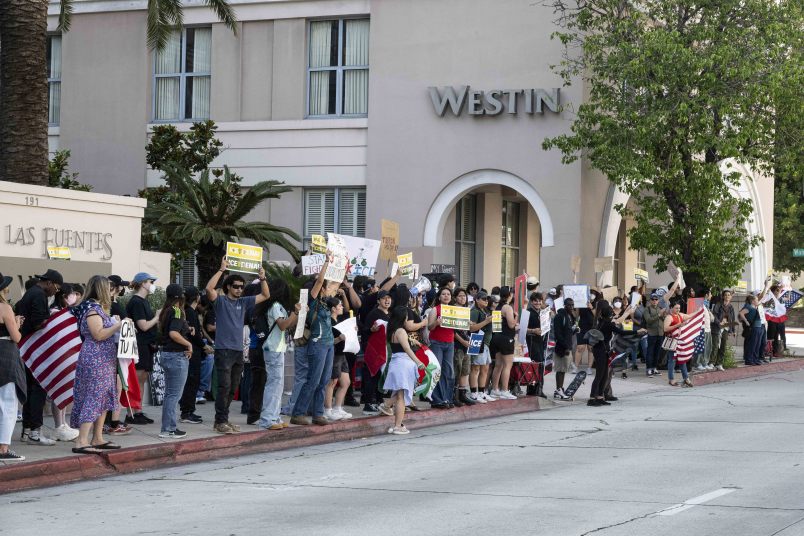
I instinctively blanche at writing those words because it has a precious sound to it. It’s too pat, too right about of feel-good Schoolhouse Rock type civic moralism. But I think it’s factually the case. It was people showing up at town halls early in the spring that first put people on notice that there was a backlash against what Trump was doing. Yes, it was the bond market perhaps most directly that got Trump to turn tail on most of his tariffs (obligatory TACO invocation). But it was also consumer sentiment showing up in the canonical consumer and economic sentiment data and polls that really scared him off. We’re about to see another example of it tomorrow in the “No Kings” protests. We’ll see just how widespread they are.
Of course, these aren’t organic. The first and second examples are certainly organized. As was the case during the first Trump administration, Indivisible appears to play a really important role creating the social infrastructure for these town hall turnouts. But still, you’re talking about people of no great prominence or wealth. Of course power can target ordinary people as well. In some ways they are even more vulnerable. But there are too many of them.
You’ve seen something similar in the relationship between the Democratic Party and its various constituencies. The dynamics aren’t the same. I don’t think Chuck Schumer is worried about one of his mergers being canceled or his medical research grants. But there’s at least some analog in the way that it’s the grass roots of the party that’s driving the elected officials. The continuing resolution debacle in March was a key catalyst and turning point. And here again, I’m using my phrases in a descriptive rather than valorizing sense.
I don’t have any great takeaway or insight here. I’m taking what I think we’ve all seen and simply attempting to pull the pattern to the surface a bit. But I do get the sense that the strongly inculcated assumption that you can say what you think, that you don’t need to censor yourself, is more vibrant and ingrained in people at some remove from the centers of immense power and wealth. When you’re closer you’re more practiced at rationalizing things. And if that’s true that’s a good thing.