I sit at my desk every morning listening to the sounds of cable television in the air. Now a lot of it is about Libya. And I’m just blown away by the constant, almost unanimous chorus in favor of some sort of active, military involvement in the country. At this moment, I’m listening to some person say that it just doesn’t make sense — that it’s inconsistent — for the President to announce that it is our national policy that Qaddafi should leave and yet not take military steps to make that happen. I’ve also heard numerous voices arguing that we ‘didn’t act’ in the Balkans and then didn’t act in Rwanda and that we should not make the same mistake today.
This is a wildly different standard for military action than we’ve ever heard before, even in an era where our interventions have become much more frequent and when they’ve often been wise and necessary.
It signals no disrespect or lack of concern for the bravery of rebels and loss of life in Libya today to say that there’s no evidence whatsoever that there is anything happening in Libya right now that is remotely comparable to what happened in the Balkans or Rwanda in the 1990s.The atrocities in Rwanda were one of a handful — really, a small handful — of cases in the 20th century that are legitimately termed genocide, the intentional and organized effort to exterminate an entire people. The case in Balkans was different but awful, protracted and dangerous in its own very potent ways.
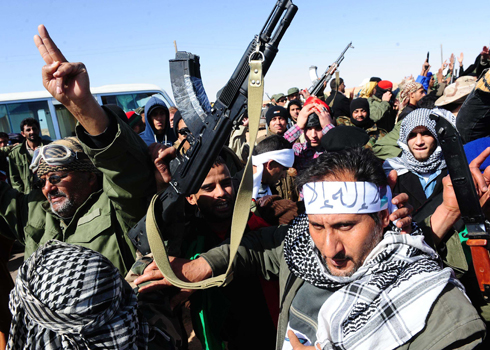
What we are watching in Libya is an outbreak of civilian protests that has broken into armed revolt. That’s very different. And do we really believe now that the United States can or should intervene militarily every time there is an armed insurrection against an existing government? That strikes me as crazy and deeply unwise, regardless of how odious the Libyan regime might be.
I have to confess that the sanest voice I’ve heard on this whole matter has been Secretary Gates saying that a “no fly zone” is not a video game. It’s not a joke. It begins, necessarily, with a series of debilitating attacks on a country’s military installations and anti-aircraft defenses to remove the opposing military’s ability to threaten your planes. That’s an act of war. Taking over a country’s airspace is an act of war.
I’m not saying that there won’t ever be a time when it will make sense for us to intervene in some way, that it might not be sensible in concert with other powers or that we shouldn’t put military assets in place to prepare for various potential scenarios or to assist the transit of refugees. But this whole conversation illustrates in an amazing way that when all you have is a hammer, everything starts looking like a nail.
You can have a policy, be committed to a policy, even be making great efforts to put that policy into effect … all without the use of artillery. It can happen.