
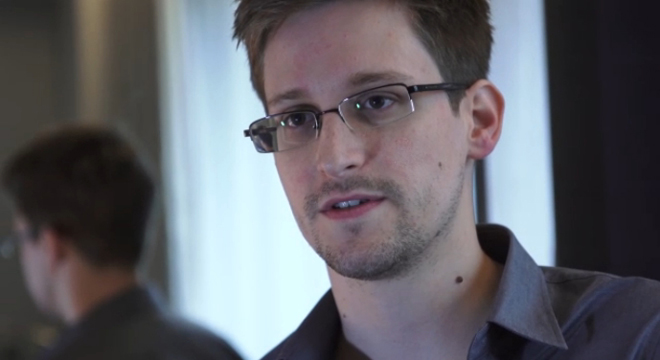
I’ve been writing out some notes for a piece about the starkly different reactions different people are having to the Snowden story and what different assumptions we bring to it. But first I wanted to flag a couple other points. We’re going to be doing a lot of reporting on Snowden’s pre-leak career, trying to piece together and confirm what we can about his background, what if anything doesn’t match up between his account and what we can find out from other sources and so forth. So that’s coming. One of the basic questions I’m interested in is whether Snowden really had quite the level of access and power he claimed in his interview with the Guardian.
In part this is just because it’s worth knowing the credibility and motives of someone at the center of such a major story. But there are two other reasons I’m particularly interested in this.In his video interview, Snowden suggested that he basically had access to everything – knew where all the intel stations were around the world, could tap people’s communications at will. Even the President if he’d wanted to. Some level of poetic license might be expected in such a case. But if that’s really the case it raises some pretty serious issues about how things are structured at the NSA. Any intelligence agency wants to be able to share information to make sure you don’t have one wing of your organization having one piece of the puzzle but unable to put it together with that other part fo the puzzle another wing of the organization has. Remember, that was the part of the critique post-9/11. Different parts of the US government had most of the pieces of the puzzle. They just weren’t communicating with each other.
On the other hand there’s compartmentation. Intelligence agencies want to protect their secrets. And because of that basically no one within the agency is treated as above suspicion. They work on something like a need to know basis. So that if someone goes rogue and turns spy or just releases a lot of information to the press, there’s a limit on the potential damage since they shouldn’t have access to everything.
Then there’s a second part of the equation. It’s been widely discussed that one key reason Republicans are having such a hard time on the information technology front is that the people who work in the field – the techies and hackers, whatever you want to call them – basically aren’t Republicans. Even that sort of understates much of the issue. The tech culture mindset – and by this I mean, the people doing cutting edge web applications and social networking start-ups – has very few points of contact with the modern GOP.
But here’s another point. The world also has a very high degree of overlap with the sort of radical transparency philosophy that Snowden (and many others) seems to espouse. Think about Aaron Swartz and all the techie subcultures on Reddit. When you figure how dependent the national security apparatus is becoming on system administrators and high-end programmers, you have to ask: Is Snowden not a one off but a more structural problem the national security apparatus is going to face?