


Whether it’s AI or Social Media, for me at least, the routine is pretty similar. I look to see if something seems interesting or interests me. And if it does, I try to reproduce it or verify it with a human brain, i.e., my own. This morning I saw a tweet claiming that the Bureau of Labor Statistics was moving from collecting the pricing information that goes into building government’s canonical inflation numbers (CPI) to relying instead on a higher percentage “imputed” numbers, i.e., estimates. “Estimates” aren’t all bad. A few years back it became a topic of pretty intense partisan warfare with the Census. As I recall it, the Census was combining data collection with statistical models to get more accurate counts for more marginal and transient populations where underreporting is chronic. (As you might imagine, undocumented people aren’t terribly eager to fill out government forms.) In any case, was it really true that BLS is cutting back on data collection?
Actually it is.
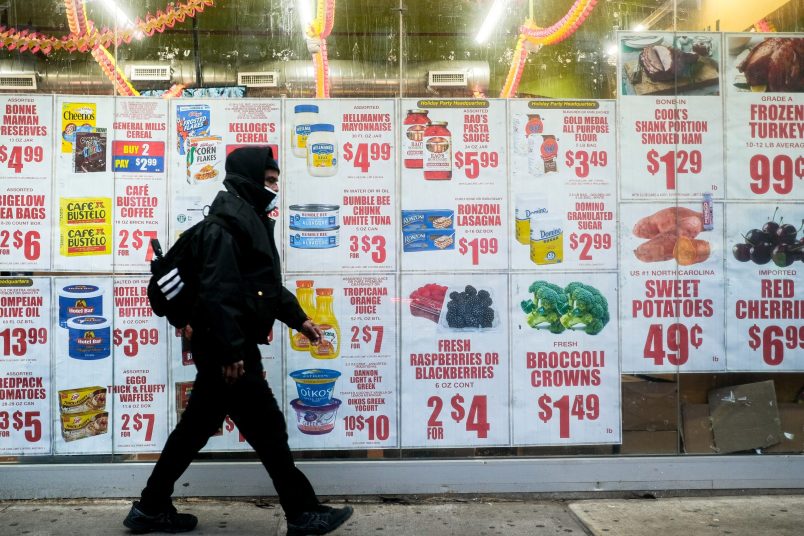
I didn’t have to look far. The Times published an article about it just yesterday. In aggregate, BLS has reduced data collection by about 19% over the last few months. That includes stopping all data collection in three cities: Lincoln, Nebraska; Provo, Utah; and Buffalo, New York. In the cities where collection is still being done they’ve reduced collection by about 15%. The BLS announcement is here.
Now, reducing collection by roughly 20% certainly isn’t the same as stopping or radically reducing data collection. But it’s not nothing. Statistical models can improve the quality of collected data. But they can’t really replace it. Statistical models can clear up the signal in your data or extrapolate what the data would be in areas where there are collection challenges — say, estimating the population of transient immigrant and/or undocumented populations for the Census or getting the opinions of low-trust male voters for political pollsters. But the more you’re relying on “imputation” or modeling for your data, the lower the quality of your data becomes. It’s sort of comparable to one of the big challenges facing AI today. They don’t have enough raw human intellectual meat to train on. If you train your AI slop-making machine on other AI slop you get thinner and thinner slop gruel over time. In any case, you get the idea.
The wise use of modeled or imputed data is to improve the accuracy of the data you’re collecting or produce solid estimates of data you cannot easily connect. Using it to replace data you decided not to collect to save money is not wise. And that’s exactly what’s happening here. The BLS notice states it succinctly in tight bureaucratese: the changes are being made “to align survey workload with resource levels.”
In other words, it’s DOGE. Or perhaps we should say DOGE+. There are the firings DOGE did in the spring; then there are the harassed “voluntary” retirements they pushed through and which have continued because of bad morale and further harassment; then there are the hiring freezes. Across most of the government now, when someone leaves for another job they can’t be replaced. These cuts have now mostly been confirmed in permanent budget cuts.
There’s another good line of bureaucratese in the notice: “The volatility of subnational and sub-aggregate item indexes also is impacted by the collection suspensions. BLS did not measure the impact of collection suspensions on subnational and item indexes.”
This means: Is it affecting the quality of the data? Yes, it is. And we didn’t check to see how much. Because we probably wouldn’t like the results. That last part is my addition. Let’s say I’m imputing it to the BLS statement.
Needless to say, the money saved by the national government by reducing the people who go to stores and check prices is infinitesimally small. This is done purely for ideological reasons. It’s another version of what we see at the National Weather Service and basically every other part of the government you assume is doing stuff in the background but don’t pay a lot of attention to until you need it, or a 10-foot wall of water obliterates your house.