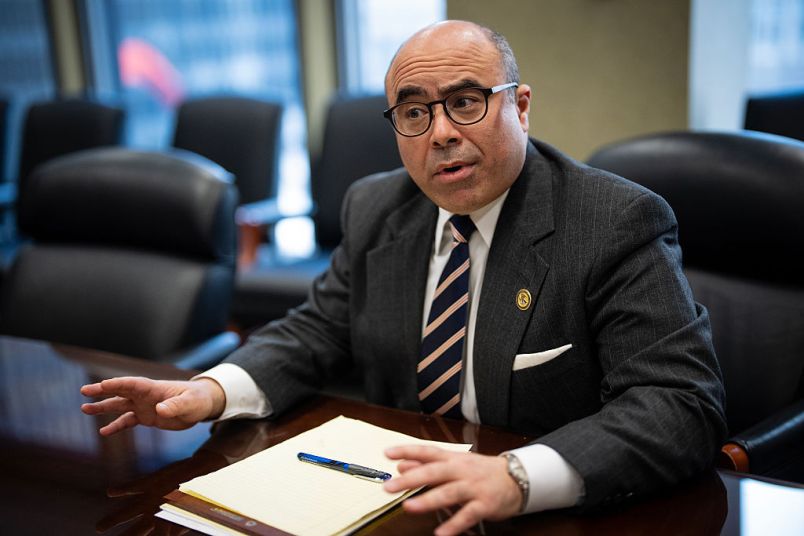
A few more nuggets to report out of the Chicago U.S. Attorney’s office. Yesterday the DOJ released what it referred to, rather grandiosely, as a “rare special report” about grand jury appearances. It was basically a statement and and defense by U.S. Attorney Andrew Boutros himself to charges that he was himself involved with the tainted grand jury which brought charges against the so-called Broadview Six. It’s a bit convoluted, even for someone like me who’s followed the case pretty closely. The “report” starts by arguing that one transcript reference that appears to refer to the “USA”, i.e., the US Attorney, was actually a transcription error. So, as the “report” puts it, a classic case of mistaken identity. It seems like that may be right, though it’s not clear to me that anyone was actually referring to that bit of transcript. In any case, the “report” leads with that, making it seem like any claims that Boutros has dirty hands is just wrong and there’s no there there.
I read an account of this “report” and then shortly after the pretty aggressive/smackdowny statement from Broadview Six defense attorney Chris Parente, Boutros’ current main antagonist.
Here’s that statement.
The U.S. Attorney has now acknowledged having personal contact with the Broadview 6 grand jury—on the date they delivered the indictment in this case. As the transcript demonstrates, U.S. Attorney Boutros asked these grand jurors, who previously refused to return an indictment, to ‘raise their hand’ if they had personal feelings on immigration cases, and informed them there would be a ‘different procedure’ for them. This was one week after the AUSA dismissed grand jurors who voiced dissent in the Broadview 6 case presentation.
Of all days for the U.S. Attorney to make a rare appearance before the grand jury, that he would be present on the day he likely knew this case would be re-presented speaks for itself. Despite this interaction having occurred in October, none of this information was disclosed to the defense or the public before this afternoon. It is only being revealed now because of the demands of the Broadview 6 defense team for transparency on this U.S. Attorney’s engagement in the grand jury process.
I was more than a little confused by this. Because where did he admit this? Is Boutros off the hook or deeper on the hook?
So it turns out that the “report” leads with the transcription error and then goes into this fairly technical distinction between Boutros not having any contact with any grand jurors but then sort of parathetically noting that he’d done little greetings to thank the grand jurors for their service. In other words, Boutros’s flat denials hang on appearing as a prosecutor vs appearing in a kind of ceremonial role to thank grand jurors for their service.
It’s one of those greetings that Parente is talking about. And yes, it’s right there in the report, just kind of buried at the end. The day the grand jury would finally bring its indictment on the third try, after certain grand jurors had already been removed to make it easier to bring the indictment, Boutros showed up to speak to a grand jury which (from what I can tell) had already been sitting for like a year to talk with them. He thanked them for their service and then said this (emphasis added) …
But we also recognize that these are trying times, these are emotional times. You
can’t help but turn on the news, read the newspapers, or for those of you who use TikTok and Instagram, and there’s stuff in there all the time.
So my question to you, and again, I’m gonna do this in all the grand juries, Monday, Tuesday, Wednesday, and Thursday. If there’s anyone here who is
struggling with a certain type of cases, such as the immigration cases or other
cases where they do not believe that they can set aside their personal, their
personal emotions, that they cannot listen and deliberate honestly and objectively, I would ask that you raise your hand and identify yourself, because we have a different procedure for that.
I’m no expert on what’s kosher and not before a grand jury. I don’t think this amounts to misconduct in itself. Boutros didn’t quite ask if jurors had “personal feelings on immigration cases”, as Parente’s statement puts it. He framed the comment as personal feelings that would prevent them from being objective. But pretty close. And the point here isn’t whether Boutros is personally guilty of misconduct, at least as I understand it. It’s whether he was part of, aware of, or involved in the effort to jam this high-profile, political retribution indictment through this grand jury. And yeah, this nugget seems to say that he was.
There are a lot of details here and it can be kind of confusing. But here’s the big picture. They need to get this indictment. A week earlier, the lead prosecutor has to commit serious misconduct to try to get the indictment. Now they’re back a week later to try again. Boutros shows up to talk to this long-sitting grand jury and, after some platitudinous remarks about the importance of grand juries, invites people who have strong feelings about immigration to leave. As it happens, no one raised their hands. But it’s very hard to believe that that was just random. It seems highly, highly likely that Boutros knew about what had already happened and was showing up to do what he could to help the process along.
For now, score one for Parente.
(As I said in yesterday’s post, if you’re a lawyer in Chicago and you’ve got more information on this, get in touch with me.)