


The big, big news of the morning is of course the D.C. appellate decision that Donald Trump has no immunity as a former president. But I wanted to briefly revisit the half-day life of the Senate bipartisan border deal that collapsed last night in the face of Trump’s demands.
There’s a bit more to it that I wanted to walk you through. Not a lot more. But a bit more. And those bits have some significance.
After the bill was released, House GOP leaders repeatedly insisted it was absolutely positively dead in the House. The very transparent aim of these statements was that they wanted their Senate Republican colleagues to kill it in the Senate. Because the truth is that it’s not at all clear it was dead in the House if it was allowed to get a vote. So the thinking from the House GOP was: you’re going to put us in a very tough position if you pass the bill and send it to us. So kill it in the Senate first. At least for now, that’s just what their Senate colleagues did.
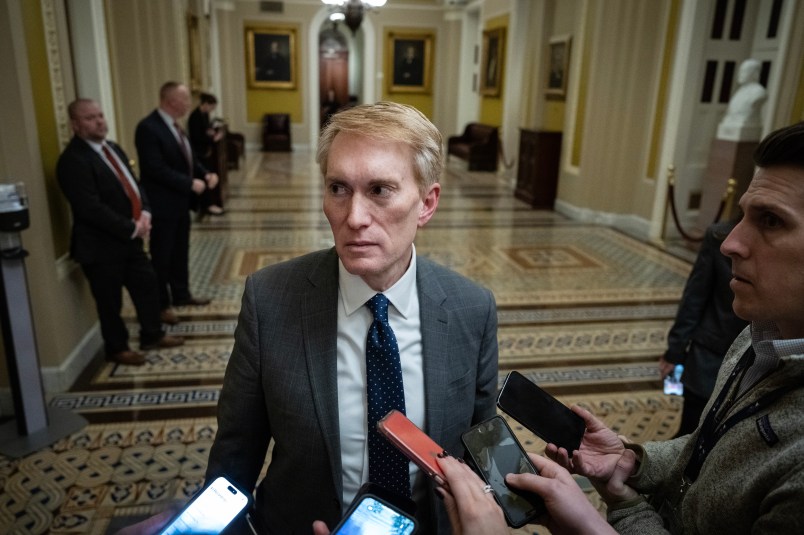
After the bill came out, Republican senators started to line up against it. A few who had been supportive of it or even participated in the negotiations did not quite say they were firm against it but said they would need more time. Chuck Schumer had said he’s going to bring the bill to the floor this week. So they were saying they would filibuster the bill if it came up this week. By late evening, even Mitch McConnell — who has been supportive of the border bill and extremely supportive of the Ukraine aid that goes with it — had come around to saying, okay, just filibuster it. Even Sen. Lankford, the new dignity wraith, who negotiated the compromise was saying, fine, filibuster it.
The bill itself is full of things Republicans have been demanding for years. It also answers another demand which was no Ukraine aide without a border deal. The lead Border Patrol union has come out in favor of it. Even The Wall Street Journal editorial page has come out in favor of it. One is tempted to say that all the leading lights of the terribleness community have come out for this terrible bill and thus the party of terrible can’t even justify why they oppose it. I won’t quite say that but you get the idea.
If you listen to the McConnell people they are not accepting that this is really over. They say they need more time to see if they can tweak the legislation to address the concerns of Republican senators who are on the fence. I actually think he is on the level about this. In a normal universe there wouldn’t be anything strange about taking some time to tweak a bill that had been negotiated semi-secretly by a working group of senators. (He’s probably in the same place as Lankford who said just a short time ago that the Senate caucus lunch today will determine whether the requests for delay are simply an attempt to kill the legislation or an actual effort to get revisions which could allow it to move forward.) I don’t know how much McConnell wants the border deal. But he really, really wants the Ukraine aide. With the end of his Senate career looming in the background it seems to have become a kind of legacy goal.
But it is hard for me to see how the attempt doesn’t fail. For the simple reason that this collapse wasn’t driven by the particulars of the bill. Donald Trump said to kill the legislation because he wants the issue unresolved for his campaign. That was enough for the House GOP leadership. And both combined was enough for the GOP senators. It’s possible that you could toughen up some parts of the legislation and bring over enough Republicans, without losing too many Democrats, to get to 60 votes. But none of that will change the calculus for Donald Trump, whose interest and demand killed the legislation yesterday. If anything a more draconian bill is even worse for his political interests since it would presumably be at least incrementally more difficult to attack as a weak-minded Democratic bill. We’ve seen clearly, again and again, that only a handful of Republican senators can stand in the face of Trump’s demands. For some it is not Trump’s demand directly but the weight of the House’s demands in the face of Trump’s demands. But this is of course an asterisk point more than a real distinction. Trump’s interests will not change. So there’s little reason to think the outcome will change. There’s a bit of possibility. But not much.
With that in mind remember that this year’s State of the Union address comes up in a month, on March 7th. That is President Biden’s singular opportunity to lay out the stakes and the outlines of his campaign for reelection. He, I hope, will use the opportunity to say that everyone is talking about the “broken border,” he worked with Republicans to come up with a bill and the people who talk the loudest refused to allow it to get a vote because Donald Trump told them to kill it. That’s just where Joe Biden should want to hit this issue for the 2024 campaign.