


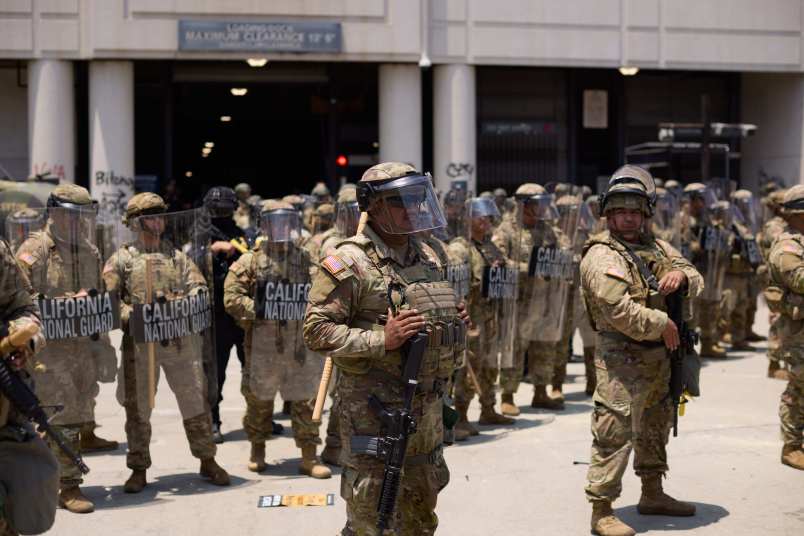
National Guard troops are mobilized fairly frequently for domestic purposes, usually during natural disasters. Having them federalized isn’t that uncommon. But having them federalized over the objections of a state’s civil authorities is extremely uncommon and hasn’t happened in more than half a century. As this was unfolding over the weekend, I knew generally that this had last happened under LBJ as a part of enforcement of federal law during the Civil Rights Era. But I didn’t remember that the last time was specifically during the Selma-to-Montgomery March in March 1965. I was reminded of this this morning by a piece in NOTUS. This 2016 piece in Politico gives the specific details of how and why the federalization took place, which are interesting in themselves. A federal judge ruled that the march was protected under the First Amendment and that the state was responsible for ensuring its safety. Wallace refused to use state police power to do that, thus deliberately forcing Johnson’s hands (Johnson was pissed), figuring that he would gain politically if federal troops got into violent in encounters with anti-civil rights counter-protestors. As it happened, the larger spectacle was a key part of building momentum for the passage of the Voting Rights Act that August.
Join TPM to get full-access to our reporting, newsletters, and other member-only features.