


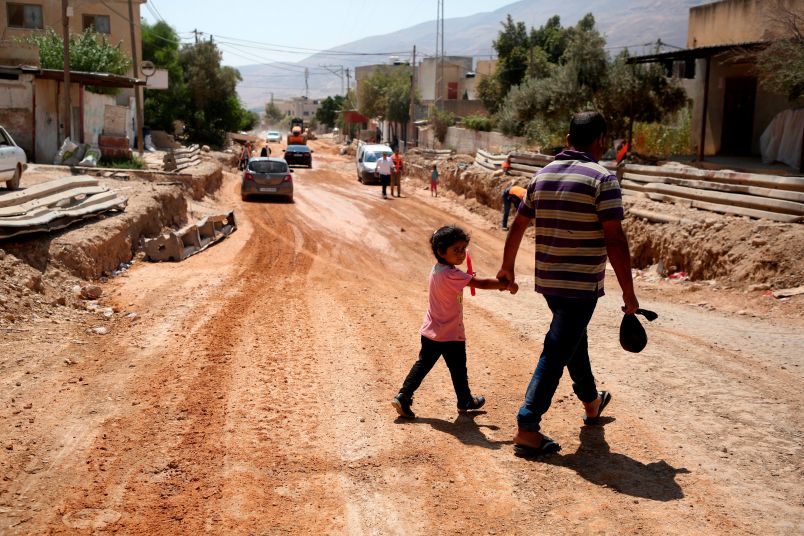
On Tuesday the United Kingdom announced a series of sanctions against Israeli settlements in the West Bank. They were joined in this by Canada and France. The sanctions include a ban on imports on goods produced in the West Bank as well as those who provide services including “construction, infrastructure, financing or real estate for settlement expansion.” That sounds like it involves sanctions on banks funding settlements. The Times refers to this as a “symbolic step.” But I’m not sure that’s the case. The devil is really in the details of that clause I quoted, how it is interpreted and enforced; just what counts as services, direct or incidental; and what counts as expansion. It also, of course, matters a great deal whether other countries adopt the same policy.
This is a wise, judicious and necessary policy. If Barack Obama had put measures like this at least on the table back in 2009 when he tried to force a resumption of final settlement talks we might be living in a much better and very different reality today. When the then-newly elected Benjamin Netanyahu rejected Obama’s overtures Obama mostly walked away and gave up. In his semi-defense he wasn’t elected to bring about a final settlement of the Israel-Palestine conflict and it would have required an immense amount of political capital simply to set the stage for it, let alone accomplish it. The key feature of this new British policy is that it distinguishes between what is legitimate (Israel within its internationally recognized 1967 borders) and what is not (its settlements on the West Bank).
Join TPM to get full-access to our reporting, newsletters, and other member-only features.