


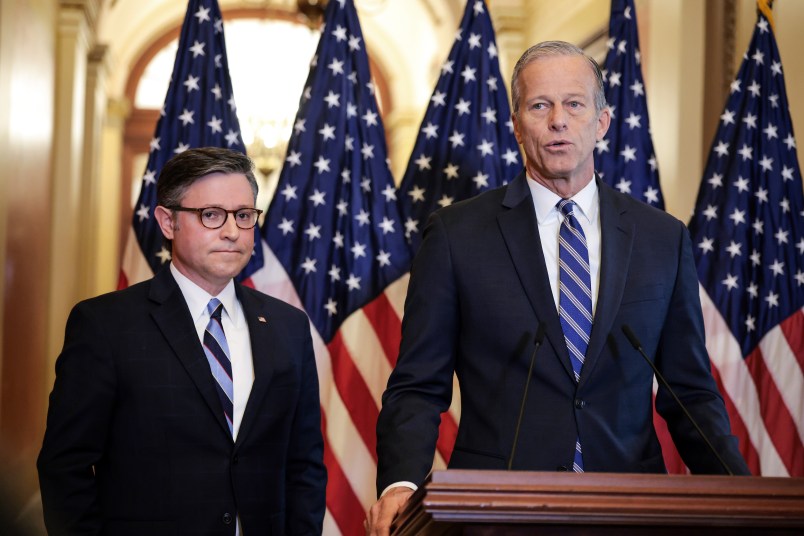
As we hurtle toward an almost inevitable government shutdown, I want to note one part of the discussion I’ve seen among commentators. This is a bit in the weeds but I think it’s worth discussing. Some writers say that it’s actually a mistake for Democrats to make any policy demands in the budget standoff. So health care, pushing back on ICE, standing up for democracy … regardless of the specific demand, it’s a mistake. I noticed Bill Scher making this argument today in The Washington Monthly. I’ve seen TPM alum Brian Beutler in his Off Message substack newsletter. And these are only a couple of examples.
The argument goes like this.
These shutdown standoffs are technical budgetary questions. The side that is making policy demands is basically taking the budget hostage to extract extraneous policy concessions. Based on the evidence of the last 20-30 years of history, that side is the one who gets blamed for the shutdown because they’re “taking the budget hostage” or introducing extraneous demands even if those demands are good ones on the merits or even supported by the public. Beutler focuses on the “hostage taking” metaphor. Scher puts it this way:
Every past attempt to use government shutdowns to extract policy concessions has failed, even when the policy demands are politically popular, because shutdowns make people forget what you have to say. Public attention shifts to how shutdowns hurt average Americans and how one political party is willing to harm constituents to play political games. Once public opinion quickly turns, the shutdown agitators invariably realize the shutdown failed to provide negotiating leverage and eventually cave.
Join TPM to get full-access to our reporting, newsletters, and other member-only features.