A few days ago, I was looking at one of the many recent (post-shutdown) polls that show an increasingly dark mood toward the GOP and favorable signs for the Democrats. There was something else in those polls that surprised me: people are really, really down on AI. Now, to be clear, this is sort of cardinal assumption almost bordering on a prejudice in the world I live in: a fairly educated, generally left-leaning world. Everyone’s down on AI in various ways in that world and for many good reasons, even as many also incorporate AI into aspects of their professional lives. (This is a pervasive dichotomy: we’re generally AI skeptic; AI is also allowing our programmers to be vastly more productive.) What struck me though is how widespread the skepticism or hostility is. It goes across demographics and age, political persuasions.
There are many good reasons for this. The explosion of investment in AI poses various near and long term environmental dangers; it might … well, take your job away from you (downer); it’s driving up prices for energy, ubiquitous parts of the modern economy like computer memory; and … oh, there’s that one thing that even the biggest champions of AI talk about and are oddly fascinated by … the non-trivial chance that AI could lead to the extermination of the human race (bummer!). This is the list of horribles that leaves many us thinking what in the actual fuck are we doing here?
What I didn’t fully understand is how deeply this anti-ness appears to have seeped through society. It’s always important to remember — keep reminding yourself to remember — that the people who are TPM’s core audience are pretty steeped in news, tend to have a spectrum of certain educational and ideological characteristics. There’s a whole world of America where news, and political news, is an occasional thing at best. Indeed there are many discrete worlds of America like that. Those are different worlds where people focus on different things, have different views. Not like opposite necessarily, or opposed. Just different. On wavelengths that are hard for you or I to imagine just as ours is inscrutable to them. It’s so easy to forget just how large and variegated America is, in geography, population, diversities of all sorts. So what got my attention is how widespread and seemingly deep-seated this skepticism or hostility is. I think I would have assumed that there’s a lot of America for whom AI is still goofing around on ChatGPT or teens and college students using it to write their term papers. But these polls suggest that’s not the case.
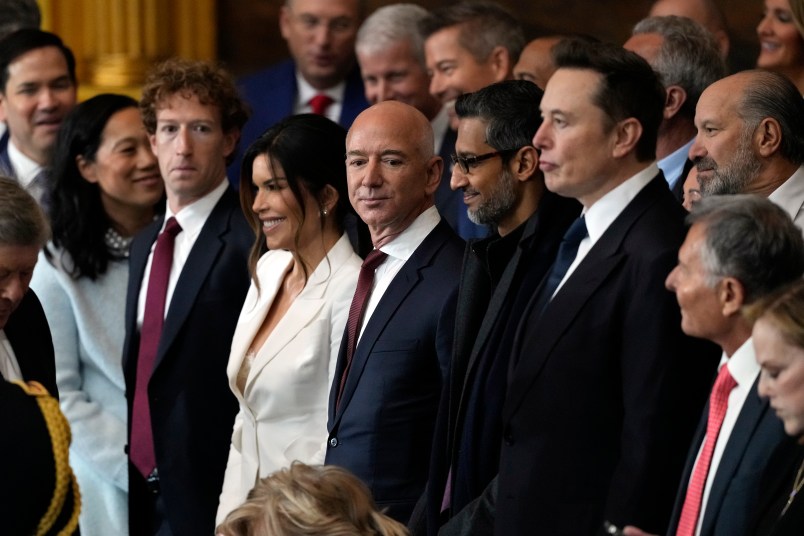
I mentioned earlier this week that a key feature, perhaps the central feature, of the AI boom is that it is being led by the decisions of a very, very small number of individuals. That is a product of the wealth concentration and platform dominance of the contemporary tech economy. For good or ill, this structural feature of the AI economy is undeniable. What came to mind when I saw these numbers was that I wondered how much of this skepticism and opposition is rooted in what I would call anti-oligarchic sentiment: basically the idea that this whole new world of AI is being created and we’re told it’s going to change or disrupt everything and it’s being led by, the big decisions are being decided by, this coterie of centi-billionaires who live in a different universe than everyone else. Put another way, has opposition to AI become another feature of the wealth inequality debate? Inseparable from it?
I’ve been mulling all this for awhile. But my interest was again piqued when I saw this piece from a couple days ago by Dave Weigel in Semafor where he recounts that the big new AI lobbying group went after its first elected-official target and basically got smoked.
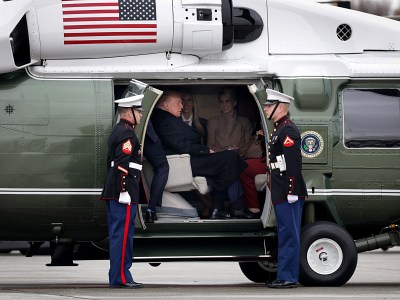
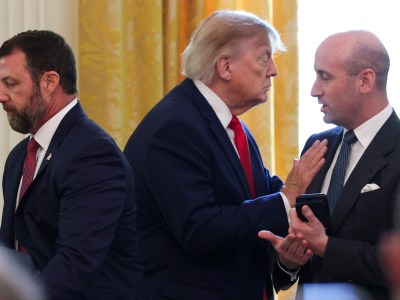
If you’re a TPM Reader, you probably don’t need a lot of convincing that Trump’s policy, as opposed to his rhetoric, has always been government by, for and of the rich. But evolving over 2024 and decisively from early 2025 it’s been all those things for the tech and tech-adjacent economy, with AI and crypto moving to the center of administration policy as well as the president’s family’s own business concerns.
I should step back and say or anticipate the response that … of course it’s about the wealth inequality debate, the oligarchy debate; it’s about taking away everyone’s jobs, pushing more wealth to the top, jacking up your electricity bills so the tech lords can have their AI data center arms race. To which I would say that what logically makes sense and may be true as far as our lights can illuminate it has at best a highly uncertain relationship to popular sentiment. And the public opinion data I’ve seen recently suggests to me that AI has become not only a thing in itself but a symbol or perhaps a focal point for perceptions of a society in which all the big decisions get made by the tech lords, for their own benefit and for a future society that doesn’t really seem to have a place for most of the rest of us — the 85% or so of the society that doesn’t get the windfall of the tech-AI future.