


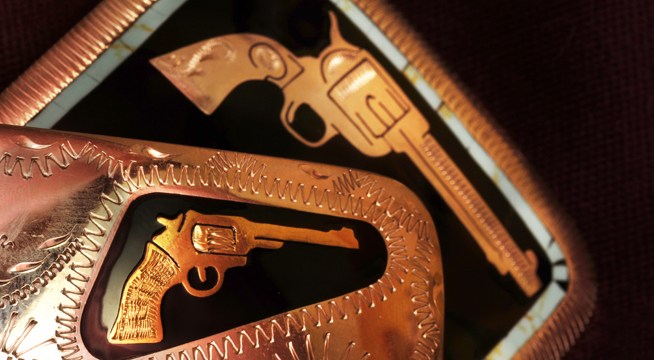
We know what people mean in a political context when they talk about ‘gun rights.’ And the Supreme Court has now said that there is an individual right, though not an absolute one, to own guns. But now an NRA boardmember in Arizona is taking it to a whole new level — claiming the guns themselves have rights.
Todd Rathner is threatening to sue Tucson police over yesterday’s gun buyback program, saying they have no right to destroy the guns themselves, despite the fact that the owners sold them ($50 gift certificate per gun) to the police to destroy them. In other words, the guns — not the people who have a right to own them — but the guns themselves, i.e., the metal and miscellaneous composites that make up the firearm, now have rights.
Last week Rep. Steve Palazzo (R) made news but voting against Sandy Relief despite representing one of the districts most hard hit by Hurricane Katrina and actually personally pleading for more disaster relief for his home town at the time. Now he’s toured the Sandy-affected region and says he’s on board for the next vote.
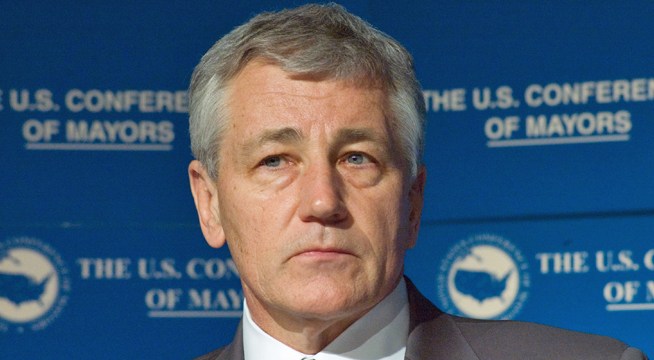
Nominations lose steam or gain steam. Campaigns against nominations lose steam or gain steam. And at the moment, the campaign against Chuck Hagel’s nomination is losing steam. AIPAC and the ADL have both signaled they do not plan to make a fight of it. Israel’s Deputy Foreign Minister is giving Hagel the thumbs up. Now even the Washington Post editorial page has signaled it’s backing off its opposition. Read More
So, day two and the Post oped page is moonwalking back its opposition to the Hagel nomination.
On the second anniversary of the Tucson massacre, one Arizona lawmaker wasn’t going to let the city get away with what he called a “do-gooder, touchy-feely” gun buyback. So he held his own rival event. To buy guns for his own collection.

For years, there’ve been marginalized and generally unsuccessful efforts to build a Republican pressure group to nudge the party back toward the middle or mainstream or American politics. The model is virtually always the Democratic Leadership Council which in various ways — some under-appreciated, many over-appreciated — repositioned the Democratic party in the late 80s and early 90s. After the 2012 election, there was another hue and cry that such a group had to come into existence. But, it isn’t looking good. Read More