


Tierney Sneed goes inside the bizarre (and complicated) Donald Trump-Ted Cruz Louisiana delegate fight and finds that, as far as locking up delegates goes, Trump’s “outsider” campaign may very well hurt him in the event of a contested convention.
I’m going to be away for a week. Please keep an eye on the country.
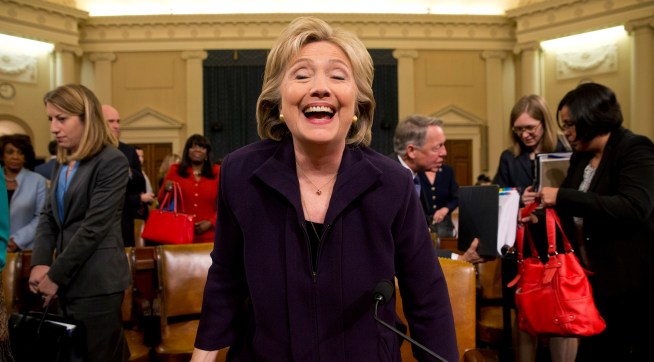
I noted on Friday that what seems very likely to be the Clinton v Trump general election match-up will be a gendered electoral armageddon – an unreconstructed, unabashed and angry male chauvinist against a women of great power and accomplishment who can more than hold her own against him. It will be ugly. But I think it will be Trump’s undoing. Remember, Clinton’s already beating Trump in all the head to head match ups (as is Sanders). So he doesn’t need much undoing. But I think he’ll get it.
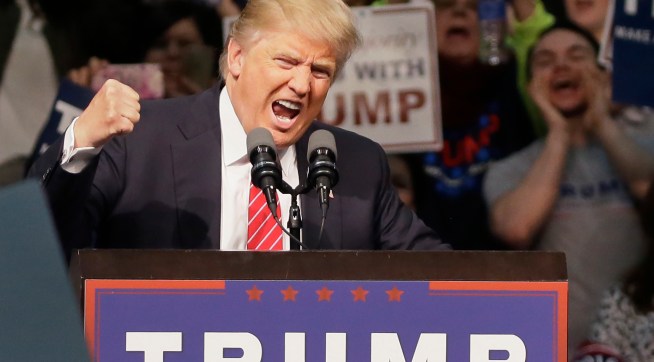
In my series of impromptu essays about Trump and Trumpism I’ve repeatedly returned to the topic of ‘dominance politics‘ and the way it informs virtually everything about Trump’s campaign. So far I’ve discussed it mainly in the context of domestic, electoral politics. That’s the framework in which I usually think about it. But since Trump will almost certainly be the Republican nominee and thus possibly become President, it’s important to think through the implications abroad as well.
Recently I was talking to an activist in the gun control movement. The issue that most interested me is that while the number of guns in circulation has gone up dramatically in the United States, the number of people who own firearms has been declining steadily for forty years. In other words, a smaller number of people are owning more and more guns.
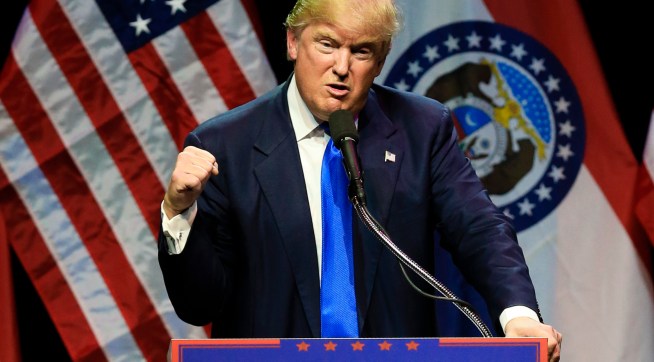
There’s a really good article in Slate by my friend Frank Foer under the headline “Donald Trump Hates Women.” It’s good for two reasons. First, it pulls together the numerous anecdotes, quotes, incidents and events going back five or even six decades demonstrating the point embodied in the headline and, second, weaves them all together in a way that is not just as an indictment, which it can’t help but being, but an explanation of a certain type of character.
Sen. Jerry Moran (R-KS) is not happy with Mitch McConnell’s Supreme Court blockade: “I would rather have you complaining to me that I voted wrong on nominating somebody than saying I’m not doing my job.”
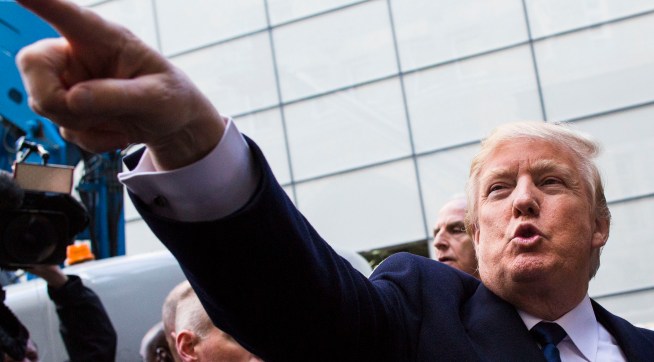
Over the last week I’ve seen a number of new articles claiming again that Democrats shouldn’t be so sure Donald Trump is an easy beat in the fall. He could reshuffle the deck in unexpected ways and become a formidable candidate. Now, before sharing my thoughts on this I want to restate what I’ve been saying for months which is that I think that the range of possibilities in a Clinton v Trump match up is anything from a narrow Trump victory to a historic Clinton blow out. Trump can win. He has the inherent power of celebrity familiarity; Clinton has the inherent weakness of seeking a third term in power for her party; Trump has a galvanizing and clear message for aggrieved white voters; and, critically, he would basically be the first ever anti-trade liberalization, anti-globalization presidential candidate – a critically undeserved niche in the national party system. With all this said though it is important to see just how long a shot this ‘reshuffle the deck with white working class voters’ model really is.
Let’s start with some thought experiments.
Picking back up on the thread that began with John Judis’ post Tuesday and continued with TPM Reader RM‘s email yesterday, here’s more of the discussion on what constitutes the “proper” long view of the Middle East and radical Islam, from TPM Reader BC:
I was very interested in RM’s analysis, particularly by his analogy — which I hope is correct! — of the Middle East with contemporary Colombia. Unfortunately, the analogy ignores a key element that separate the two situations: the presence or absence of Great Powers in Colombia vs. the Greater Middle East.