


Why the new GOP majorities have every incentive to keep gridlock going strong.
Two New York City police officers were shot this evening in the Bronx just after 10:30 Monday evening. They were responding to a robbery. Neither officers’ injuries appear to be life-threatening. A major manhunt is currently underway.
NYPD officials do not believe the officers were targeted.
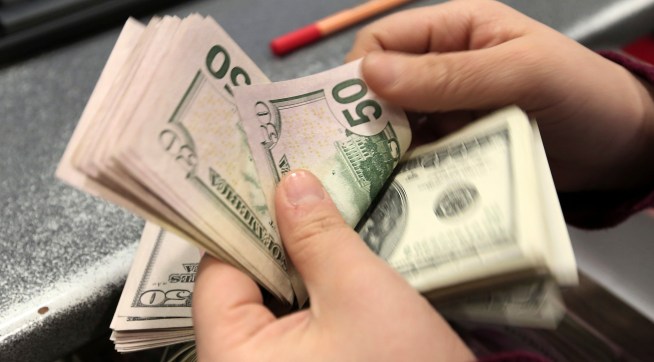
This is another in my on-going series of posts on the politics and economics of wealth inequality – perhaps the key political and economic puzzle and problem of our time. As we’ve noted before, the trend toward greater concentration of wealth at the top is most extreme in the US and to a lesser extent in the UK and Canada which are closer to our economic model than other European countries and Japan. This post from November has a good chart illustrating the relative trends (third chart down). But this new study comes at the same data from a distinct and frankly jarring perspective.
What will define 2015 in politics and more importantly our national and political culture in general? 2014 I’d call a year of general malaise, disenchantment with Obama, a return to Iraq and a polarizing but irrepressible public argument about race and policing. What does 2015 hold? I’ve just opened this thread to discuss it in The Hive (sub req). If you’re not a Prime member, shoot me an email at our main site email address up at the top of the site.

If you have a moment, check out this Times article on the collapse of the Yanukovych government in Ukraine last February, the event that seemed to end one Ukraine crisis but in fact kicked the broader and continuing regional crisis into high gear.
Brittle states, especially once they are held together only by bare force, can and often do come apart very rapidly. There is a strong element of game theory and crowd action in the process – a rush for the exits that can be baffling. It has always been a bit of a mystery exactly how the end came for Yanukovych and why it happened so quickly. The Times article doesn’t quite solve that mystery so much as it illustrates that process of rapid government or state collapse – a chain of events that lacks any clear point of origination.
TPM is pleased to announce the winners of the Eighth Annual Golden Dukes recognizing the year’s best purveyors of public corruption, outlandish behavior, The Crazy and betrayals of the public trust. The awards are named in honor of former Rep. Randy “Duke” Cunningham, who epitomizes the iconic modern scandal.
This is a really good run-down of why – despite the controversy, which goes to the heart of a lot of GOP messaging weaknesses – House Republicans have no intention of dropping Steve Scalise.
As I mentioned earlier we are considering doing a subscription/contribution drive for a one-year project where we would hire one or two reporters and one editor to report exclusively on crime and policing. The two issues are umbilically connected to each other, which should go without saying. And through all this roiling public controversy about police community relations, the one critical factor that simply doesn’t get mentioned enough is the historic drop in crimes of all kinds over the last 20 years. It is nothing less than the end of the late 20th century crime wave which began in the early 1960s and lasted between 35 and 40 years, depending on where you’re talking about and just how you want to define it.