


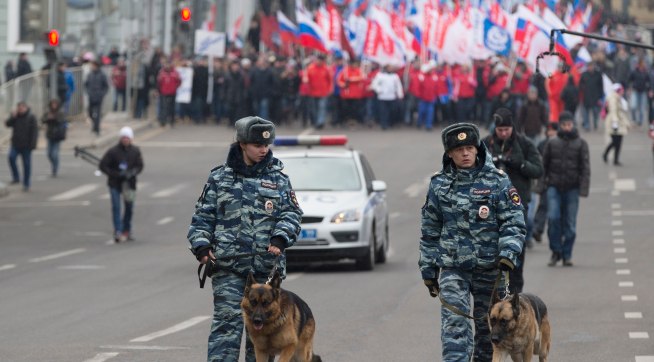
(The following is the first in a series of guest posts on the on-going crisis in Ukraine.)
NATO Ambassadors will meet tomorrow for the second time in 48 hours, this time at the request of Poland, which invoked Article 4 of the NATO Treaty in order to convene the meeting. What does this mean? And what should the 28 NATO Allies decide to do?

1% entering period of crisis as people with too much money prove too stupid to know what to spend it on. Today’s edition, Twitter has purchased two 19th century Log Cabins from Montana and plans to install them in its San Francisco headquarters to serve as dining halls. Because, something.
Senate candidate Steve Stockman (R-Tea Party) threatens jail to anyone who publishes his mugshot. We published it here along with the whole bizarre story. Presumably we’ll soon be in the can.
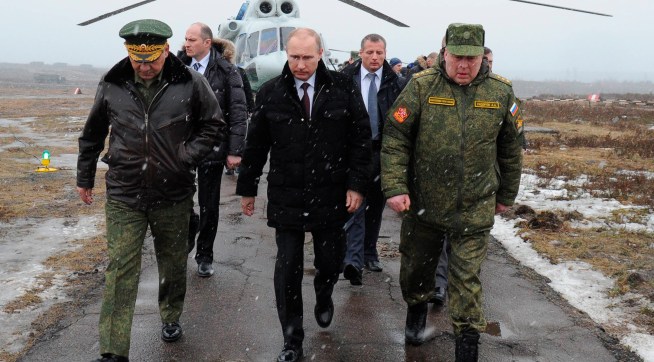
More from longtime TPM Reader JB on what may be the weakness of Putin’s position …
Thanks for the Ukraine coverage. I think, after the shock of finding boots on the ground, we are now waking up to the weakness of the Russian position. Some other food for thought: Based on the 1994 Trilateral Statement by the Presidents of Ukraine, Russia, and the United States where Ukraine was to destroy all nuclear weapons on its territory, Ukraine, Washington and Moscow reached an agreement in January that allowed Kiev’s formal ratification of the Nuclear Non-Proliferation Treaty (NPT).
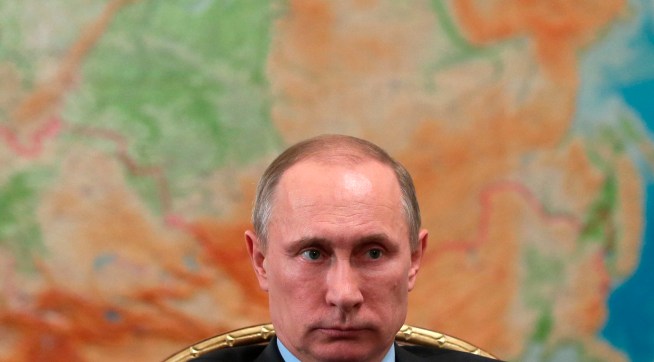
A contrary voice from TPM Reader IL …
Under what metric are Putin and Russia “#winning” with the invasion into Crimea? The Russian Central Bank just raised interest rates 150 bps in response to weakness in the Ruble. The Ruble is now the worst performing currency in the world this year.
It may be true that Russia is using 19th century statecraft. But this press photo from ITAR-TASS news service strongly suggests Russians are using 1970/80s phones and office technology.

Click post title to see larger version of photo.
We have a lot of economic indicators — but very few of them actually tell us if people are happy. We welcome Zachary Karabell this week for a TPM Cafe Book Club on The Leading Indicators: A Short History of the Numbers That Rule Our World. The week kicks off with his look at an attempt to measure happiness.
In case you missed, here’s my initial take on the crisis in Ukraine. It’s from the weekend but still captures my basic thoughts on the what it means, what we can do.
Juliet S. Sorensen points out that natural disasters can be breeding grounds for corruption: “each additional $100 per capita in FEMA relief was correlated with a 102 percent increase in corruption in a state.”
So who exactly was behind that spasm of “religious liberty”/”all good to hate on the gays” bill that suddenly cropped up all over the country? We got to the bottom of it.