


Quite frequently I’ll get an email from a TPM Reader who asks me whether they can cut and paste a whole paywalled article to share it with someone else or whether we can put it in front of the paywall so non-members can read it. As I tell people individually, there’s no need. We’ve done a poor job getting the word out about this so here goes. If you’re a member, you can take any Prime/paywalled article and create a link that is not behind the paywall, that anyone can read whether they’re a member or not. On every paywalled article there’s a “share” button. Click that and it allows you to copy a non-paywalled link. It’s not the same as if you just cut and paste from your browser. You have to do it with that button. So if you want to email it to your colleague or son or daughter or anyone else you’re welcome to. It also allows you to share a non-paywalled version on the big social media sites. We do this because we want you to be able to share with people you know who aren’t members. It’s also an indirect form of publicity to attract new readers and hopefully new members.
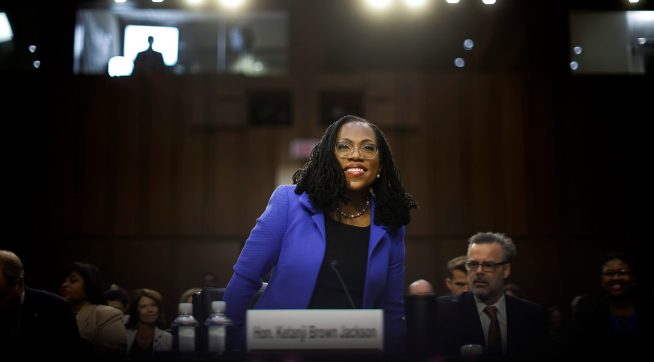
TPM’s Kate Riga will be reporting LIVE from Capitol Hill on the 3rd day of hearings for Biden’s Supreme Court pick, Judge Ketanji Brown Jackson. For written updates you can follow along our Live Blog. For video updates follow us on Instagram: here is the link.
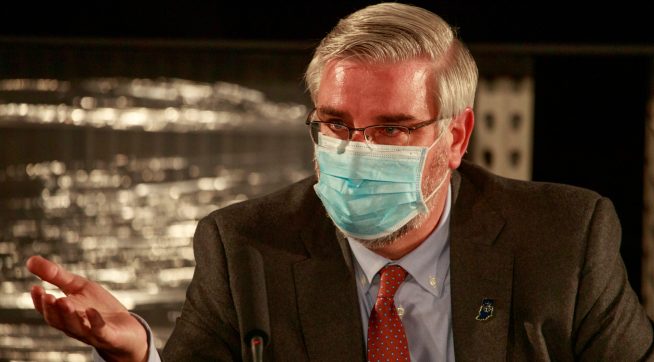
I want to say thank you to everyone who joined as members today and throughout this drive. During this drive we’re mainly trying to sign up TPM Readers who’ve been readers often for some time but for various reasons hadn’t become members. So for those who have just joined, I’m very interested to hear from you. What made you decide to join now?
We’re starting the second week of our drive. It’s really, really critical it be a good one. I’ve spoken to a number of TPM Readers over the last few days who have told me, “Well, I’d been thinking about it and that post pushed me over the edge.” I need to push more of you over the edge. If you’ve been meaning to join but haven’t gotten around to it, please make today the day. If you’ve been on the fence, please lean into it. Come off the fence and join us. You get a lot of great additional stuff we publish. And you support a truly independent operation bringing you the news in a genuinely unique way. Please join us. Just click right here.
Thank you in advance from all of us.
This is a quick follow-up on a COVID post I did last week, noting evidence of a new mini- or moderate- surge after the trough of the last month or two. I had said that my impression was that the driver was mainly the relaxation of mitigation measures — both as policy from governments and people individually changing their behavior. That seems less clear than I thought. There seems to be more evidence that the Omicron subvariant BA.2 is a key driver, perhaps the key driver. The evidence still seems muddy because BA.2 appears to have only a moderate advantage in infectiousness. And its share of cases has grown fairly slowly against the original Omicron strain. So there’s a lot about the dynamics of this latest trend that are not clear to me. But just let this stand as a partial correction or update on the earlier post which focused on declining mitigation. Be safe out there.

A few of you asked for book recommendations to read more on the subject of my post this morning about Ukraine and the homeland of the speakers of proto-Indo-European, the ancestor language to the languages spoken by just under half the world’s population. There’s a long answer and a short answer. But the short answer is the better one. The book is The Horse, the Wheel, and Language: How Bronze-Age Riders from the Eurasian Steppes Shaped the Modern World by David W. Anthony.
Join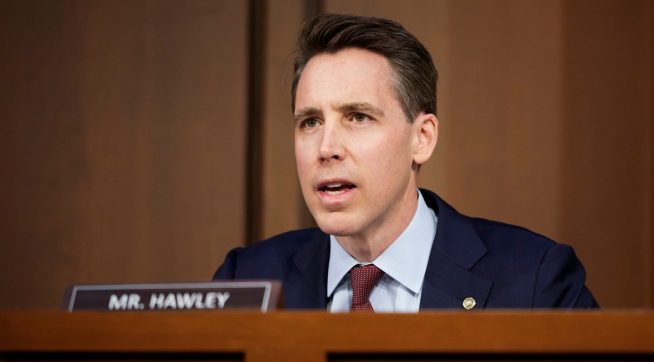
As Kate Riga noted repeatedly during her coverage of Supreme Court nominee Ketanji Brown Jackson’s appearance before the Senate Judiciary Committee today, Sen. Josh Hawley (R-MO) made a point of injecting some QAnon-adjacent claims about Jackson into the public record Monday.
Read MoreThis is hard to make sense of. But let me give you a brief update. A short time ago the Russian paper Komsomolskaya Pravda published an article which cited official Russian military numbers of killed in action in Ukraine as 9,861. That is a mind-blowing number. In one month Russia would have lost 2/3rds of the soldiers it lost in a decade in Afghanistan. But then a very short time later the article was pulled and replaced by a 404 error. Then it was reposted without any numbers.
What lends some credibility to these numbers is that that is in the ballpark of many Western estimates for Russian fatalities. I’ve been watching expert Russia watchers debate this in real time on Twitter and they seem to disagree on whether this was a real number that was rapidly pulled or whether it was just a complete goof, a typo.
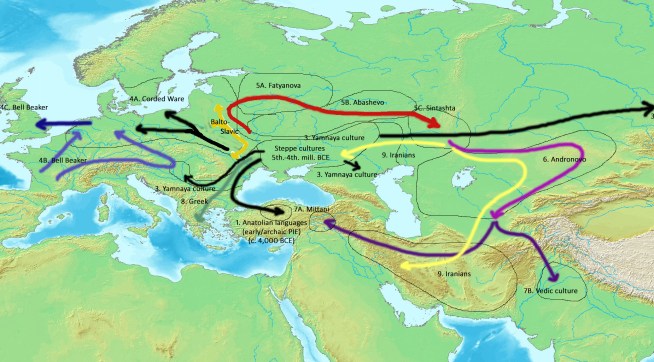
From the outset of the Ukraine Crisis, Ukraine’s relationship with Europe and potential integration into Europe via the European Union has been a, perhaps the, cornerstone issue. I got to thinking about this over the weekend since almost every European language originated in the country we now call Ukraine. Don’t get me wrong. I don’t argue that what I’m describing has any particular relevance to the current crisis. But it’s a fascinating prism through which we can look at our connections to the distant past. The language which I am now writing and which you are now reading originated on the steppeland just north of the Black Sea and the Caspian Sea. In other words, in the region we now call Ukraine and some adjoining parts of Russia and perhaps Romania. This is true of English — a loose hodgepodge language — but not only English. All European languages except Finnish, Estonian, Hungarian and Basque start there. (Maltese, an official EU language, is derived from Arabic, a Semitic language. Turkish is an Altaic language so it depends what you count as “Europe.”) And not just Europe. This is also the origin point for the languages of Iran, much of Central Asia and northern India (including Hindi and Urdu). This is not to mention the Spanish, Portuguese and French that are spoken in the Western Hemisphere outside of Anglophone Canada and the United States.
Join