


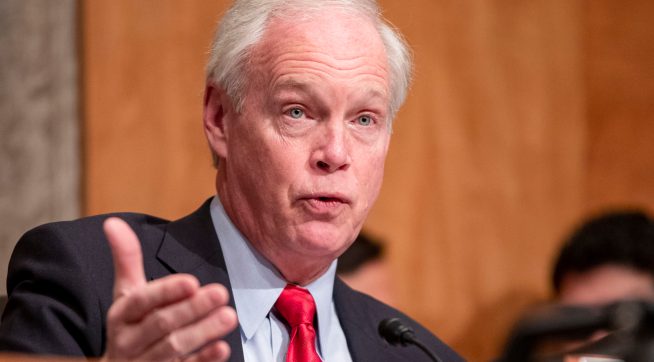
The antifa card has been dealt repeatedly this week. And it’s only picking up more steam among the GOP as a vague but ready excuse for all manner of things.
Tucked into a recent Politico report on Senate Minority Leader Mitch McConnell’s decision to push back on the House’s bid to conduct a bipartisan review of the Jan. 6 insurrection was a clue as to the staying power the actually-it-was-antifa lie will have.
JoinManhattan DA obtains Trump tax records (not just the returns). Manhattan DA zeroes in on Don Jr. Don Jr. deposed by DC Attorney General in lawsuit alleging misuse of inaugural funds. Like snow melting with the warming spring the Trump family’s immunity from the law is disintegrating.
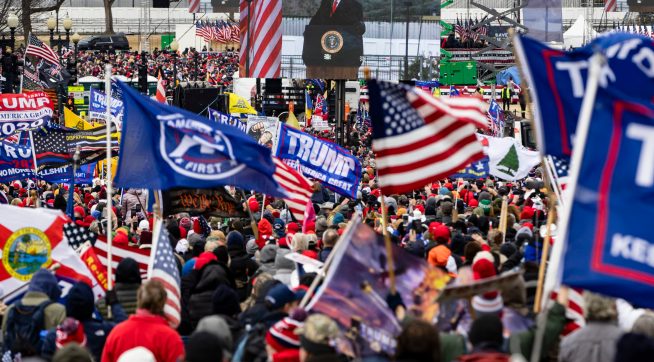
I’ve mentioned a number of times that to avoid the errors of the Obama years Democrats must make a firm commitment not to engage with bad faith arguments or bad faith actors. “This to me is the greatest negative lesson of the Obama era: the willing engagement of good faith with bad faith in which bad faith is, by definition, always the winner.” This necessity has cropped up again with Speaker Nancy Pelosi’s plan to create a commission to investigate the January 6th insurrection against the US capitol.
Congressional Republicans are doing everything they can to scuttle the idea. They’re opposing Pelosi’s plan to give Democrats a 7-4 majority on the panel (that’s not an unreasonable argument in the abstract) and more tellingly insisting that they can only support the idea if it also looks at violence during the summer protests in the wake of the murder of George Floyd. In other words, the Republican response is to whatabout the insurrection at the Capitol and the attempt to overturn the 2020 election by force. The latest gambit comes from Senator Minority Leader Mitch McConnell who says he could agree to the whataboutist model – Capitol insurrection but also antifa and everything that happened last summer – or a much narrower commission focused solely on Capitol security procedures.
Join

We’ve been following the story of South Dakota Attorney General Jason Ravnsborg’s fatal hit-and-run incident for some time now. And new video footage of interviews between the state AG and investigators raises questions about what truly happened on that September night — and the extent to which Ravnsborg might have known that he hit a human being, not a deer.
Like, for instance, the fact that the victim’s reading glasses were allegedly found inside the vehicle that Ravnsborg was driving when he hit him.
Join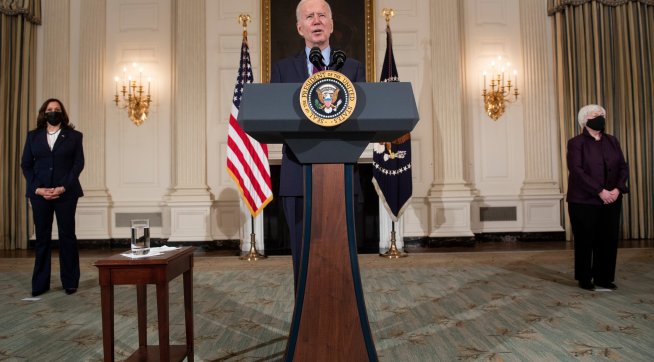
Of the many lessons of the last decade, one of the most salient is that good policy does not make for good politics. Not automatically. That’s simply not how it works. It was one of the underlying premises – intertwined with much else – that led to the disappointments and failures of the Obama years. Ex-President Trump got grief when he wanted relief checks to go out with his name on them. That’s not at all legit. But he had the right idea. You need to tell people when you’re doing things for them. No one else is going to do that.
This belief that good policy will take care of itself is deeply rooted in the technocratic, meritocratic mentality that animates so many professional Democrats. There’s a lot to that worldview that is good and we should celebrate. This is one of its blindnesses. There is no good policy that isn’t conjoined to good politics. You just have to do the politics because there’s no good policy without building, nurturing and sustaining constituencies for good policy. That’s the only way good policy can be sustained over time, from election to election. Because the most ingenious and humane policy is a failure if it isn’t sustained, if voters don’t know that it happened, why it happened and what they need to do to make it keep happening.
Yesterday the United States passed the threshold of 500,000 fatalities from COVID19, right about one year after we started this. You’ve seen the number in many places. I wanted to be sure you saw it here too. This chart illustrates the per capita death toll by state. Unsurprisingly New York and New Jersey still lead the country. New Jersey is actually first at 258 fatalities per 100,000 inhabitants. New York comes in at 239.
If you’re familiar with the geography this makes sense. New York’s epidemic was focused on New York City and the Greater New York City Region. And a greater percentage of New Jersey is in that region than is the case with New York state. Other nearby states are close – Connecticut (212), Massachusetts (230) and Rhode Island (233).
But outside the Northeast the next state is probably not one you’d think of: Mississippi. I struggle to think of a single national news story I’ve seen about the COVID pandemic specifically in Mississippi, where 220 people have died for every 100,000 inhabitants. That’s ahead of South Dakota at 211 and Arizona at 213 and neighboring Louisiana at 204. Those are all the states which have seen more than 200 inhabitants per 100,000 die of COVID in the last year.
From TPM Reader LF …
JoinI thought your appreciation of Mitch was good. I am nearing completion of the Years of LBJ by Robert Caro, and in the Passage of Power after the assassination, LBJ sees the legislative pickle JFK got himself into. I have left off right where Richard Russell says that they (the Southern bloc) could beat Kennedy, but that they won’t beat LBJ. I have not gotten to the part where LBJ figures the way out, but Caro makes a point here (and throughout the series in some ways): Congress was broken from the time FDR’s court packing scheme died all the way through the Kennedy Administration, and the only progress that was made was when LBJ pushed through measures as Majority Leader (limited as they were–geared to him becoming President). And Caro points out that the reason Congress was broken was that the old bulls of the Southern bloc controlled the Senate.
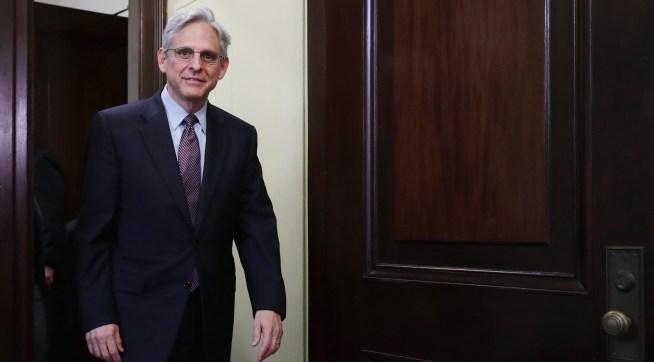
Merrick Garland is finally getting his day in court.
While the most eye roll-inducing moments thus far involve Sens. John Cornyn (R-TX), Ted Cruz (R-TX) and Josh Hawley (R-MO) daring to harp on the importance of an apolitical Department of Justice, Garland’s opening statement gave us a pretty clear sign of what to expect out of a Garland-run DOJ.
Join
Since the earliest reports of the high efficacy of the Pfizer and Moderna COVID vaccines there’s been a significant asterisk attached to that good news. While the vaccines are extremely effective at preventing illness and death – close to full proof on the latter – it wasn’t clear whether they prevented the further spread of the disease. So a vaccine protects you from getting sick but possibly you could still spread the disease to others.
When I first heard about this possibility in an article by TPM’s Josh Kovensky I was baffled. How could that possibly be true, even logically speaking?
This issue is one of the deepest sources of confusion and inaccurate messaging tied to COVID vaccines.
Join