


TPM Reader SD has a reply to my post about the psychology and ideational worlds of Republican and Democratic partisans …
JoinI think your post on the jitters of Democrats understates the really dramatic role consistent winning of elections can bring to the psyche of your average Democratic voter. It has been 52 years since 1968, and in those 52 years, the Republicans were really in the ascendancy for more than half of the period and then in the last 20 years the two sides have had an uneasy, unsteady equilibrium with each side gaining temporary advantages (and with Republicans doing a better job than Democrats at preserving or entrenching their otherwise temporary gains). Almost no Democrat under the age of about 70 (someone who would have been 10 years old in 1960) remembers a time where the Democrats had super majorities in the Senate and House while also holding the Presidency. Democrats who were 40 years old in 1960 would have essentially conceived of themselves as being a member of the dominant political party, accustomed to running the country and seeing the government reflect their values, because it is all they would have known in their lifetimes. Even a Republican holding the Presidency as Eisenhower did from 1953-1961 did not revisit the changes wrought by the New Deal. Instead, he could probably be more properly seen as a person of the other party holding the office in an era of the other party’s dominance. I think of Bill Clinton’s Presidency in similar terms.
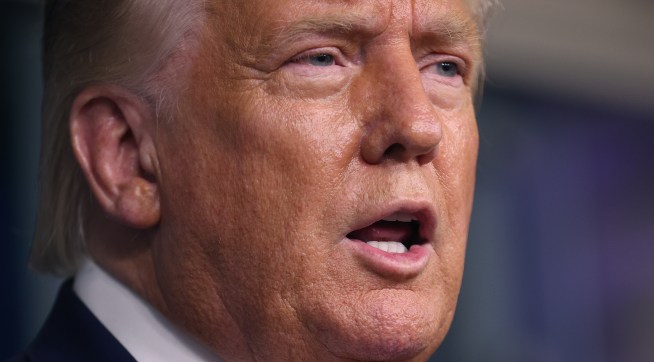
My roommate just asked me this question. There’s not a solid answer, but it’s related to news out of New York Times reporter Michael Schmidt’s forthcoming book, which was obtained by CNN.
Join
The President continues his policy promoting a maximal climate of violence and instability in the hopes that fear, uncertainty and demoralization will give him another term in power. He continues his tacit embrace of Kyle Rittenhouse, the self-styled 17 year old ‘militia’ member who gunned down two protestors in Kenosha, Wisconsin last week. This morning NBC reports that Rittenhouse’s lawyer will argue that his client was part of a “well-regulated” militia and that at least the weapons charges against him are unconstitutional. That argument seems unlikely to succeed. But it is another sign of how the brazen murders of two civilians are being embraced as a new cause celebre on the right.
JoinOne of the President’s supporters, who was actually filmed cheering him at a Trump rally, brought an AR-15 to a BLM protest and murdered two protestors and seriously injured a third. The President won’t condemn his actions.
Asked whether President condemns supporter and Trump rally attendee Kyle Rittenhouse who murdered two protestors, Press Secretary says Trump's "not going to weigh in on that." pic.twitter.com/ZeoaYP5oHB
— Josh Marshall (@joshtpm) August 31, 2020
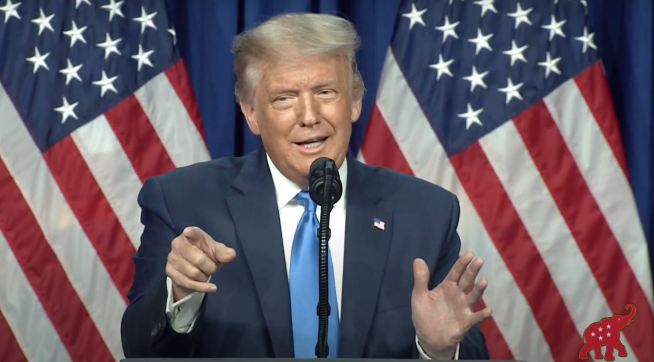
The White House is going after former Veep Joe Biden for not traveling to Kenosha, Wisconsin, unlike President Trump who “shows up.”
The only issue? The governor of Wisconsin has politely asked Trump to actually … not show up.
Join

We are now waiting to see the upshot or impact, if any, of the two successive national party conventions. The general consensus was that the Democrats did very well. Then last week – at least as I was hearing it – many seemed to think that the Republican convention was more effective than Democrats anticipated. Suddenly the tide seemed to shift. I felt some of this myself. I have no idea which of these is true. But I can offer one observation that I’m pretty certain is accurate. It’s born of years of experience watching elections.
Regardless of the objective realities, Democrats will consistently anticipate loss or worry about loss while Republicans will consistently be confident of victory. This is a good rule of thumb regardless of the objective realities of the moment, to the degree they can be known. This is not an absolute of course: overwhelming odds will buoy Democrats and hopeless situations will nudge Republicans to despair. But in general this is almost an iron law of political psychology in the United States.
This may be obscured by the genuine shock and horror Democrats experienced on election night four years ago. Democrats were pretty confident and all their worst fears were realized. But a closer look shows the general pattern was actually in effect through much of the 2016 cycle. Indeed we saw a particular example of it during the 2018 midterm election. The fall of 2018 was chock full of theories and predictions about how two years of ‘resistance’ activism were coming up short. It was the ‘caravan’. It was Trump’s 12 dimensional chess. It was low turnout among young voters. So pervasive were Democrats’ latent fears of coming up short that they actually persisted well into election night and even the first couple days after the election – until late returns, results of close call races and just the actual numbers made clear Democrats had won a decisive victory.
Join
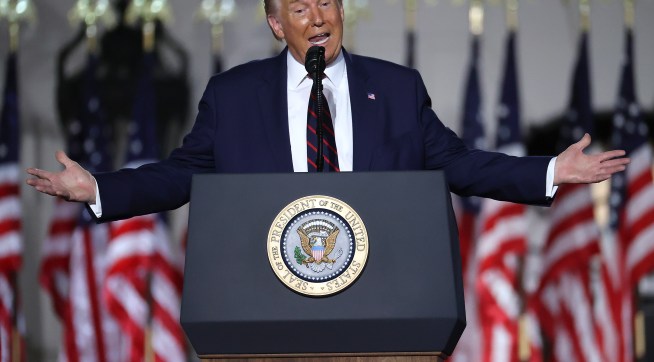
While there were scant references to the shooting of Jacob Blake during the last night of the RNC Thursday, President Trump tweeted about the “succes” scene in Kenosha, Wisconsin on Friday morning. (No, that is not a typo on my part, but his).
JoinVery excited to welcome Aurin Squire back to our virtual pages. Don’t miss ‘The Incredibly Short Rise and Fall of a Black Republican.’
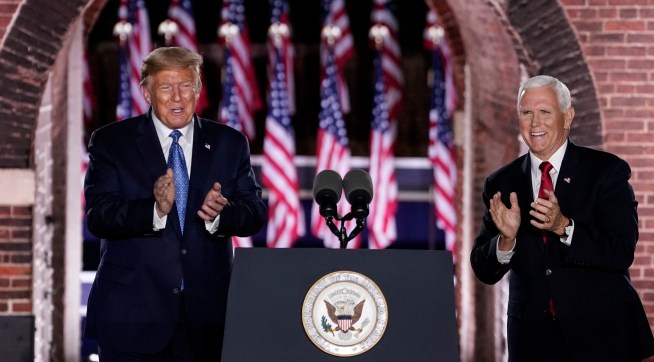
One more night.
Join
Today we are publishing in its entirety my recent Inside Briefing with Professor Ruth Ben-Ghiat of New York University. Prior to the Trump Era, her main subject area was Benito Mussolini and Italian fascism, particularly the cultural dimensions of the fascist era. Since 2015 she has become a public commentator on the rising authoritarianism we see across the globe and with particular force right here in the United States. In our culture, discussions of right-wing authoritarianism and fascism almost always spur mentions of Adolf Hitler, if only as a canonical point of reference. But as you’ll see in our conversation, with Donald Trump, Benito Mussolini is a much better analogue. The parallels are more pregnant with potential insights into both men and their movements. Ben-Ghiat also explores this question in a new book coming out in November, Strongmen: From Mussolini to the Present.
I was really looking forward to this discussion with Ben-Ghiat who I’d come to know mainly through her Twitter presence. I was not disappointed. I hope you enjoy the discussion, which you can watch after the jump …
Join