


In the fallout over Evan Bayh’s retirement announcement, one of the things we’ve been grappling with today was whether his timing was designed to prevent Indiana Democrats from holding a primary election — or whether that was just collateral damage from a last-minute decision.
I’m not sure we know the full answer to that yet, but here’s some new information to throw in the mix: On a conference call this afternoon with county Democratic chairs, Bayh and state party chairman Dan Parker argued that not having a primary election is a good thing for Indiana Democrats, according to someone who was on the call. Evan McMorris-Santoro reports.
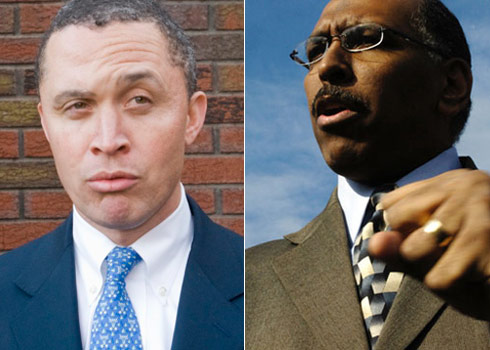
Former Rep. Harold Ford’s nascent New York senate campaign now says that contrary to what the campaign and the candidate said before Ford did pay New York state tax on all the income he’s made since working in New York for Merrill Lynch.
In other words, Ford is presenting New Yorkers with a choice of voting against him as a tax cheat or as the guy with the worst press operation in human history.
It’s all about empowering the voters.
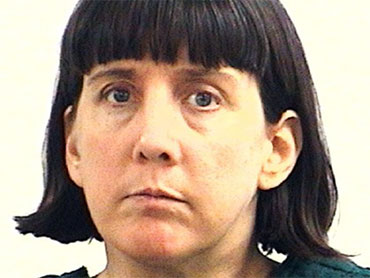
It’s starting to seem that Amy Bishop, the biology professor who mowed down three colleagues at the University of Alabama in Huntsville (UAH) last week, had not one but perhaps as many as three outbursts of homicidal violence in her life. She shot her brother to death in an incident that was ruled an accident at the time but looks much more like an argument that escalated to murder. And she was investigated but never charged after a pipe bomb (which did not detonate) was mailed to the guy who ran the lab she was working in at Harvard. Justin Elliott looks at what we know so far.
Let me start by saying, I don’t buy it. If there’s an explanation for this that involves the presidency it is that most of Bayh’s career going back two decades anticipated an eventual running for the big office. And part of me thinks that at some point over the last two or three years he just realized that that simply was never going to happen.
But TPM Reader EH makes the case …
The most logical conclusion from Evan Bayh’s retirement today is that he wants to be the next President of the United States. With $13 million in the bank and great reelect numbers against fairly weak opponents, a third senate term seemed very likely. If you look at his career in the senate, it’s consistently marked by spotlight-grabbing antics, including his regular play to be the leader of some variation of the “Senate Blue Dog” caucus, which has ended in failure each time.
From the Evansville Courier & Press …
Last Thursday, Indiana Democratic Party Chairman Dan Parker said Bayh, whose campaign coffers are loaded with $13 million, was returning to Indiana this week to film commercials for his re-election campaign. The filming was planned for Wednesday and Thursday.
Late last Thursday night, his communications staff discussed arranging an interview with the Courier and Press as Bayh prepared to run for a third term. His spokesman, Brian Weiss, said Bayh would file this week with the Indiana secretary of state’s office to run for re-election.
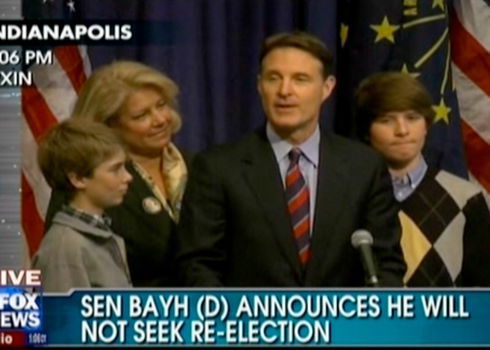
Saying Washington is broken and getting a few shout-outs from the Broder gang is almost de rigueur for middle of the road senators, especially Democrats, when they retire. And it’s hard to disagree with the judgment in general. Watching what’s happened over the last year it’s hard not to believe that something is fundamentally off-kilter in our national government — just not, I think, what Bayh thinks it is. I think the most generous read of Bayh’s decision is simply that he was bored. He just said that his decision was in part because he was “an executive at heart,” which is probably a very honest explanation. He just preferred being governor. And that’s fine. It’s another way of saying he was bored.
But let’s not paper over the fact that he says our national government is broken. And his decision is to walk away.
I’ve been talking to people in the Bayh operation. And there seems little doubt that this came as a very big surprise to almost everyone on Bayh’s campaign and senate staffs. There had been some rumors Bayh would pack it in a few months ago. But I’m told that the impression as late as the end of last week that everything was full-speed ahead for reelection was not just something people on the outside thought. That’s how it looked to almost everyone on the inside too. One source tells me, “from what staff/campaign staff knew, it was full steam ahead. Bayh was doing everything someone who was running hard for re-election would be doing. That very effective attack on Coats was largely from the DSCC, but Bayh people were involved and active. Bayh had recently picked someone to manage his race, ads were in the works, etc.”
If you’re in Bayh-land and have more to share, drop me a line at our comments line. Anonymity guaranteed.

There was already another Indiana Democrat trying to get on the primary ballot to run against Evan Bayh. That’s Bloomington cafe owner Tamyra d’Ippolito. But she’s still short (but not that short) of the signatures necessary to get on the ballot. She’s about a thousand signatures short statewide and still short in the 8th congressional district.
Eric Kleefeld just spoke to her. See his report.
It’s a good thing that back room deals and smoke filled rooms are having a resurgence of popularity these days. Because it seems that the timing of Sen. Bayh’s decision will leave the decision on who to nominate to replace him in the hands of the state Democratic party.
We’ll have more details on this shortly. But Bayh’s timing seems to have made it all but impossible for Indiana Democrats to hold a primary for his seat. The deadline for petition filings is tomorrow. (The formal ‘filing’ deadline is Friday. But our understanding is that the signatures actually have to be in tomorrow — though we’re trying to get further confirmation on that point.) So that means that prospective candidates need to decide to run and collect all the necessary signatures in about 36 hours. In other words, all but an impossibility. And it’s not even really clear who the potential other candidates are.
To be clear, that does not mean that no Democrat will appear on the ballot in November. It means that the party apparatus will choose a candidate, rather than have one chosen through a primary — if in fact no filings take place in time.