


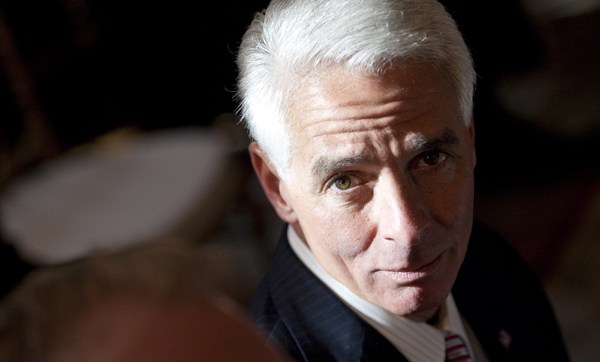
Florida Gov. Charlie Crist spent most of 2010 a pitiful figure, falling behind an upstart Tea Party opponent and struggling to remain competitive in a senate primary when only two years before he was a presidential kingmaker and widely viewed as a future vice presidential or even presidential contender. But now he seems to be having if not the last laugh than at least biggest current one. Another poll is out showing Crist not just ahead in a three-way race for Senate but by a significant margin — six points over Marco Rubio and 19 points ahead of Democrat Kendrick Meek. And now Sen. Reid’s office is calling Crist’s office to chat. Read More
In the wake of the BP spill, the Obama Administration will propose splitting the Minerals Management Service into two new agencies to separate its oilfield enforcement role from its oilfield leasing role. That and the day’s other political news in the TPMDC Morning Roundup.
Our Kagan nomination liveblogger Andrew Pincus looks at part two of the SCOTUS nomination process: the interest groups descend.
That’s the total amount the State of Florida paid to George Alan Rekers, disgraced co-founder of the Family Research Council, for his expert testimony on the evils of homosexuality.
We’d originally reported that Florida Attorney General Bill McCollum (and now leading gubernatorial candidate) publicly disclosed $60,000 paid to Rekers. But it turns out that was just the retainer. Florida paid him about another $60,000 for billable hours.
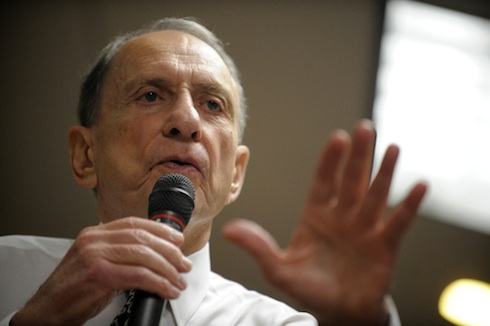
Is Arlen Specter toast?
There are three big senate primaries on May 18th — Democratic primaries in Pennsylvania and Arkansas and a Republican one in Kentucky. It’s been clear for some time that the establishment GOP candidate in Kentucky will likely get rocked by Rand Paul — son of Texas Rep. Ron Paul (R). But it’s now looking like the one in Pennsylvania could be the first real political bombshell of the 2010 season. Read More
The NRSC is hosting a fundraising coffee tomorrow morning with the ‘draw’ none other than Sen. John Ensign.
Since he managed to raise only $50 for himself last quarter, I wouldn’t have thought he’d be such a hot draw. But there you go.
Schwarzenegger at Emory University Commencement: “I was also going to give a graduation speech in Arizona this weekend. But with my accent, I was afraid they would try to deport me.”
Our Kagan nomination live blogger Andrew Pincus takes stock of the Day One narrative on the Kagan nomination.
We’re getting anecdotal indications that the decline of the newspaper business, particularly the withering of the size of newsrooms, is having a practical impact on the 2010 congressional election campaigns. I’m curious to know if you’re seeing evidence of this, too.
I was talking to a candidate last week in one of the high-profile 2010 races. Campaign coverage has just about evaporated in this candidate’s state, I was told, because there are so few reporters left, and those who are still around have bigger priorities, especially this far out from Election Day. As a result, it’s hard for the campaigns to get any traction with messages or story lines, and voters are much less engaged.
That’s not the first time we’ve heard this complaint from campaigns. It’s happened often enough now that I wonder if it’s part of a larger pattern. Intuitively it seems plausible enough, but I’m very curious how broad the pattern is.
I’d love to hear from our readers who are local journalists and editors. But I’m especially interested in what campaign consultants and political types have to say. Are you seeing this too? How are you adapting to it? What changes has it forced you to make in how you campaign? Shoot us an email to the tip line at the top right of this page. As always, it will be confidential.
Elena Kagan has written, perhaps to her regret, that the modern-day judicial confirmation process is without substance and “takes on an air of vacuity and farce.” It’s a remark Republicans have seized on in demanding more specific answers from nominee Kagan.