


How much would a soda tax reduce consumption of the sugary beverages — and how many pounds does that translate into for the average American? The USDA has a handy chart with the answers.
Dem leaders send members out on recess with special “Job Fair in a Box” to get public to realize … well, not sure what they’re supposed to realize. But it’s a “Job Fair in a Box.”
Nye County, NV, makes a run at Maricopa County, AZ, for title of most screwed up county government — or as a defense lawyer trying to take advantage of the breakdown in the local criminal justice system put it in a court filing: “A review of the Internet reveals that Nye County is the laughing stock of the known universe.”

Ex-Con, Ex-Rep. Jim Traficant is now an ex-candidate to get his old job back. Didn’t get enough legit signatures to get on the ballot.
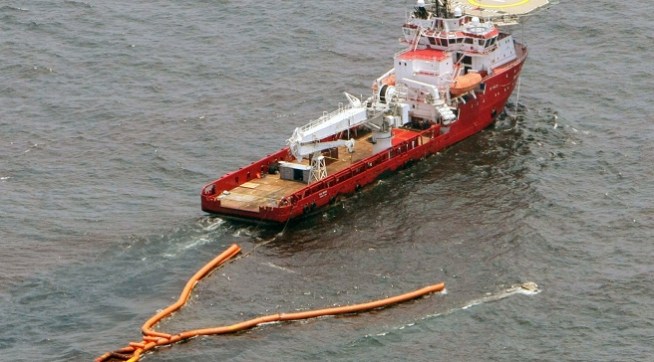
This smart piece from Reuters makes what should be an obvious observation: The contingency plans all the offshore drillers have for skimming up a major spill rely on materiel and equipment that’s already deployed for the BP blowout. In other words, the industry doesn’t have the skimming capacity to deal with multiple major spills at the same time. (Let’s set aside the issue of how effective our current skimming capacity actually is on a deep sea blowout.)
So it adds up to this: The government won’t let oil companies drill without contingency plans for a spill. The contingency plans all rely on a skimming capacity that is at present unavailable and which in any event can only handle one spill at a time.
If you extend that logic, you end up having to shut down current deepwater production and additional exploration, which isn’t really feasible and which again highlights the point that a lot of what has passed for regulation of the industry consists of providing ourselves with the comfortable illusion that we’ve got a plan for when something goes wrong.
