


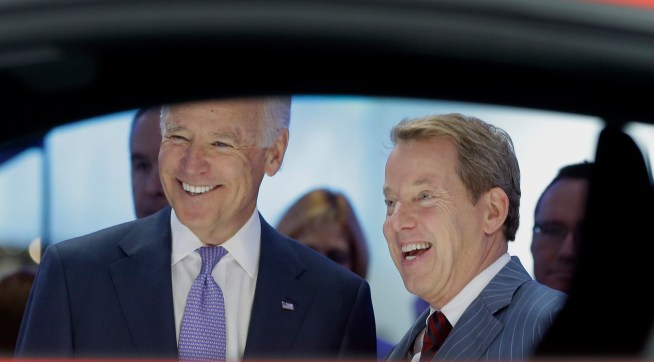
I’ve been publishing a series of emails about Joe Biden and his candidacy. Here I want to share something different. It’s an window into his candidacy and potential presidency. Back in 2004 I was writing an article for The Atlantic about John Kerry’s foreign policy. I did a range of interviews for that piece and one of them was with then-Senator Biden, in his office one evening up on Capitol Hill. It was loose and unstructured. When you talk with Biden he’s thinking out loud, discussing ideas, not a lot of couching or sound-biting or hedging. It’s very immediate and unfiltered. The issues then were quite different. This was maybe 15 months after the invasion of Iraq. George W. Bush was late in his first term. But even if the issues are from 15 years ago, you still get a pretty immediate sense of the man, how he thinks and specifically how he approaches the world abroad. So with that, I went back into my notes and pulled out the transcript of the conversation, which you can read here …
Josh Marshall: There’s several points I wanted to touch on, and a number of these — if you can answer them descriptively, or prescriptively I’d be interested in both. One of the main points of the piece, a hypothetical Democratic administration 9 months from now, what the continuities and discontinuities would be with where Clinton left off in 2000. I mean obviously the chessboard has moved all around, and that’s a given, but on an issue like North Korea, an issue like Iran, the Atlantic relationship and so forth, and broad kind of questions about how you mix diplomatic muscle and military force. What would you identify as the main continuities and main discontinuities? Again, either descriptively or prescriptively.
Joe Biden: I wouldn’t even try. I wouldn’t. I don’t think you can connect those dots prescriptively or descriptively. I think it is a false — I think the paradigm is the wrong one. I mean I think it is literally impossible to suggest how the policies of the Clinton administration would be continued, augmented, changed, morphed, discarded in the year 2005. The world has fundamentally changed since he left office and the damage done to our relationships around the world, coupled with the emergence of what was a perceived threat — but even the Clinton administration never fully contemplated knowingly the potential consequence of a serious international terrorist organization coordinating a lethal attack against the United States. There isn’t anybody who wrote about it. Read More
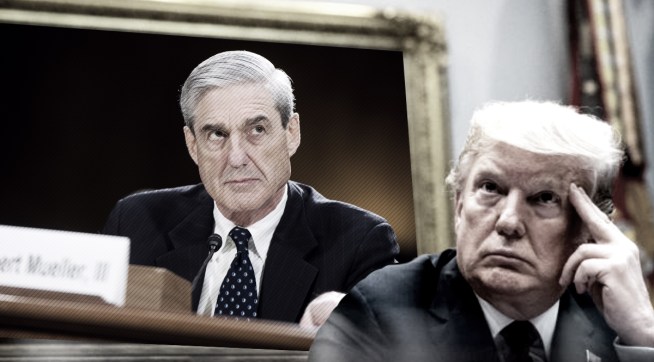
I wanted to flag your attention to a really important opinion column that appeared yesterday in the Times. It’s by Jed Shugerman, a law professor at Fordham. Shugerman gets into a number of points about the collusion portion of the Mueller Report that I’ve been trying to make sense of myself. To put it more specifically, I’ve been trying to make sense of the disconnect between the Report itself and its media portrayal. Trump’s campaign didn’t just collude. They conspired and coordinated with Russia. And Mueller proves it.
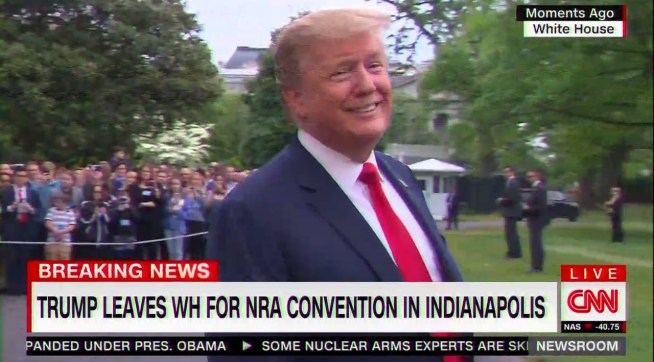
In a short Q&A with reporters on the White House lawn, President Trump called Don McGahn, his former White House Counsel, a liar, called Robert Mueller a “Trump hater” and doubled down on his notorious “very fine people” comment about Charlottesville. Clips after the jump … Read More
Former, now on-going, employment-status-ambiguous Rod Rosenstein gave a churlish passive-aggressive “I’m awesome!” festivus kind of speech last night. Kate Riga gives us the highlights.
Feds charge a Massachusetts state judge and court officer with obstruction for helping a undocumented man leave by the backdoor of a courthouse to evade ICE officers who were trolling the courthouse looking for people to arrest.
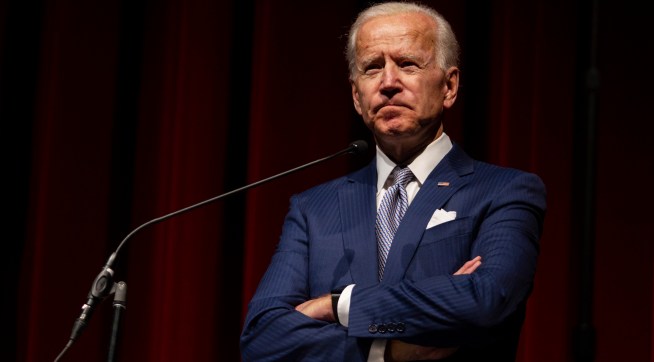
Joe Biden is the hardest to figure of all the Democratic candidates in the presidential field. He is at once an obvious choice and also unsuited to the moment in almost every way imaginable. Read More
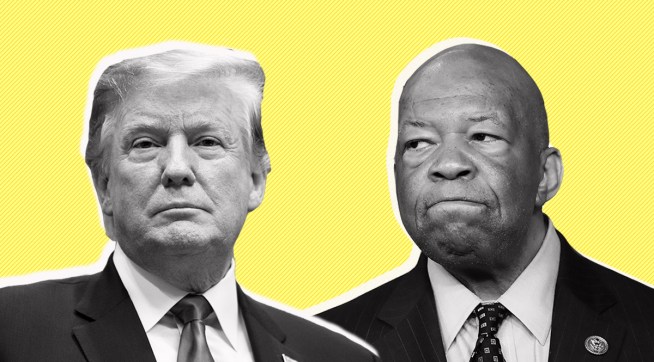
As President Trump has — unsurprisingly — dramatically ramped up his refusal to comply with any congressional scrutiny and oversight, the impeachment debate has moved in a new direction. Or at least one part of the existing argument has become much more salient. That is this: the claim that by moving into a formal impeachment process, perhaps as little as beginning a formal impeachment inquiry, the House will strengthen its ability to compel cooperation from the executive branch on all the documents and testimony it is now trying to get. In other words, whatever you think about the politics or wisdom of impeachment, Democrats need to start the process because that’s the only way they’ll have the standing to do effective investigation.
The problem is I see no evidence this is true. Read More
A lot more evidence emerging about the depth of the compromise of the Trump team in the government’s sentencing argument for Maria Buttina. Get used to the phrase “spot and access.”
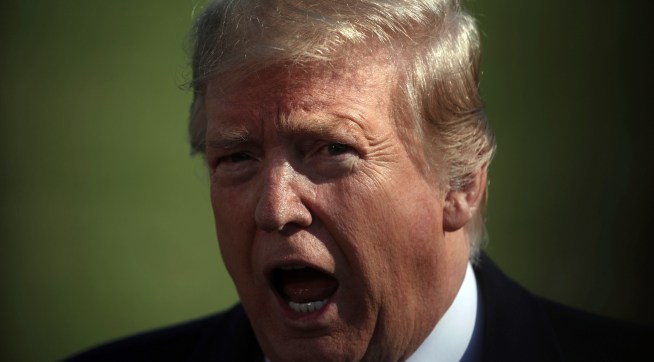
I’ve said a number of times that I think impeachment under the present circumstances is a mistake. There are two reasons. The lesser of them is the near impossibility of removing President Trump from office. The greater one is that moving quickly toward impeachment rather that holding it as a cudgel in the process of on-going investigation gets in the way of aggressive investigations. If people want to apply pressure, that’s where to apply it. Yesterday it was revealed that Chairman Cummings had agreed to delay the Oversight Committee’s subpoena deadline until after a court hearing on May 14th, when a court holds a hearing into President Trump’s suit against Cummings and the Trump’s accounting firm Mazars USA.
This is a mistake. Read More