


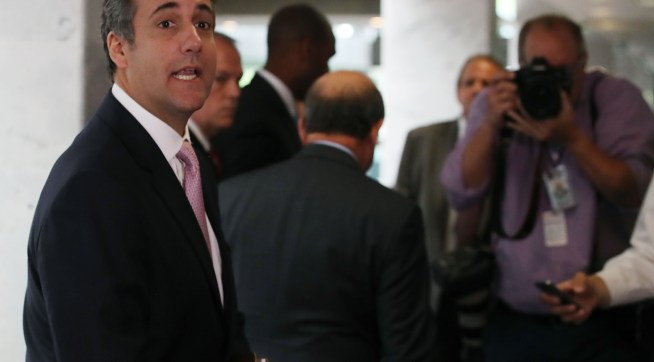
Yesterday a reader asked me if we had a list of our key Michael Cohen articles and, if we didn’t, could I recommend a few key ones. First, I think this piece from 13 months ago remains the best look at Cohen’s backstory. To go deeper you can read this piece on Cohen, Sater and the Trump-Russia money channel, this piece on what the CIA and FBI knew about it before 2016, and the eye-popping details about Cohen’s childhood friend and later fellow Trump associate Felix Sater. If you missed it, I explained last night to subscribers why I don’t buy that yesterday’s events were about the Stormy Daniels case. Read More
The President’s democracy-shaking comments late today — flanked by Vice President Mike Pence and National Security Adviser John Bolton, and in the presence of the nation’s military leaders — is deservedly overshadowing the underlying FBI raids on his attorney, Michael Cohen. But Tierney Sneed scrambled to get the immediate reaction of leading legal experts on the Justice Department’s big move against Cohen and what it means. Here’s her report.
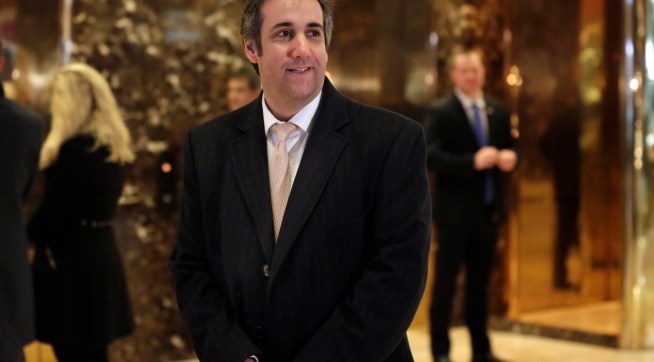
The New York Times is reporting this evening that Special Counsel Robert Mueller is investigating a $150,000 donation — in 2015, during the campaign — to Donald Trump’s foundation from Ukrainian billionaire Victor Pinchuk which was solicited by none other than Michael Cohen. In return, Trump made a 20-minute appearance via video link to a Kiev conference, the Times reports:
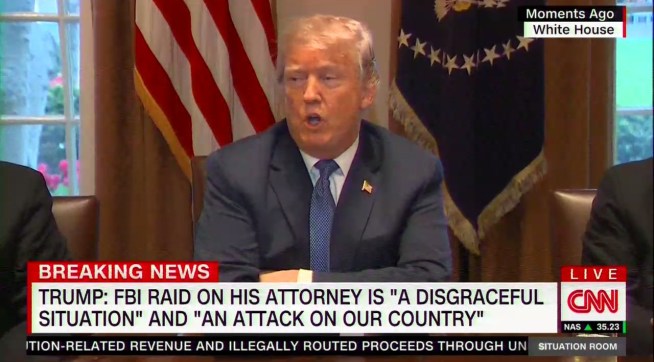
First comments from President Trump on the Cohen raid (from the pool report) …
Quick comments: “it’s a disgraceful situation.”
“I have this witch hunt constantly going on.”
“It’s an attack on on our country…what we all stand for.”
Also called the special counsel “the most conflicted group of people I have ever seen.”
Trump went on to criticize AG Jeff Sessions for recusing himself and repeatedly said no one “is looking at the other side,” referring to Clinton’s 30k emails and “many many” other things.
Video after the jump … Read More
FBI raids offices of Michael Cohen. This seems not to be directly tied to the Mueller probe but things Mueller’s team unearthed during their investigation. More to come.
Here’s your Weekly Primer on Voting Rights and Democracy (Prime access). Give us three minutes and we’ll make sure you’re totally up to date on every critical development over the last seven days.
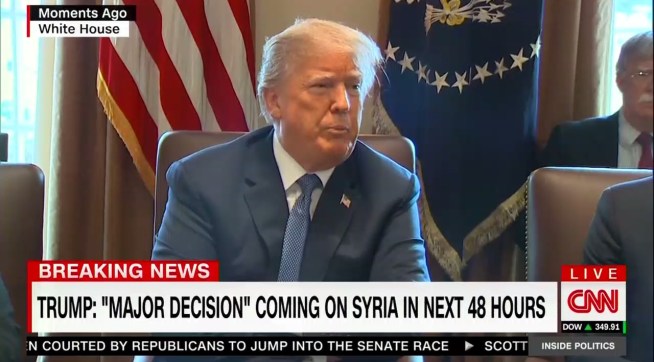
Notable moment in President Trump’s remarks a few moments ago. If China enacts tariffs that harm US farmers, they’ll understand, he said. Because they’re “patriots.”
“When we do a deal with China – which probably we will, if we don’t they’ll have to pay pretty high taxes to do business with our country. That’s a possibility. But if we do a deal with China, if during the course of a negotiation they want to hit the farmers, because they think that hits me, I wouldn’t say that’s nice, but I tell you, our farmers are great patriots. These are great patriots. They understand that they’re doing this for the country. And we’ll make it up to them. In the end they’re going to be much stronger than they are right now.” Read More
Some points, which are simple but critical, get overwhelmed by rhetoric and lies. Nowhere is this truer than in the Trump Era immigration debate. To listen to the White House, virtually the entire question is one of domestic crime, gangs, and national security. That applies to border security, control over the Southern border, and monitoring of immigrants (legal or otherwise) within the United States.
There are many good or reasonable reasons for a country to control the process of immigration into its borders. Mainly those are economic – both the possible positive and negative consequences of immigration at different levels. But by and large, there is really no evidence that permissive or restrictive immigration policies have any effect on criminal activity within the United States at all. Indeed, what evidence we have suggests that immigrants and first-generation Americans are less apt to commit crimes than native-born citizens whose history in the country stretches back generations. Read More
This afternoon I saw a friend on Twitter say that he doesn’t buy the idea that if people just paid Facebook some sort of fee the data and privacy issue would go away. Because he subscribes to the Times, the Post and the WSJ and they each track his readership habits and sell that data to advertisers or make it available to them for targeting. This is at least partly true – I’ll discuss the ins and outs of that point in a moment. But this is a good opportunity to discuss the real relationship between publishers and big data. It’s actually very different than it looks.
First, what my friend says is true. These publications are all in the data collection and sale business. Indeed, TPM is too – not directly at all but because of the ad networks (like Google and others) we have no choice but to work with. The key on the main claim is that the issue is one of diversity of revenue streams. Each of those big publications mentioned has at least three big revenue sources that are relevant to this conversation. They have premium advertisers for which the kind of data we’re talking about has limited importance. They also have subscriptions. The final bucket is made up of advertising that is heavily reliant on data and targeting. Read More